This episode was recorded on the land of the Wurundjeri people of the Kulin Nation. We pay our respects to their elders, past, present and future.
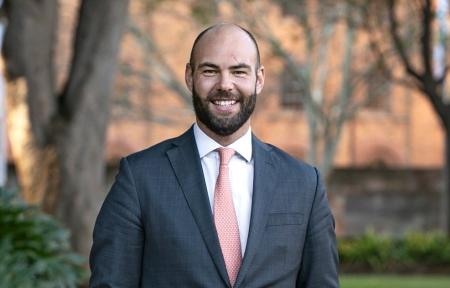
Richard: Hello and welcome to another episode of Precisely Property. I’m your host Richard Temlett. I’m excited to have you with us today. If you’re here for the first time, thank you for joining us. I encourage you to listen to our previous episodes where we discuss all things property with a focus on dynamic discussions with industry leaders. In this episode, we’ll be talking about place making in real estate with Andrew Hoyne. So sit back, relax, let’s get started.
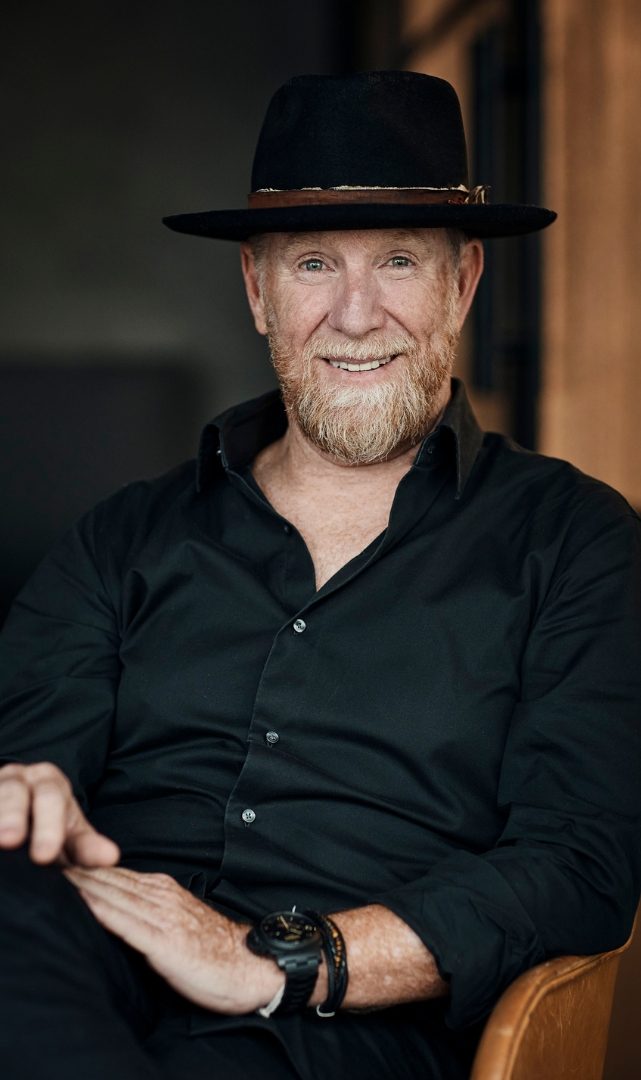
Andrew is the principal of Hoyne, an industry leading creative partner and global authority in place making, branding and property marketing. Across every project in place, The Hoyne team pursues one singular goal, make it extraordinary. A passionate advocate to the link between great place making and stronger social and economic outcomes, Andrew has spent decades helping shape how people think about the built environment. This has led him to create and publish The Place Economy, a globally acclaimed three volume book series exploring best practice place making and property development from around the world. Andrew is a sought after speaker at major conferences in Australia and internationally, including SXSW, TEDx, ULI USA, and the International Place Branding Association.
Richard: Welcome, Andrew.
Andrew: Thanks for having me. Good to chat.
Richard: Andrew, today’s episode, we’re going to talk about all things place making in real estate. I’ve been contacting you for a while and I certainly love picking your brain and talking to you about what’s going on in your world. And I think it’s becoming increasingly important just to understand place making across all asset classes, just with what’s happening with the dislocation in some of the markets at present. So today we’re going to talk about all things place making, talking about some of the work you’re doing, talk about some case studies. And I really think it’ll be very insightful for different developers or investors across different segments of the market and across their respective projects. But before we get into that, I do have an icebreaker question, and the icebreaker question is as follows. You spend your life helping make places extraordinary. What’s one everyday place you think is underrated, but gets it really, right?
Andrew: You know, I’m lucky enough to do a lot of travel, you know, in Australia, but also overseas, but I’m often up in Queensland and I’ve got a lot of friends in the Gold Coast. There’s this one place I always like going to and it’s called Capri on Via Roma. It’s just a shopping centre. And I was going, oh, we should get people at locals are like, really? You want to go there? It’s just a shopping centre. But what I always love about this place is it’s like almost a warehouse structure. And it’s not on a main street and it’s not amongst other retail. It’s kind of in a random location, but it’s got waterfront dining, which you wouldn’t know about if you drove past. It’s got cafes and restaurants, but at all price points, which I think is important. It’s got a supermarket, fresh food, deli. It’s got personal services like a barber, massage, beauty salon, and a gym. It’s got all the boring but necessary stuff like chemists, medical, dentists, news agency, post office. And I’m always like, really like the design of this place, but it just seems to be so overlooked. I never see it referenced anywhere. But for me, it’s just a great example of somewhere you would go every day to meet all your convenience needs. And I just think it’s quite stylish. There is one other I’ll throw in there, which is, in Sydney, Burwood Road, Burwood as a suburb, I just love this dynamic Asian community. Burwood is not cool, it’s not famous, but for me, it’s such a go-to place to eat. I love the multiculturalism. We’ve been working with a local council there on a long-term sort of place strategy, and they’ve really started to implement great things in terms of events and activations but also think big picture about property development and the role that private enterprise can play. So, they’re two examples that I think people don’t really pay enough attention to it. I love them.
Richard: Well, Andrew, thank you for that. And I can’t help thinking people are going to start looking those two up if they’re not aware of them. And just for our listeners, you can hear Andrew’s passion which is why I certainly I love talking with him and working with him because he’s extremely passionate and obviously very good at what he does.
Andrew, before we get into the session, I am keen to just talk and get a little bit more about your background. I think it’s important for people just to understand a little bit more about Hoyne mission statement of Hoyne. And really, I suppose, why you started the business in the first place.
Andrew: Yeah. Look, the way I talk about Hoyne as a business, uh regardless of who I’m talking to, I just try and sort of position us as being a creative partner and a global thought leader. So, you know, we work with clients who, they’re just seeking to develop like a vision, a brand and marketing to create places that really deliver extraordinary value. So a big part of that is place making. It means we get to work across all asset classes from residential communities, mixed use precincts, city shaping urban renewal projects, working with state governments, but also all the spaces in between. And so, I guess ultimately that kind of summarizes as, as what is our mission, as you asked. And for me, it’s really about bringing places of extraordinary value to life. So, you know, places that set new standards and design and experience, places that really move people. That they have an impact on culture and economic from commerce. But all of these things that actually change them and enable people to engage with them in new ways.
Richard: Gotcha. All right. Let’s jump into the first question I actually had for you. And let’s start with the basics. Placemaking. I came across the word placemaking. I was about 2017 or 2018. Obviously, it’s evolved a lot since then. But when I started looking into it and I suspected it was even back then when I actually came across you as working in governments at that point. And I think you were speaking to government about place making and how it could just have a very positive impact on projects. So, it starts with the base, the basics really, what is place making?
Andrew: So look, place making is about creating great experiences for people. And this is in terms of both the hard and the soft elements that make a place magnetic. So, it’s both in terms of the architecture and the built form, although we’re never pretending to be architects, but in collaboration, you know, what is that built form that has actually going to create a meaningful experience? And then what are the experiences in between? What, does the ground plan work? And then what are those activations? So good place making gives real meaning and purpose to a space. It actually compels people to care, to engage, and then ideally repeatedly visit if it’s not just Rezzy. So, it starts with an ends with understanding the people who will use and have at the place. Who is our audience or audiences? And then how do we deliver an outcome that actually ensures better social and economic results for the surrounding community, for the developer or the investor, and for all the stakeholders who actually feel that they have a role to play?
Richard: Gotcha. Look, what I did ask you to do in preparation for the episode is let’s talk about some case studies because I do feel that, certainly for myself too, it is how I learn by either knowing a certain area or if I don’t know the area, I can obviously look it up. So where is a really good example? And then let’s I’ll pump up your ties for you that you’ve been involved in then, like that has created a good sense of place or place making.
Andrew: Yeah. It’s interesting because I might look at this from two different perspectives because I think that there are some really kind of game-changing things happening around Australia, both in terms of state governments, as well as. you know, private institutional developers that are going to really change the way that we think about our cities. And probably one of the biggest ones in Australia is actually Bradfield City Centre in New South Wales. It’s, know, actually building a multi-billion dollar city from scratch over 115 hectares. You know, it’s, it’s going to be a city centre. It’s going to have a train station, a Metro station opening, you know, imminently in the next sort of two years. It’s surrounded by light industrial, but it will have residential uses, a town centre, commercial innovation. And so if I look at that project, which is, again a multi-billion dollar, tens of billions of dollars over decades, and actually working with, our client on that was the Western Parkland City Authority Board, around understanding what is the shared ambition to look very, very big picture over a whole host of asset classes over a long period of time. And then how do we actually create a framework that gives clarity and confidence to make these very early-stage foundational decisions on land use, anchor tenants, open space and activation. Because, you know, while we might’ve dealt with 15 different organizations over a long period of time to kind of get to a solution, the reality is that once that train station is open and people are starting to have that experience from day one, it’s going to be very different to, you know, year five, year 10 and year 20. So, you know, it is at that major city scale from nothing to something. And it’s probably just a good example about how to think very long-term about the impact that you have, but also knowing that you’ve got to build flexibility in. Another interesting example. was one we’ve recently done with Renewal SA in Adelaide called Southern Grounds. It’s the old West End brewery site.
Richard: Yes, I know it well.
Andrew: It’s going to be 1,300 new homes, mixed-use precinct. We went through a process of leading research workshops, collaborative visioning. We dealt with planners, architects, indigenous consultants, landscape designers, and other cultural advisors. This is about understanding how you create and shape a vision with a really clear and authentic point of difference, stuff that people really believe in. They can see how it will come to life and how it will be meaningful. So, you know, when you start with that project foundation, you know, you’re really thinking about this kind of market ready solution and a development framework that right this year is already coming out of the ground with a multitude of developers who have won those tenders to actually create those residential and retail solutions. So, ensuring that you actually have a really sort of clear guideline for developers and to ensure you’re attracting the right partners that will actually, you know, embody and showcase the site’s future potential and real value. And I think that when you do that, it’s really easy to translate that thinking to create a unique and distinct place brand that can actually end up being brought to life both in terms of marketing at one end and activations at the other?
Richard: Well, I can’t wait to get into some of the other questions I have with you, which is one of them, and we’ll get into it shortly in terms of just creating value in the market, which I find fascinating. But before we get into that, I did have a question for you. When I’ve done a lot of analysis and advice for different clients, take, for example, a residential development with its townhouses or apartments. Often there seems to be more of an inward focus just looking at that element. It’s almost like call it the silo effect, rather than looking at almost outwardly and looking at the surrounding opportunities to just leverage off one another. And when I’ve heard you speak or seen some of your work, it’s very clear you have a very different view of how different uses actually connect with and interact with one another. And going back to the Bradfield example, Charter Keck Cramer has also actually done a bit of work, my colleague, Brendan Woolley, on that. It’s absolutely amazing the scale of it, but it was very clear to me when I was working with Brendan and just looking at the different uses, how important they are to actually acknowledge and respect or even agglomerate with one another. So, my question, or I suppose my question or comment to you is, do you think that, that is a key defining feature of the successful projects? The ones that actually embrace the mix of uses and how they interact with one another?
Andrew: People often ask me, What’s your favourite kind of project to work on? And I always say, look, mixed use, the more asset classes, the more exciting because everything’s an ecosystem and they all have the ability to affect each other. You know, when you have different typologies of residential and you have commercial office nearby, so access to jobs, you might even have light industrial. And I’m not talking about, you know, heavy noise or sort of, you know, smells, actually places where there are different types of work opportunities and manufacturing at a lot light scale. Retail, F &B, retirement living, you know, all these things into the melting pot actually continues to assist in making something a meaningful place for a multitude of different audiences at different times of the day, at different days of the week. And so, I often talk to people about how do you create value? You know, how do you, how do you increase the value of an asset, but actually how do you actually think about increasing the rate per square meter? How do you leverage other asset classes to impact one of these particular silos that you might be trying to bring to life? And the full circle of this is that if you want to deliver on value creation, you have to always start by trying to understand who the end user is. Looking at the market, who’s going to live here, who’s going to work here, who’s going to visit here. But then understanding how do I create differentiation? How do I create meaning that can distinctly and directly have a relationship to that piece of land or that history or that culture or that community, and then figure out what do you already have that you don’t need more of and where do the gaps exist that can actually create economic opportunities? Whether they’re different residential asset classes, different typologies, different experiences or curation of tenancies through retail and F&B. How do we not create more of what we’ve got, but we actually think about creating something that’s going to become meaningful and destinational.
Richard: I love that. I’m going to change direction quickly and then come back to this concept of creating value because I do just want to ask you a little bit more about the place economy. I’ve certainly read parts of it anyway and it’s an amazing body of work. So, could you just explain to the listeners, what is it place economy? What prompted you to actually prepare it?
Andrew: It came out of the notion that for a lot of organizations, whether they’re public or private, people want proof. They’re like, well, what you’re saying sounds nice and ideal and maybe a bit kumbaya, but how do we kind of stress test it or how do we mitigate risk? And so I wanted to start to look locally to prove that in Australia, we’re already creating incredible development at a global scale, but also look for influences in other places, other countries that actually kind of prove this categorical link between visionary place making and better performing economies that actually deliver higher profits at one end and happier, healthier communities at the other. So, you know, when I started this process, I think in about 2014, so about 12 years ago, we were reaching out to developers, planners, architects. all around the world as well as looking at the projects we’d worked on around Australia and develop those into kind of case studies and essays, which we did a huge amount of research on the background of. And so what we wanted to do was really showcase how we could strengthen the commercial argument for effective placemaking. And I guess through those three books, which are collectively, I think around about 2000 pages over three books. So they’re pretty bloody big. You know, there’s a couple of hundred stories. We’ve spoken to several hundred, you know, global experts and quite famous people around the world who are at the pointy end of their area of expertise. We have, i’ve either visited or done research in on projects in around 60 countries. And ultimately the sales of the book have raised over $250,000 because we give a hundred percent of all proceeds to Habitat for Humanity, which is an organization I’m very deeply involved in. So it’s a bit of a snapshot of you know, 12 years’ worth of a ton of work.
Richard: Well, look, that’s very admirable in terms of the donation side of things. I did know that and I was going to ask you about that, but I also want to just commend you. Your passion just certainly shines through. We’ll put links in the notes to how people can contact you, either to get copies of those materials or certainly even seen on your website, some of the articles that you’ve prepared. I certainly in the work that I do, is research, but it goes back to that evidence based and, being able to support the arguments with the views we put forward. And that is particularly why I like those bodies of work because you’re right. is the potential for people to go well in theory. That sounds nice but show us hard works in practice. Is there a premium? Is there a faster take up rates or whatever it is? Is there market acceptance of these ideas? And certainly, it’s a number of case studies there. I’m especially of the market services that are more mature markets where it has been embraced and picked up, and I’m absolutely convinced and it’s going to be the next topic that we get into shortly that is actually how you can really create value. Developers can actually create value. Let’s jump into that I suppose, because that is one of the things that was really keen to talk to you about today in terms of how do you create value? And that I think is particularly important right now because with the distorted market that we have in Australia, but particularly in Melbourne where pricing has moved so significantly. How do developers in 2026 create values that buyers or renters are able to pay 2026 prices or accept those prices? So, let’s, let’s start there. How do you create value?
Andrew: I mean, it’s, it’s interesting throughout just Australia alone. It’s such an ever changing market and a different landscape in each city or state. So, there are kind of different levers to pull, but I guess. You know, the way that we look at opportunity is really through this place visioning lens where we’ve got a process that creates a blueprint for design, development and communication. Because ultimately your goal is to ensure that what it is that you’re building actually stands out in the market, right? You’re trying to attract customers, you’re trying to attract buyers, you’re trying to get people to buy a higher rate per square meter for what it is that you’re offering as opposed to maybe someone down the street or in another area. And that means that you need to create something that’s incredibly distinct and memorable as a destination and as a product offering. And so, you know, the work that we do really needs to kind of sort of sit as a framework that is a long-term guide over that process of development in terms of the delivery and the decision-making. So, it doesn’t matter what role you play within the development process. What we’re looking to do is have a framework that helps everyone sort of work collectively and collaboratively with a really clear guide on terms of what it is that we’re doing that creates that point of difference, that thing that becomes meaningful, that enables us from a market point of view to engage buyers, tenants, or the surrounding community to see real value and a premium value in terms of what it is that we’re offering. And so, you really have to ensure that through that process that there’s alignment between all of the consultants, the developer, the finance people, in terms of what is our intent on an outcome and what are our expectations on quality? Because, you know, very much in the early stage of the process, certainly, you know, we’re looking to attract investment, we’re looking to get approvals through, get support from the community, approvals through local council. And then ultimately, when we go to market, you know, we’re trying to ensure that we are attracting as many people as we can to what it is that we’re actually offering.
So, you know, everything that we do through these processes needs to kind of translate directly in terms of financial performance and probably erring back to the reference about the place economy book series. If I was able to, every single case study would actually have a financial summary of, you know, what the gross development value goals were, what the expected sort of costs were and what the margins were anticipated to be. And then at the end, what the reality was, you know, what was the real financial, you know, gross development value? What were the real margins? And I would certainly say that in the vast majority of projects that we have featured through those three books, we have heard anecdotal evidence to support that investment has resulted in substantial increases in profit and margin but also an incredibly more buoyant and meaningful outcome for the community, even for the people who aren’t living or shopping there, regardless of the asset class. Unfortunately, while I know the anecdotal evidence of all these in 99% of instances, no one will let me actually publish it because it’s confidential information, but at least it ensures that when we are communicating this information, we know that all of these outcomes have exceeded the benchmark or the industry standard. And in a difficult sort of time right now, particularly in a city like Melbourne or the state of Victoria, you know, with increased costs in more red tape, in difficulty in getting sort of financial support, it is only going to be these types of developments that actually look to mitigate risk because they have something that the market actually will pay for, that you’re able to better position these opportunities.
Advertisement: Quickly interrupting this episode to tell you about Charter Keck Cramer. Charter Keck Cramer is an independent property advisory firm with offices in Melbourne, Sydney, Brisbane and the Gold Coast. Through our collaboration with Anderson Global, we connect with over 18,000 professionals around the world. We provide strategic property advisory services spanning multiple market sectors. Our advisory team provides specialist advice across transaction management, tenant representation and lease negotiation, strategic portfolio of reviews, development advisory and more. Complementing this, the Capital Division advises on structured property partnerships connecting property owners and tier one developers. Our extensive valuations coverage includes Prestige Residential and Greenfield Development Markets, together with all commercial asset classes. Quantity surveying is at the core of the project team, ensuring cost control from planning through to post-construction. And our research team delivers property data and analytics across the residential living sector, along with expertise in strategic land use planning and urban economics. With specialists across a diversity of sectors, Charter Keck Cramer is your trusted property advisor. Now let’s get back into the episode.
Richard: My next question for you, when I’ve done a lot of research in the Brissy markets, I’ve noticed over the last decade, it’s older than this, but especially in the last decade, there’ve always been two types of projects with two types of developers. There’s the developer that meets the market and then it’s the one that creates the market. So, building on how you’ve just created value, when we were preparing for this, we also spoke about market makers. What in your mind is a market maker? How do you, and what does it mean by making the markets? And you had a very good example, I recall when we were preparing. So, if you could get our listeners know what you thought a market making project was.
Andrew: Yeah. For me, a market maker, I would describe as a developer or a project that actually creates demand rather than just responding to the market. So, you know, when you’re going through the process of understanding how place making will play a role and actually achieving that it’s about, you know, crafting a really compelling place story that people go it passes the pub test, people don’t think it’s bullshit they think oh my god, that’s really exciting I want to I want to be a part of that. It’s about understanding. How do you curate the amenity? The experiences and the activations that actually attract people’s attention. How do you position the precinct as being desirable before competitors even kind of catch up. So essentially what you’re doing is you’re shaping market perception and behaviour which will actually change the way that the general public value and actually interact with the place. Look, one of my favourite projects for the last decade, even when it launched a decade ago, and I’ve always been in love with it, is one of our clients, Woodley, out in sort of the outer Western part of Melbourne. It first launched in 2015 and it had immediate success. You know, it had a visionary developer in both Mirvac with their joint venture partner, VIP, who are an incredible organization. They’ve got an amazing team out on site at Woodley. And they’ve had numerous sellouts of houses and land release. It’s been named the fastest selling community by the National Land Survey Program. You now have a community of 15, 20,000 people living there. So from a piece of dirt in 2015 to only a bit over 10 years later, you now have almost 20,000 people living there with a town centre, with 14 different amazing kind of play spaces and parks, tennis courts, football ovals, an annual festival, which we developed with a client called Flavor Fest for an incredible multicultural community. We started with an incredibly strong vision. And then by delivering all that early amenity and really focusing on the needs of the community right from the very beginning and actually giving them proof points as opposed to just CGI’s or just a master plan or just statements about what might come in the distant future. That is actually what enabled them to achieve those sales outcomes and to kind of smash every competitor surrounding them in every direction and actually being that national benchmark for what it is to create something so compelling that delivered results, delivered the numbers.
Richard: I must admit, I certainly do lots of work with Mirvac. I know that project very well. When I’ve studied it, I can see that it has performed exceptionally well. Can we just talk a little bit more about that in your involvement there? What were some of the lessons learned? I also always like to just reflect and go, what did you learn out of that, that you’d apply into the future?
Andrew: The biggest stresses that we all have in this industry is time and money. And the desire is just to get moving and get out there and get it on market as quickly as possible. The big lesson for Woodley was while there was a lot of challenges in terms of decision-making early in the process that actually impacted the entire future of the project, there were a couple of early pauses to check ourselves to ensure that the decisions that were being made were going to actually have the impact that we were aspiring to. And so that meant, you know, number of difficult conversations in terms of pushing the timeline back a little bit initially to think about, well, rather than just tell people about what will eventually be here, why don’t we actually build something like build a park, build, you know, an oval, build a café, build a sales experience that you wouldn’t anticipate at those early phases. Often what happens with these master plan committees or future town centres, is that everything is about a promise of what’s to come, but nothing is tangible. You can’t actually go and feel and experience that upfront. You just have to trust that it will be delivered. And we’ve often heard in development, oh yeah, that’ll happen in two years or five years. And then 10 years later, some of those things still aren’t being delivered. So I think that when you can actually deliver that physical experience before day one, that people can come with their children and be in this incredible playground and actually go to a fantastic cafe with good food and start engaging with the community before you even start selling, you know, as a proof point, that is so incredibly compelling. And I truly believe that in the process of Woodley doing that, they turned visitors who were merely there for the playground or the cafe into buyers. People who had no intention of actually considering this as their future home, they just fell in love with the place. And that completely changed the dynamic of the way people thought about this as a development and as a future home. And it actually fast tracked the ability, due to sort of the huge nature of quick sales, to think about the future stages in terms of when they would actually arrive, such as the Woodley Town Centre.
Richard: Thank you for that. That’s again, our minds just processing everything you’ve said. And I’ve done a lot of work in those areas. I’ve used that project as a case study. It’s funny just to put things into perspective in terms of how well it’s performed compared to some of the other estates stand, listening to obviously you were heavily involved in that, which makes a lot of sense now because I’ve always have enjoyed that estate, and the amenity there is absolutely excellent.
Let’s shift gears. Let’s jump into we’re obviously in 2026. So place making in 2026. What are you working on now? What are some of the new trends? What are some of the both risks and opportunities that developers or investors need to be aware of? As you said at the beginning of the session, it actually starts with the investors, the vision, and it needs to have as much certainty or invest. It needs to have the investment potential. So what are you doing now on some of the current work that uh the industry needs to be aware of.
Andrew: Yeah, well, we’re really in a very fortunate place. I think partly based on our reputation, but we’re working on projects all over New South Wales, Victoria, Queensland. We’ve got some great things in Adelaide and Perth, Tasmania. We’re doing things across New Zealand, parts of Asia, working on some big projects in the Middle East and the USA. So we get to see and experience a lot in all asset classes. And while I do love mixed use, sometimes these are singular asset classes from different types of residential communities or commercial office or light industrial or retail. But I think that one of the kind of consistent factors is really ensuring that you have an understanding at the forefront of an opportunity to confront challenges, like what are the most compelling challenges? So rather than just fixating on the opportunities or the kind of low-hanging fruit, it’s actually about almost being a little bit pessimistic before you start getting excited. And that’s like, what are the worst things that could happen? What are the things that could go wrong? And how do we actually mitigate those or rethink them to turn those challenges into opportunities? And quite often that’s where the best ideas come from. And so you know, we, we constantly see, you know, we get presented with plans of very kind of generic product or kind of borrowed ideas or people thinking, oh, don’t worry about the positioning. We’ll deal with that later when we get to marketing, but positioning is about product. It’s not about how you kind of communicate it. That’s, that should be a no brainer because you figured it out upfront. And so I think that when we are confronted by uncertain markets, you know, anything that’s vague or it doesn’t have a really clear. purpose, it gets exposed quickly and people just can’t get excited or focus attention on those developments. So, to really gain traction, we need to make very clear choices early in the process. We need to ensure that we’re aligning the consultant teams and that we are making very clear and bold decisions around a shared purpose and understanding why should this place exist at all? Like what is that core purpose? You know, it could be any particular asset class. You could say, yeah, we’re trying to deliver, you know, margin and profit, but that in itself is never enough because we actually have to think ultimately about the audience and reverse engineer it because that’s how we get people to kind of support an idea that has absolute clarity that will ultimately deliver commercial advantage.
So when we’re going through this, I guess, you know, there are, there are some kind of difficult questions or some uncomfortable questions that we need to collectively ask and answer. You know, who is this place for? Like who are we really delivering a development for? And you know, what role does it play in the city or in the surrounding community? And what can we do to ensure that we’re to deliver something that’s meaningfully differentiated? And if we ask someone on the street, can they say back to us what it is that we’re doing, that actually will feel ultimately magnetic or meaningful. And so it’s that full circle. Why should this development be built beyond the notion of yield? And so I guess right now, the question isn’t really about whether the Australian property market will recover, because of course it will. They’re just cycles. It’s really about what are we developing or building that will still matter when it, you know, it does recover or, know, that we’ll actually create at the moment that actually will take people on the journey to want to be buyers, tenants, participants. They’ve really got to see meaning and purpose behind all these things that we do.
So, you know, I think the developers and there were some so many good developers out in the market in different states of this country who are, you know, creating things that will actually ensure that there are always going to be customers. They are thinking about this idea of engaging people through certainty. They’ve got a catalyst to divine a very clear vision. They’ve got alignment with their teams. And they’re creating places that people are genuinely excited about being delivered. And so that always comes back to relevance. Having a place vision isn’t optional. It’s going to, you know, from a business plan point of view, it should be one of the core things at the very beginning of the process that ensures you’re delivering a really strong asset that will deliver something that is economically viable and ideally highly profitable.
Richard: Absolutely fantastic, Andrew. Thank you so much for that. I know we’re running short on time today, but one issue I did want to still delve into you with when I give advice to a lot of the developers, particularly in the residential market, but to be perfectly honest with you I think it’s across, in fact, I know it is all real estate asset classes, I basically do tell them that they need to know their target market and target their target market, which is particularly what you’ve been saying is one of the key themes of today’s session. When you’re understanding your target market, do you do a lot of community surveys, community engagements to truly understand what people value, what they’ll pay for, what they like, what they don’t like? Do you get involved in that? Do you, and is that the advice that you’d be giving to the developers to actually set these projects or precincts up for success?
Andrew: Yeah, we do a lot of research on every single project that we start. You know, sometimes it’s desktop, sometimes we’re dealing with, you know, getting community engagement online. Sometimes we’re partnering with, with community specialists on the ground. Because like, to your point, you know, these, whether we’re talking about a development, a precinct or a city. All of these are lived experiences. They’re not products. You know, we got to design for people first, and that’s how you ensure that commercial success follows as a natural outcome. So, you know, collaboration by having a really deep audience understanding and then, you know, ensuring you build that into a place vision, that’s absolutely essential to creating destinations that endure, you know, long term, not just, you know, in terms of the balance sheet on completion, but, you know, whether you’re holding the asset, selling it, or actually ensuring that it’s still increasing in value, not being diluted in value over decades to come. And so, if you’ve got that mindset, then it means that you think legacy matters. You know, you’re already asking yourself, you know, what kind of places are we leaving for future generations? You know, again, whether we are on selling them or whether they are holding onto them on the balance sheet. And so that’s, I guess from my point of view, clearly I’m biased, but for me, place visioning is really about that strategic values driven, but also really deeply financially responsible approach to ensuring that we’re building something that people care about, they get excited about, they see value in, and they actually think has really contributed to better cities and better communities. Because as a property development industry, that’s what we have a responsibility to do.
Richard: Again, absolutely fantastic. And it’s so good to get further insight from you in terms of to close out the session. Do you have any final thoughts that you’d like to leave, leave our listeners with? Look, I say to my three children, one of the most important things in life is investing in relationships. Right I’ve said this ad nauseam, it doesn’t matter whether it’s your wife or husband, your children, your colleagues, your clients, your collaborators, just invest in relationships. Actually, you know, talk to people, listen to what they have to say. You know, while I talk too much myself, I’m always reminded that, you know, we have two ears and one mouth for a reason. And that ratio means that we should listen twice as much as we speak. And, you know, if we can, if we are really investing in relationships at all levels, then we will always ensure that collaboration is critical to every phase of what it is that we do. And I truly believe when I look back at my career, the best things that I’ve been involved in, the things that I’m most proud of, and I think what actually ensured that at the end of the day, we did something meaningful and it was always like, yeah, it was a really good team dynamic. People listen to each other. We were actually not afraid of the community, but we engaged with them and we developed progressive thinking that came out of true collaboration. And so, for me, if we can actually invest in collaboration, we will always deliver an outcome that exceeds our expectations.
Richard: Andrew, you have the most infectious enthusiasm, which I absolutely love. I hope that the listeners, I’m sure they would have heard it certainly. I hear it when I deal with you face to face. It’s amazing to see. So I want to thank you so much for coming on the show today, just sharing your enthusiasm. As I said, I will put links in the show notes to yourself and to your articles on your website. I would encourage our listeners to do reach out to Andrew. He’s a pleasure to actually work with on your projects, but also just the outside of the box thinking that I genuinely feel we need across different states because there are issues in all the different states. But actually setting up the projects for success and his view, I think is very well made about keeping your eye, not just on the short term noise that’s happening, but also in the long term future and how we’re building almost a legacy out of some of these projects or precincts. And that’s very, very important because the decisions they need to be correct and have a good vision at the beginning of the process. And you follow that, you deliver that. And often it is over more, could even be over more than one market cycle, especially if it’s a large precinct. That is very, important to keep in mind. And I think that you certainly describe that or articulate that very well, both in your numerous articles that I’ve read or just even in the session today. So thank you once again for coming on m and I hope to be collaborating with you soon into the future.
Andrew: Thanks, Richard. Great questions. Really enjoyed the conversation. I’m happy to hear from people. I’m happy to be challenged. I’m happy for people to disagree with me. I try and get articles out every couple of weeks just on things that just pop into my mind that I’m keen to share. And I’m always interested in feedback. And I’m always interested in people setting me straight if they think I’m traveling down the wrong course. Because these are thoughts and opinions and nothing, a lot of it’s not fact, but it’s a strong belief in what it is that we can do that delivers an incredible outcome for city shaping and community.
Richard: Fantastic, Andrew. All right, well, thanks everyone. I hope that you have a good rest of the day.
Hi, everyone. I hope you really enjoyed the session with Andrew and myself. You can see or can hear how passionate he is about what he does. And I love working with people like him because it’s a pleasure just to feel the enthusiasm that he brings to his work.
In terms of the three key findings that I’d ever like everyone to go home with today, they always follows. His comments about knowing your target markets and then targeting your target market. I think is absolutely critical. This applies across all asset classes, really, knowing who your users are and what they can afford, what their values are, what their propensity to pay is, as much due diligence as you can do to truly understand who your customer is, I think is a very, important thing to do. It de-risks the project and certainly does set it up for success. I do hope people reach out to Andrew and jump on his website. You’ll be able to look at things like the place economy and learn a little bit more about place making. And I’ve studied a number of city shaping precincts around Australia and even overseas and certainly place making and not only knowing the target markets, as we’ve just said, but also understanding how the various real estate asset classes and uses linked to and feed off one another. And I think it’s absolutely essential. And especially with where we are in Australia now with some of these large precincts, doing and considering place making is absolutely critical. And I’m convinced that finance actually will drive a lot of that because they can see the returns or the relative returns that they can get from pursuing this course of action. Following on from that, the final one is certainly when you actually look at how place making when it’s successfully carried out, and if you know your target markets, you are able to actually shape and create markets. I’ve certainly seen that in projects where they get a price or rental premium, they get faster sales or lease up. And often it is doing the community engagement, understanding who the community is, their wants, their needs. But even more broadly for that, it’s also what business needs are, what future trends are coming. And if you’re able to do that, you’re actually able to then, as Andrew very well-articulated, create or shape markets. And I think again, that sets precincts up for success. Certainly, I’ve seen it when I look at the projects that have been carried out successfully. I hope that’s where you find this episode insightful and have a great day.
Thank you very much for listening to this podcast. If you enjoyed the episode, please make sure to subscribe to our podcast so you never miss an episode as we’ve got more exciting content coming. We’d love to hear your thoughts. Please leave us a review on either Spotify or Apple podcasts as it really helps us to grow. Also, follow us on Instagram @preciselyproperty for updates and join the conversation. If you’d like to get in touch with us, subscribe to our newsletter via our website, charterkc.com.au or write to us at podcast at charterkc.com.au.
Lastly, if you found this episode interesting, please share it with your friends and family. Thank you again for listening and stay tuned for our next episode dropping in two weeks’ time, plus bonus content also on the horizon.
Disclaimer: Precisely Property is a podcast presented by Charter Keck Cramer and is for educational purposes only. Nothing in this podcast should be taken as investment or financial advice. Please engage the services of an appropriate professional advisor to provide advice suitable to your personal circumstances. The views expressed by our podcast guests may not represent those of Charter Keck Cramer.