This episode was recorded on the land of the Wurundjeri people of the Kulin Nation. We pay our respects to their elders, past, present and future.
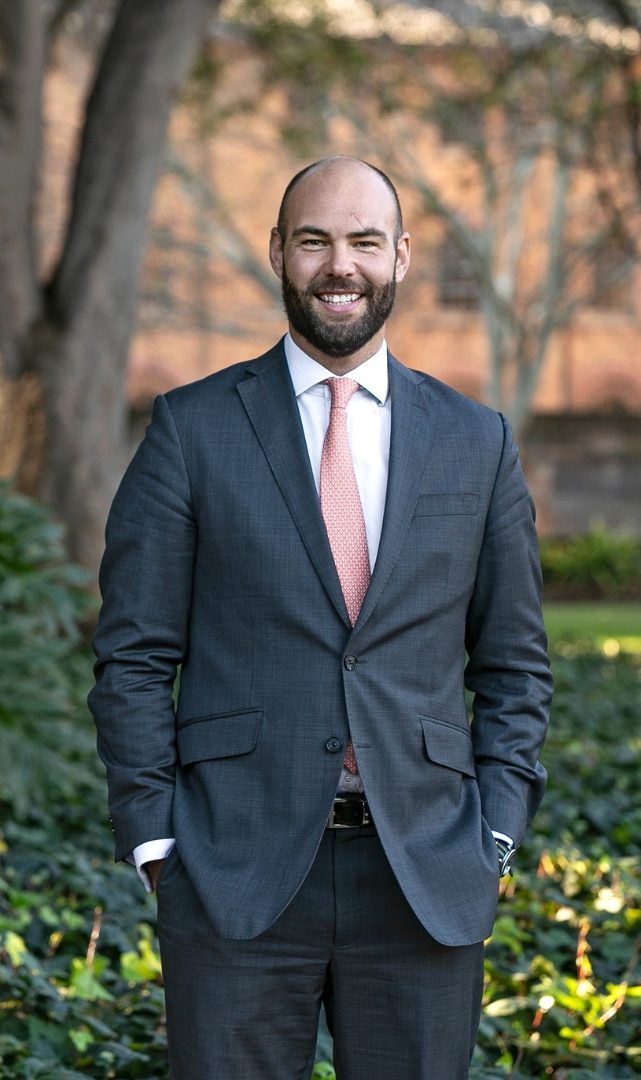
Richard: Hello and welcome to another episode of Precisely Property. I’m your host Richard Temlett. I’m excited to have you with us today. If you’re here for the first time, thank you for joining us. I encourage you to listen to our previous episodes where we discussed all things property and had focus on dynamic discussions with industry leaders. In this episode, we’ll be talking about the Sydney real estate market with Peter Vines of Ray White. So sit back, relax, and let’s get started. Peter has over 20 years’ experience in real estate in both Sydney and Europe. Due to his hard work and client-centric approach to business and his out of the box thinking, Peter has developed a reputation as one of the leading agents in Western Sydney market. He has watched Western Sydney grow over the 10 years he has worked across that region and has developed a deep understanding and huge belief in the growth yet to be realized in Western Sydney. As a third-generation commercial real estate agent, interestingly, both Peter’s father and grandfather ran estate businesses in Sydney for many years. The decision to join Ray White with its long-standing legacy and family entrepreneurial values was a natural one for Peter. He has experienced traverses all manner of transactions involving commercial and resale investments, properties, development land and special use assets across Western Sydney. He’s undertaken a number of significant assignments over the years for states and local governments, major corporations and landowners, not-for-profits, religious groups and private clients.
Richard: Welcome Peter.
Peter: Thank you very much, appreciate you having me.
Richard: Peter, as we discussed in today’s episode, I’m really keen to talk to you about all things Sydney and most specifically, I think it’ll be all things Western Sydney. Whilst I’m based in Melbourne, I still do a lot of work in Sydney with our team and I’m always astounded when I look at the opportunity for growth in Western Sydney, whether it’s some of the sales that are occurring, I saw one in the paper this morning. I think it was a $300 million sale from the industrial market. And when I look at the infrastructure being delivered there, it’s just absolutely fascinating to see what’s occurring and I’m very keen. You certainly are extremely active in that area. So we’re going to dive into the different asset classes, industrial, commercial, retail, resi in that area. And I’m keen to just get your views on what’s happened and what is potentially likely to happen. What’s some of the risks, what the opportunities are in some of these asset classes. And I’m hoping off the back of this show that there’ll be a few people that reach out to you and want to actually get more information from you. And certainly, I’ll be passing them on. But before we get into that, I’m keen to just give the listeners a bit of a flavour as to your background and obviously just your experience in the industry. I know I covered it bit off in the intro, but there’s no substitute for actually just getting just more insight from yourself. So I suppose my first question for you is how did you get into real estate?
Peter: As you mentioned in my bio, so both my father and my grandfather were in real estate. Also my brother’s in commercial real estate and my brother-in-law is on both sides of commercial real estate also. So I don’t know that I had much of a choice in my life. When I was in high school, I wasn’t sure that school was the right thing for me. My father had a business in Potts Point, the residential business where there was quite a strong management business. And so I left school early and went and started working with him, started on reception and moved into leasing. And then it had been in real estate ever since and made the move of the commercial in what is it now, about 16 years ago. So yeah, it’s been a great journey and a great industry part.
Richard: Fantastic. I suppose the final question just in this intro section then is there is a number of people, no doubt, that I actually would look up to as role model, would like to get into the space that you’re working in. So what advice do you have for any of them?
Peter: Look, I think the biggest thing is that Commercial real estate has a number of different areas to it. It is a lot of complexities involved with it. I think anybody who’s wanting to get involved really needs to apprentice themselves to a dominant agent or somebody who they look up to or somebody that they can really learn from. It’s not too similar to any other industry where we learn a huge amount by osmosis and we really need to be a part of that. And if you can attach yourself to somebody who’s good, you can learn from them. But most importantly, add value to people. If you can add value to people, you will make money. And that’s I think, one of the biggest things that I’ve learned over my career is, whether I’m adding value to somebody else in the industry or I’m adding value to my clients. The better I am myself, the more value I can add to other people, the better I’ve done my career. So that’s, I think the biggest thing is work hard, add value to people.
Richard: That’s a great piece of advice. And certainly it actually applies to, I think just about anyone in any sector of the industry. Thank you very much for that. Look, let’s start off with the industrial markets. I’m keen to get your views really on, I suppose, where the market is, where it’s likely to be heading. Just for our listeners, we’re actually recording it on today the 3rd of February. The RBA meets today. We were talking just beforehand about the highly likely chance that interest rates are going to increase and what the impact is going to be on different segments of the market. So let’s start off with industrial and Western Sydney, obviously, because that’s your bread and butter. What are you seeing there? How has the market performed over the last 12 months?
Peter: Yeah. So I think that there’s no shortage of institutional and private capital that are still chasing the industrial thematic across Western Sydney. That’s, I can say that in all of the campaigns that we run. I think in terms of the leasing market at the moment, I think that it probably has started to not start it. It has softened. I think that it’s the amount of vacancy has certainly increased things, the city on the market for just a little bit longer. And I think incentives are probably starting to creep up a bit. None of which is particularly surprising in all honesty, when you sort of double rent in a four year period or whatever it is from, you know, from COVID and then we increase interest rates, people stop spending as much as they were. Those businesses, you know, just, there’s not that froth in the economy to just keep, their profits turning over like they were. And I think it gets to a point where businesses simply, there’s a pinch point where it’s unfaithful for them to take that newer or more expensive space because the business simply might tolerate it. So I think we have noticed that there has been an increase particularly this year in sort of those smaller requirements up to 3000 square meters, but the larger requirements are just personally think that there’s probably a bit of a wait and see approach with some of those larger groups at the moment, perhaps not knowing what to do from an economic perspective in terms of what may happen.
Richard: Great. Thank you for that. For those of the listeners that might not be as close to what’s happening on the ground in terms of infrastructure delivery, how important is all the infrastructure and the new airports coming out in that area in terms of the demand or just the support in the fundamentals for industrial in Western Sydney?
Peter: I think it’s the look, the road networks still the big, the big heavy driver and they have just continued to improve in Sydney, which has been a massive win. Whether you’re going the North of connects, West connects, which I take every day or the air make tunnel from Port Botany and the airport out West. The road networks are phenomenal. think certain groups, there is an eye obviously toward the airport and what will be happening out there. I still think many groups perhaps don’t know how they will feed into future of the airport in terms of flight class, but they know that there’s growth coming. And so there is still lots of people trying to position themselves on land for future development. And no doubt in the future will be a game changer. It’s only a question of time and take up. I just, think it’s more people don’t quite know what to expect. They know that this big piece of infrastructure is coming, there’s huge amounts of government spending, there’s huge amounts of private sector spending as well. So you can be guaranteed that it’s all moving in the right direction.
Richard: Sure. You made a comment about just the investment thematic for industrial being so strong. Is that again, just so the listeners who might actually be considering getting into industrial, is really, what is that thematic and is it mainly all the AI boom and the data sensors that we keep hearing about and storage and last mile delivery and how that’s all changing with the rise of online retail. Or what is that investment thematic for industrial?
Peter: Look, it’s really often single tenants, multinational tenants quite often. I think there’s still been a huge move away from retail. I think the consumption of goods and services online is enormous. Yes, AI and data centres and stuff, probably they do come into it, but I think that will only be a small part at the minute. That will continue to expand, but it’s still quite niche. But I just think, you know, it’s a simplistic product from an investment perspective. You have good demand. Sydney’s a growing, growing geographically. There is a limited amount of industrial land available that’s serviced. And from a, It’s easy to get the head around the core pillars of that market very quickly and who the players are, where the yields are, where rents are. And so it makes it a very nice product. I also think the stability of ours, of the Australian government makes a very good story from an international investment perspective. It really, we’re a growing country that has grown demand for goods and services or goods particularly obviously to be moved up and down the Eastern seaboard and further afield. So, there is a very strong desire still from international bricks to continue to find that space.
Richard: Very interesting. And the final question I’ve got for industrial is overseas. It may have been in about August or September last year in Singapore, talking with various investors and they made, or they asked me about double level industrial like warehouses.
Peter: Multi-story.
Richard: Multi-story. There you go. Excuse my ignorance. Multi-story. And I said, look, I hadn’t actually seen an enormous amount of that in Melbourne, if at all. They said that they were looking to it in Sydney and Sydney was very common overseas. And so when we started talking about it, they basically just said because of the land values and just a more mature market or industrial market in Sydney, that they are very attracted to the multi-level. So are you seeing much of that activity there? How is that evolving in terms of utilizing space and working the land harder?
Peter: Look, I think it’s a, and I understand how big that is. There is some multi-level industrial throughout Sydney, which has been developed and is still being developed. Also industrial strata complexes where there’s two or three levels where they’re selling down those units individually. Look in certain locations, clearly there is a market for it. I think the market is still not used to it and is still perhaps trying to get their head around driving up ramps. It’s a drop off cargo, I think. In the industrial states that we’ve seen where there is multi-levels, there is always a heavy preference, the ground floor and the upper levels remain to be seen what, what take up they, they may get. I guess it, I don’t think it will be people’s first choice is the answer. It’s always people don’t like changing their habits. Even when you go shopping, people like to drive in at grade parking and walk straight into the shop, the man going into a basement or up. It tends to be more problematic. So I think it’s something that. Yes, long-term is certainly a real option, but I just, I’m not sure that it’s at maturity yet in our market.
Richard: Sure. All right. Let’s jump into commercial, the commercial market and commercial real estate. How much activity are you seeing there? What have you been involved in there? Are there any interesting things that have surprised you with what’s happening in that space?
Peter: Commercial rate remains, I think, incredibly challenging, but I talk for sort of Western Sydney. I think from a Sydney CBD perspective, I think there’s a lot of people who, who see value in that market at the moment and they believe it’s the right time to get in. And if you buy in the right building, it’s a good fundamentals, I think it’s a good story. Paramatta has, is the second CBD, but heavily dominated by government tenants. And I just think with, they haven’t properly started coming back to the office. I know that leasing inquiry is still slow. Which yeah, just is problematic, obviously from a take-up perspective. I think the biggest thing with Western Sydney is, you had over 200,000 square meters of brand-new A grade space put into Paramatta Square. They’re going to go and take all the prime tenants. And so there’s all this additional space, which is older, BCD grade assets that need kind of considerable amounts of money spent on them. And you’re not sure then whether you’re going to get a tenant or not. But the yields getting up into the eights, certain assets are certainly getting to levels where, you know, if you can manage the tenant risk, it’s certainly an opportunity for people to get into. I think Parramatta as a market will continue to be the centre of Sydney. The Metro’s coming in 2032. And we’ve got one of the largest hospital precincts in the country next door. We’ve got airport, it is a massive opportunity. It’s more just from an economic perspective, when that big demand for tenants starts to return.
Richard: Gotcha. Can I ask, I’ve been doing a bit of work just on the building cost side of thing for commercial, it’s all asset classes, but as it applies in a lot of markets. when you combine land values with the building costs and you look at what the rents, the market rents are versus perhaps the economic rents, a lot of the new supply just doesn’t financially stack up right now. The rents are too high to justify the supply of new stock. Is that what’s happening in Western Sydney in terms of building costs, just making new supply cost prohibitive?
Peter: There’s no way anybody will bring on any new stock. It’s more, we’ve gone from an 800,000 square metre market in Paramatta to over one million square metre market. We pay introduction at Paramatta Square. There’s two, there’s the increase in stock, but then there’s the added issue of COVID and people still working from home. Primarily our workforce, out view is made up of government tenants who just, yeah, they’re not as quick perhaps to return to the office or have multiple places that they can work from. And so the investment theory behind buying an office at the moment is just very difficult to convince people to do that.
Richard: Look, it certainly sounds like that’s the case across the majority of the country. Has that been impacted lease terms or things like that? Because I can imagine if you’re an office landlord, you’d be quite worried about how you’re going to keep vacancies low and the incentives and so forth that you might have to offer. Is that obviously playing into some of the transaction activity?
Peter: Yeah. Absolutely. Absolutely. There’s that flight of quality to the, A-grade stock, because that’s where everybody wants to be coming back and they want to be a nice, shine buildings. But yeah, it has to have a direct impact on negotiations and incentives and all of those senses. When there’s fewer deals around, you need to be more competitive or you lose your chance. And some people, you know, are more bullish around that. You know, like the privates just don’t see incentives the same way as an institution. The privates aren’t as excited about giving incentives because it comes straight off their bottom line, whereas the insights were true.
Richard: Very interesting. I’d not actually thought of that. Let’s jump into the retail market. What are you doing in the retail market? Obviously, that has changed dramatically because of online retail and just cost of living crisis and so forth. What are you seeing across the different elements of retail arts, obviously with that new delivery of infrastructure and so forth and whether it is Paramatta or some of the other areas, there’s obviously a growing population which would drive demand for different forms of retail. But what are you actually seeing there?
Peter: Look, I think established retail is where it’s at, particularly neighbourhood shopping centres. The cost of developing land at the moment, unless you’re a Coles or a Woolworths or an Aldi or something like that, it’s very difficult to get the rents to a level that makes sense for an external developer to develop these things out. And so I think there’ll be, it’s just, there’s not a brand-new stock which is coming out of the grounds, even in the greenfield areas. And I know that there’s very strong demand still from, for certain it and be style tenants. And obviously people like retail as an asset class. You have to have the mix right. I think obviously fashion and that type of thing is no longer where it’s at, but stuff like childcare, medical. More essential services is certainly where people are positioning centres to not recession proof them, but it’s a different experience now. It’s not, you know, you’re going in there, you know, getting food, you’re shopping, maybe going to a dentist, wherever it is. They’re far more, yeah, service and essential items based.
Advertisement: Quickly interrupting this episode to tell you about Charter Keck Cramer. Charter Keck Cramer is an independent property advisory firm with offices in Melbourne, Sydney, Brisbane and the Gold Coast. Through our collaboration with Anderson Global, we connect with over 18,000 professionals around the world. We provide strategic property advisory services spanning multiple market sectors. Our advisory team provides specialist advice across transaction management, tenant representation and lease negotiation, strategic portfolio reviews, development advisory and more. Complimenting this, the Capital Division advises on structured property partnerships connecting property owners and tier one developers. Our extensive valuations coverage includes Prestige residential and Greenfield development markets together with all commercial asset classes. Quantity surveying is at the core of the project team. ensuring cost control from planning through to post-construction. And our research team delivers property data and analytics across the residential living sector, along with expertise in strategic land use planning and urban economics. With specialists across a diversity of sectors, Charter Keck Cramer is your trusted property advisor. Now let’s get back into the episode.
Richard: How is strip retail performing? Because I know for example, in Melbourne, a lot of people unfortunately are still not really back at the CBD. And so there’s certain strips that are outperforming. There’s other strips that are already struggling. So what’s happening there?
Peter: And like Sydney, there’s certain areas where high street retail is still a real thing. We have a very strong kind of, we have a very strong Asian demographic, obviously throughout the West, but also Indian, Middle Eastern, and those people, those cultures they like bricks and mortar. They typically aren’t going and buying online. And so they’re like the Asian grocers and the Middle Eastern markets and stuff, those people still love to buy. they like to go in, they like to touch on field of products and they’re not going to Woolworths and getting direct to booze or whatever it is. It’s a completely different way that they consume. And so, there’s still pockets in areas that are trading incredibly well, specifically like a Burwood. For example, which is heavy Asian demographic on a train line, you’ve got a Westfield there. Just a very strong foot traffic, very strong FMB operating. Eastward again, another one. But I think it’s, if there’s foot traffic and there’s a good mix of tenants on the strip, then it probably will still trade well. But I think it’s concentrated into those core precincts as opposed to not every high street retail is the same. It really, it’s really, I think back to fundamentals and back to who is my tenant, what are they selling? What is their business model? And is it Melbourne in today’s market?
Richard: Okay. Let’s jump into residential. I know you’ve got a very big listener group that is very interested in residential. So what are you seeing there? What’s happening? Is there enough supply coming on board? What’s happening with prices? Who’s buying what?
Peter: Look, and I guess. Primarily I’ll talk about Western Sydney, where we’ve had a significant amount of success in the last 12 months has been subdivision and lower density townhouse sites. There is this strong market out there for that product. We were selling a 24,000 square meter parcel of land lecking to the other day, which is a growth centre in Southwest Sydney. We had 17 offers for it. It’s incredibly strong, that subdivision top infill where it’s serviced. There’s a number of those areas out there that still aren’t serviced, which is obviously problematic, but the stuff that’s serviced is highly sought after. We sold some land for Stockland within one of their master plan communities recently. Again, very strong interest and more integrated style products. So not as strong as the subdivision, but still that low density stock appears to be where the market is. For us in Western Sydney at the moment, trying to sell anything with density, unless your revenue is over 14, 15, 16 ground meter is incredibly difficult, if not impossible in certain locations. The build costs just simply outweigh the opportunity to do it. And so we’re seeing groups who were traditionally Western Sydney people going back and take my building arm and go and build in the lower North shore or the seeding or whatever it is. And I can actually make it adopt and stack up. Why am I going to stay in Western Sydney where my margins are lower and I’m not getting volume of sale that I need? And so, I think, look, it’s, I think the demand for housing is certainly there. I think crisis perhaps still haven’t got, well, crisis haven’t gone to where they need to make things work is a challenge at the minute. The state government is doing a significant amount to try and streamline processes and they’re doing, in my opinion, they’re doing everything they can to try and make these things happen, freeing up a lot of land, which had been sat on for years to try and create housing opportunities. Still, the fundamentals are, what can I sell the stock for? What’s it going to cost me to build? What do have to pay for the land? Like that, that, those don’t move you. And so, we still have, I think we have a construction crisis to be perfectly frank. It just is trying to get things to stack up. In the West, it is a challenging thing. I think prices have to rise. They haven’t quite yet, but I think in the meantime, we need to be delivering more lower debts, then houses, townhouses, that more affordable stock and perhaps some of these greenfield locations until it gets to a point where they do start stacking up or there’s more groups who are doing the build to rent, which really hasn’t taken off like we perhaps would have expected in the West, because of where it’s now need to be to make those feasible.
Richard: Great. Look, thank you for that summary. There’s a couple of themes that I’d like to just loop around to as you went through the different asset classes, they did jump out at me. Let’s just build a little bit more on your comments about building costs. And it seems that building costs across all the asset costs have risen dramatically and a lot of them don’t appear to be financially viable right now. You’ve made the comments about pricing, just having to move and my question to you, I’m going to ask you, it’s a difficult question and I get asked all the time is, can people actually afford to pay higher prices? You made the comment about 14 or 15 grand a square meter for apartments out in Western Sydney. Can buyers afford that? Are they just going to be forced to afford it? or what’s going to happen if there’s that sticking point where it’s just so much more expensive to deliver, then buyers can afford.
Peter: Look, it’s a conversation that I have regularly. Maybe we need to look at changing the size of units. Maybe people move into smaller stock. The government’s really getting involved trying to assist with the deposits and trying to get more stock off the ground. I’m not sure what else can happen apart from like, if there’s only certain things that can move. Land though, can’t go down too much more. Even in some places, even if they’re at zero, it still doesn’t fundamentally stack up to do a development in some of these places. Yeah, you’d be almost negative land value in some of them. And so I think if, look, I think there was a lot of us out there hoping that rates might come off. And by rates coming off would increase people’s serviceability, which might increase people’s buying power. That sort of app-cross-stress testing on higher interest rates is obviously very prudent and important but does impact how much people can borrow. But maybe the answer is that we need to stimulate the investor market more as well. I think fundamentally overseas people, people are much more renters than they are owners. Maybe the Australian dream is, will be out of reach for some people and we need to stimulate that kind of investor economy and also that, that build to rent. There has to be more of that in, in the market. I just, I don’t think that everybody will be able to afford to save and buy an apartment or house. I think it’s not done in the rest of the world. So, I think probably that’s where the future is more than likely to be for us.
Richard: Look, I certainly agree with you. Let’s follow that logic though for retail. If it’s still so much more expensive to actually build retail and will again, rents just have to rise there, will tenants have to just pay high rents because otherwise if they don’t, stock doesn’t get delivered. Obviously with a growing population of I’ve seen some stats. I can’t remember what the rule of thumb is about the amount of retail floor space per person. And I know we have lower levels in, for example, the U.S., but we’ve got a growing population. We don’t have enough new stock coming on board. The replacement costs are higher and a lot of what the values are right now. What where does that all lead? Do you think there’s just going to be a resetting of pricing sooner or later across some of these asset classes?
Peter: Maybe it’s another, maybe it’s something else. Maybe it’s like more of a dark store model where you’re actually not going into the bricks and mortar. Maybe it is more online. Yeah, there’s a saturation point or the inflection point went the other way. It doesn’t work. And so I don’t know that rents can just continue to rise. And it’s often the specialties that bear the brunt of the increased rent. Your supermarkets are the anchor. Obviously, they bring the majority of with people into the centre. And then it’s the, yeah, the specialties that pay the higher rents. I don’t know, again, maybe space gets smaller. Maybe it’s, it is more of it like dark store model where you’re building warehouses and distributing as opposed to building bricks and mortar where people come in and, and yeah, I don’t know. I don’t quite know what the answer is. You’re certainly not doing basements in those areas. Like people looking at going and saying, well, you know, we’ll build a basement car park, and then we’ll build a first floor or whatever. It’s like, how cheaply can we build a single-story building? And how much can we get onto it, that it’s still efficient where we have enough parking. But it’s certainly that the moment you look at basements or anything, it’s just, the conversation isn’t worth having. But you look at a product like Woolworths built in Leppington, that’s a really nice product. They probably built it before the explosion in cost, but they’ve got really good retail offering there, good mix of food, At-grade parking, they’ve got medical there, it’s obviously future. But the benefit of the Woolworths or Coles or an ALDI, or whoever it is developing it, they are not purely driven by a return on investment from the real estate. The real estate forms a part of it, but it also gets washed through with business as well. And having a long-term business in them, they’re probably the most likely people to be doing it in where they can make money through business as well as through the real estate.
Richard: Gotcha. All right, look, the final theme for today, and I did leave it to the end, is just the cash rates. As I said at the beginning of the session today, the RBA meets today. There’s lots of discussion or conjecture about whether rates rise or not. I’ll go first, but I’m obviously keen to get your views. I do believe that rates are going to rise today. Sadly, when I look at a lot of the stats, it does look like they do need to rise. But why I’m worried and also confused is that it’s very clear to me that there’s different states that are at different points in the market cycle or the economic cycle. You’ve got Southeast Queensland, for example, that does not want any more rate cuts. Actually, when I speak with the values in those locations, they don’t need any more help with the market so stimulated. At the other end of the spectrum, we’ve got Melbourne and Victoria, which is crying out for rate cuts. It was interesting to hear some of your comments about Sydney. I detected that, Sydney’s side would also like a rate cut, but they’d not really want a rate rise. Let’s talk it through in terms of what if rates do rise, I’ll ask you if you think it’s going to rise, but if they do, what’s going to happen to either the cost of debt or just cap rates on certain asset classes?
Peter: There’s obviously the feed through that it has directly to values. I think it’s more a, the rates going up is more of a confidence thing from our perspective. And when I talk about that, people like certainty. Investors, like certainty. Everybody wants certainty on what’s going to happen. And everybody was certain that at the end of last year, we were going to get rate cuts, more rate cuts the beginning of this year. And now that’s perhaps not happening. And so people don’t like that. And I think as a result of that, you lose confidence. I also think that as a result of that, many lenders or owners who thought I can see the blue sky coming. I’m to get a kick in the market at the end of 2026. That’s probably not the case anymore. Nobody has a crystal ball. It’s now that people are to get that kick in value that I’m hoping to get. And so that then feeds through to potentially more forced sales or people selling in the market they didn’t really want to be selling into. And just perhaps not that exit that they were hoping for. Look, in terms of the rate. rate rise today, yes, I think it probably more than likely. I thought that the RBA would do everything they could not to and we’ll be using that stick of potential rate rises, but there’s every chance that they do a rate rise and then that sort of hopefully has the impact that they’re hoping for. We talk about it a lot. It’s a very blunt instrument. And like you said, there’s so many different micro markets, but it really, yeah, it’s obviously not necessarily, not a good fit and prices when rates hell up, prices don’t usually follow.
Richard: All right. Look, thank you for your views on that too. I know we’ve got through a lot today. Do you have any closing thoughts or comments? I suppose a question that I’ll ask just to close things off. 2026, where do you see the greatest opportunities in your space in Western Sydney?
Peter: Somebody asked me about this the other day. I really, there’s two things I like and they’re both, they’re incredibly different. I like any sort of built assets. So existing industrial, existing retail, where there’s an opportunity to add value, reconfigure tenancies, cut them down, expand certain tenancies, really work an asset harder without going into full blown construction. I wouldn’t necessarily be wanting to build at the moment. I think it’s a good time with assets coming up into the market that people wouldn’t have typically sold previously. So, I think there’s an opportunity to buy those types of assets at the moment. I also think that there could be an opportunity with land, given what I said, land is where the major stress will come. There’s a lot of people who’ve been sitting on this land for some time and are going to be pushed to sell, or there’s going to be opportunities to see sales through various agencies. And it’s more difficult to borrow against. It’s probably a bit more countercyclical. You can require more equity, but I also think some of the land values will have halved. And so surely when land values halve, it’s an opportunity. You have to look at things countercyclical sometimes as well. So you probably need to have a foot in both camps, but if you just do what everybody else does, it’s very difficult to buy value unless you can see things that others duck, but I like buying when others are fearful.
Richard: I like that. I think that’s a good way to end this episode because I know the last couple of years has been very difficult across different states in Australia. I certainly take a positive outlook on life, not a naive outlook, but a positive outlook on life. And your comments about countercyclical opportunities, knowing that there’s sub-markets or micro markets, there are opportunities there. I would encourage our listeners, reach out to Peter. He’s certainly able to help you with some of the opportunities there or point you in the right direction. Because I’m convinced that as you quite correctly said, the markets are quite different and there’s risks, but there’s also opportunities.
Peter: Absolutely. No doubt.
Richard: Look, we can close off today’s session. I’ll put links to people that want to contact Peter on the website. I have seen various articles and things like that published by Ray White. They are certainly a source of knowledge. So please do reach out to them and I’m sure that you’ll, you won’t be disappointed in terms of the knowledge sharing information that you’re able to get. So thank you, Peter, very much for coming on the show. I’ll certainly take you out to coffee when I’m next up in Sydney and I hope that you’re off to a good start to the year.
Peter: Excellent. Thank you again so much. We really appreciate the relationship that we have with you guys. We always come to your seminars, and we greatly appreciate that knowledge share. So, thank you for the opportunity to be on the show.
Richard: Great. And thanks everyone. I hope that you have a lovely day.
Hi everyone. I hope that you really enjoyed our first podcast for 2026 with Peter. I found it fascinating to chat with him as I always do about what’s happening really in Western Sydney. Please do reach out to him if you would like to talk to him in more detail on your project specific requirements. The three findings that I thought were really good, and there were more than three, but the three that I thought were good for you, everyone should just take home and think about throughout the day is as follows.
I really enjoyed his comments about adding value. I think I know that might sound obvious, but in this day and age, good customer service, adding value is just so important. That comment that he made, and as I alluded to, it actually applies across all industries, all sectors, adding value. And then again, as it applies to real estate, adding value does get capitalized into higher prices, rents, land values, and it’s important. And it’s a concept probably that we need to start, considering more and more the markets continue to recalibrate over 2026 because adding value will ultimately then lead to higher pricing in my mind anyway. His other comments about new versus built assets I thought was very well made. I’m consistently seeing across the board that a lot of recently completed assets are significantly undervalued compared to what the cost of delivery of new assets are going to be. And can’t help thinking that there is an opportunity there for those established assets to just reprice upwards. In terms of the timing, obviously that is market specific and dictated or determined by the new supply coming on board. But really with the costs of delivery of all asset classes significantly higher than it was pre-pandemic. And I think other than perhaps industrial and maybe even childcare; all the other asset classes struggling to stack up financially and it’s extremely worrying to hear that there’s negative values in certain markets in Sydney. I do feel that there’s opportunities for built assets as Peter said.
Finally then, I loved his references to Paramatta. We’re actually as a team doing a lot of work out there. And those of you that have heard myself or my colleague, Brendan Woolley speak, we talk about areas that have an alignment between planning, market demand, and then infrastructure development or delivery. Those are really; it’s almost like a jackpot. If you can get all of those in one place and it goes through more than one market cycle and de-risks, it makes it an extremely attractive destination in which to invest. And we’re doing a lot of work in build to sell and build to rent apartment markets out there. And all you need to do is actually just walk around the area to see how much has transformed over the last 20 years. And it’s really a good case study as to just how cities and particularly Sydney is evolving. And there are certainly significant opportunities in that area. But again, I would encourage everyone to do their well-educated due diligence or research to just identify what asset classes are under or over supplied and when new stock can be delivered into the market. Anyway, that’s all for me today. Hope you have a good rest of the week.
Thank you very much for listening to this podcast. If you enjoyed the episode, please make sure to subscribe to our podcast so you never miss an episode as we’ve got more exciting content coming. We’d love to hear your thoughts. Please leave us a review on either Spotify or Apple podcasts as it really helps us to grow. Also, follow us on Instagram @preciselyproperty for updates and join the conversation. If you’d like to get in touch with us, subscribe to our newsletter via our website, charterkc.com.au or write to us at podcast at charterkc.com.au.
Lastly, if you found this episode interesting, please share it with your friends and family. Thank you again for listening and stay tuned for our next episode dropping in two weeks’ time, plus bonus content also on the horizon.
Disclaimer: Precisely Property is a podcast presented by Charter Keck Cramer and is for educational purposes only. Nothing in this podcast should be taken as investment or financial advice. Please engage the services of an appropriate professional advisor to provide advice suitable to your personal circumstances. The views expressed by our podcast guests may not represent those of Charter Keck Cramer.