This episode was recorded on the land of the Wurundjeri people of the Kulin Nation. We pay our respects to their elders, past, present and future.
Richard: Hello and welcome to another episode of Precisely Property. I’m your host, Richard Temlett. I’m excited to have you with us today. If you’re here for the first time, thank you for joining us. I encourage you to listen to our previous episodes where we discuss all things property with a focus on dynamic discussions with industry leaders. In this episode, we’ll be talking about the self-storage industry with Linda Sharkey of Four Leaves Property. So sit back, relax, let’s get started.
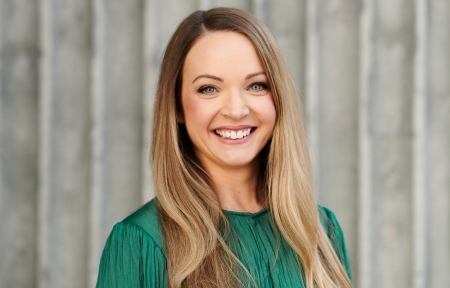
Linda is considered to be an expert in self-storage. After a decade of valuing self-storage assets across Australia and New Zealand, Linda now practices as a specialist self-storage sales broker. Linda is the Founder and Managing Director of Four Leaves, the largest self-storage sales agency within Australasia, with sales in excess of $350 million negotiated over the past 18 months. Prior to founding Four Leaves, Linda was the ANZ Divisional Director of self-storage at Cushman & Wakefield and previously at Urbis. Welcome Linda.
Linda: Thanks for having me, Richard.
Richard: Linda, in today’s episode, we’re going to talk about all things self-storage in Australia. I can’t wait to actually get into this episode because it is – in my mind anyway, an emerging asset class, but it’s growing very quickly. There certainly seems to be very strong fundamentals and a need for it, but I have known you for a while now and we’ve shared insights on the sector. I do find it fascinating, but I’m keen to actually learn about it and then obviously what’s happening in it. And I think, there’s a growing need for storage, it’s timely and very relevant.
In terms of the layouts or the contents for today’s session, I’m keen to also learn from you a little bit more about Four Leaves Property, why it was founded, what the growth plans are, and then really dive into what self-storage is, what’s happening on the ground.
As we were discussing offline, we’ll talk about potentially some of the things that are happening overseas that could be brought across to Australia. And then we’ll close off with ideas and a bit of a thought leadership discussion as to the Government and how the Government can support the sector.
Before we get into that though, as I do with everyone, we do have an icebreaker question. The icebreaker question is as follows: You spent time working across both Australia and New Zealand. What’s the most memorable Kiwi destination or experience you’d recommend to anyone who hasn’t been?
Linda: Yes, great question. I love New Zealand and I’m very fortunate to work across both countries. Look, there’s a fair few. Queenstown is amazing. So Queenstown has all of the ski elements, but also the adrenaline elements. So bungee jumping in Queenstown is quite unique. But there’s a little place that most people won’t know about and it’s the Waitomo Caves on the North Island. And you can abseil into this cave, spend most of the day in the cave exploring. And there’s glow worms in there. So the whole cave lights up with these little worms and it’s really incredible. So New Zealand, there’s plenty to do over there and anyone that hasn’t been there, get over there quickly.
Richard: That sounds absolutely incredible. All right. I’ll have to put that on my to-do list.
Okay. Let’s get into the first part of the session. Four Leaves Property. Obviously, you’ve worked in the sector for a number of years now. Who or what is Four Leaves Property? Why was it founded?
Linda: So, Four Leaves, clearly my accent gives away that I’m Irish, and it was the decision to call the business Four Leaves was to capture the four different segments of the market or the four different disciplines that we practice in. So traditionally we were a group of valuers. And moving into the sales space because there was a lack of sales agencies or really knowledgeable sales agencies in self-storage. And that was the opportunity. So keeping some of the valuations, moving into sales, staying with some advisory and we also have this fourth leaf growth. Understanding value, we’re able to advise owners on how they can get more from them, from their assets. And the reason why we went that way about it was I didn’t actually think there would be enough sales to keep us in business, believe it or not, 18 months ago, getting close to two years ago now. And since then, it’s just been transaction after transaction. So very fortunate for the timing of the business. We specialise only in self-storage. It’s all we do day in, day out. It keeps us very busy. And the transactions piece of what we do is predominantly where we’re at now. It’s about 80% to 90% of our work is sales.
Richard: Look, I didn’t realise obviously that Four Leaves, a new part of it, with an educated guess as to part of why you’d called it that. Those four pillars or the Four Leaves, I think are actually very clever. I do recall before you actually started Four Leaves, chatting with you about the sector and I can’t believe it’s been 18 months. Congratulations. Obviously, you appear to be going from strength to strength and I, every now and then I see articles or work that you do and it’s very inspirational, I’ll be honest with you, so please keep going. That does tie into my next question about the growth plans for Four Leaves. What are your plans over the next couple of years?
Linda: You know, it’s funny, again, we didn’t realise how many transactions were going to occur since the business was founded. This year, we had a record year of transactions. We weren’t involved in them all, of course, but $1.36 billion, which is a huge number compared to $390 million last year. So at the moment, we’re just trying to keep up with all of the transactions that are occurring. And I’m really just trying to add as much value as we can. The sector is really stepping into its own space at the moment. And I guess I saw that happening, but not to the extent that it is actually occurring. And I really do think there’s a lot more growth to occur. So I think we’ll naturally grow with that.
We’re doing more and more with the big agencies to make sure that we still have an alliance with Cushman and Wakefield where some of our team previously worked. So we’ll probably step into that space more. We are a small brand, even though we’re very well known in storage, but the big agencies obviously with the bigger transactions bring a lot of value as well. So I imagine we’ll partner more and more. There will be bigger portfolios. There is more capital coming in. It’s quite phenomenal actually how much capital is coming into our space and how much capital is interested in Australia and New Zealand in storage. So to be able to manage that and to be able to work with those groups in the best way that we can, I see that we’ll partner more and we’ll grow together.
Richard: Gotcha. Self-storage. What is self-storage?
Linda: I think most people would have to ask that question. And I know before I got into the sector, I had to ask it myself to really understand what it is. So the concept of self-storage is that you are storing yourself, not yourself physically, but you’re the one doing the storing and there’s no access to the units. So effectively you’re renting space. You get, as a customer, you get full control over what you store. Obviously, they’re hoping it’s legal, but effectively you keep the key, you have control over the unit, and effectively the self-storage facility might have hundreds, in some cases, thousands of those units. So it’s individual storing goods. Sometimes they’re coming from a residential background, so a domestic user, and sometimes they’re coming from a business background. More often than not, it’s a residential use. So the traditional reasons to use storage are typically linked to the residential property market actually. Moving house, renovating, sometimes downsizing, going through a family split, going through a family merge, lifestyle changes, the working from home trends that really fuelled demand over the pandemic. But 80% to 90% of all customers are actually using it for an everyday use. So it’s quite a simple product that many people don’t think about until they’ve actually used it. And if you use it, you’re twice as likely to use it again. And that’s where the rise of self-storage has come from, really big uptake in usage and demand over the pandemic. Awareness grew, more people started to use it, more people are now using it again, and you’ve got demand growing and all of the supplies coming in to try keep up with demand. But really it’s only just happening in our country and that’s why we’re hearing so much about self-storage.
Richard: Gotcha. I did have the question about whether it was just limited to residential. I specialise in the Resi housing market. I can see a lot of people either moving into medium or high-density dwellings. Quite simply, probably have too many items. That’s probably a good thing, but there’s not enough space for the items. And I’ve seen the self-storage centres pop up and we’ve done some work together where we look at the apartment markets and often the self-storage seems to be able to track the location of the future supply of apartments because there’s that need obviously with apartments having just less storage. But it’s interesting to hear that it’s not just limited to residential and it actually goes into like the commercial business sectors. I think that’s probably, or I’d suspect it’s relevant is because then you could basically follow the development. Whatever real estate development there is, if there’s an overflow of need for storage, that’s obviously where the opportunity is created.
Linda: Absolutely. And we love the research that you do and we use that research and the research that we do for the association in picking up the trend and how strong the market is. Understanding where the high density, smaller housing is going gives us insight into where the most likely demand will be. And it’s not just apartments, in areas like Auckland and Sydney, and even Melbourne, where the housing lots have become smaller and smaller, there is an inherent need for ongoing storage to give those families or whoever’s living in those houses that additional space that they need. That’s actually a really good user because they’re long-term. They use it as an extension to the home, which is actually the number one reason to use storage in the US, which not to jump straight into how we compare, but it’s known that we’re about 15 to 20 years behind the asset class in the US. Their culture has evolved quite a lot to use storage more. And I recently visited the Vegas convention, all for work, of course, to understand exactly what’s been spoken about over there. And really they are using it as an extension of the family home and more and more individuals that have apartments are using it as an extension of their home. And that’s what’s driving demand over there. So understanding where the high rise residential is going is probably one of the most important fundamentals to understanding demand in major cities such as Melbourne. And how people are living, buying, renting, which is an interesting one to examine. And just in general, how people are using storage. Interestingly as well for us to go back to the US comparison, the Built to Rent sector or Multifamily – as it’s known over there has a really strong correlation with storage demand. We’re just starting to see that and likely to see more and more of that. And that’s why Melbourne is of interest at the moment, because we’re getting a lot of Built to Rent coming through.
Richard: Gotcha. Let’s take a step back. I’m keen to understand really the structure of the industry, particularly like who the owners are, are they institutional investors? You’ve made a comment that people rent space. Could they actually buy the space? So let’s start there. Owners, vendors and purchasers, you mentioned portfolios and then also the renting or buying. How does that all work?
Linda: So typically the facility, which is a going concern, so that’s an operating business within the real estate, which is why it’s so specialist because even as a Valuer you’re looking at business fundamentals and real estate fundamentals all captured in one. And as the going concern, the asset as we know it is the whole facility. So the individual units are not really available to sell, although there are options out there as the product continues to evolve. There are strata options out there, but that’s not necessarily tied to a business. So it’s separate to self-storage as we know it. Typically, the asset is owned by, was one of two, REIT, National Storage and Abacus, were the largest owners, the largest acquirers of assets. Kennards Self Storage, privately owned, has become a really big acquirer. And more recently, lot of private equity coming in. So all of those groups really want the whole facility and they want the business that’s attached to it. So they’re buying cashflow effectively. So it’s less about initial return, but more about how you can increase that cashflow. And that’s the beauty of storage. You’re not tied to a lease or several leases. You have hundreds, if not thousands of individual customers that can be charged a different price any day, really. So as your customers leave, they’re on month-to-month license arrangements and new customers come in. If demand is strong enough, you can charge that new customer really whatever you want, as long as they’re going to accept it. And that’s the beauty of it. And that’s why it’s such a popular asset class at the moment, because it’s not tied to CPI. It’s not tied to set fixed 3%, 4% annual increases. It’s actually outperformed most of the sectors because of the fact that we have more, I don’t want to say intelligent capital, but definitely more institutional capital coming in, operating them as really strong businesses, pushing the boundaries in terms of what they can achieve with those rates and therefore achieving phenomenal year on year revenue growth. That’s why it’s in the spotlight. If I was to give you an example, Melbourne and Sydney, about 80% growth in revenue since the pandemic. So over five years, Perth has been sort of 150% growth over that period. So you’re talking about a lot of growth. It’s now down to normalized growth, 8%, 10% per annum, which is still really strong. We see it stabilising about 3% to 4%, which is a lot less obviously, but there’s a few different reasons for that. But even if you’re outperforming the 3% to 4% and you’re sitting at 5% to 6%, that’s still really strong growth every year.
Richard: I’m just trying to get my head around that in compared to some of the other asset classes that I’ve looked at have emerged and that is extremely strong growth. Can I ask, do you have indicative yields for the property nerds like myself that would always want to know if you know what industrial yields are or office yields are or childcare yields, where does this sit roughly for the yields?
Linda: Sure. So I practice nationally and across New Zealand, but leaving New Zealand out for a second. If we look at the average cap rate across the market nationally, for a self-storage, you’re sitting about 5.75%. So that’s A grade, B grade, C grade across the market, Metro and regional. If you take the PCA (Property Countil of Australia) data and CIS (Construction Industry Scheme) data and overlay that. That’s about the same as where retail is currently. I think it’s 5.71%. Now 14 years ago, when I started looking at these trends, going back in time, retail was a 200 basis point spread between retail and self-storage. We’re now at the same level, which tells me that the asset class has actually matured to a level that’s acceptable and comparable with the traditional sector, such as retail. Office is a little bit softer for obvious reasons. And then industrial is somewhere in the low fives. I think it’s about 5.31%. So you would think that these alternative assets will give you stronger growth, but it’s actually not the case because there’s so much investment waiting to go into this sector. And our sector is really small. There’s only about 2,800 self-storage facilities across Australia. That’s every part of Australia, including regional, including the small ones that you find in the regional towns. That’s a very small number. There’s only a couple of hundred in Melbourne. So when you think of it that way, there’s a lot of capital trying to get really good assets. So the grab for those assets is obviously pretty strong and pushes down cap rates. Do I see that moving? Probably not. I actually think it’s really positive for our sector where the real benefit and where the real opportunity is, is that top line growing the revenue, keeping the operational costs tight and keeping the revenue growth strong.
Richard: Alright. You talk about operational costs. So we’ve got lots of line of sight on Built to Rent. For example, I can see the operational costs. What are the operational costs for self-storage? What are they?
Linda: Yeah. So it’s a very interesting question because they’re changing. So traditionally, staff was the most expensive operational cost. And now we’ve got models that have come in that actually remove staff from the facility. So staff would be a really meaty one. Marketing, it’s a highly competitive sector. So there’s quite a big chunk of the operational costs is spent on marketing and actually attracting the customer or competing for the customer more so. And then you’ve got the expenses that you would imagine in any business, which would cover insurance, holding costs, electricity. So it is a business. It’s an operational business with the lights on. It is, I guess it’s often compared to a hotel without the CapEx.
Richard: Gotcha. Ok.
Linda: So you do have to run it. There’s staff involved. There are, there’s electricity bills. There’s, as I mentioned, marketing is a really big one. So you have all of those nine items that you can’t do much about because it is an open-door operating business. The idea obviously is to try and keep them in line. Where the savings is, as I mentioned, it’s like a hotel without the CapEx. So you don’t need to redo the foyer. There’s no end of trip facilities like there is in an office. All you need to do is keep it looking really clean. Change the doors when somebody reverses into them or whatever the case may be. But typically that budget in the operation expenses is relatively low compared to other sectors. And that’s why a lot of investors like it because it’s almost, you can have a management company in place that will manage the facility for you and take care of the business for you so that you just get the net profit. And that is like a hotel and like a car park, but you don’t have to keep it as maintained as though as those assets. Another reason why it’s very popular.
Richard: Very interesting. The final question I’ve got, I suppose then… is the number of levels. As you’re talking, I know the names that pop into my head now as I’m in my mind driving around. I can see the different storage facilities. They’re obviously a number of multi-level ones. suppose my question to you is do they come in all shapes and sizes? Is it dictated by the build costs or the land values or what are you seeing in that space?
Linda: Yes. So it’s a changing trend. So we get to see everything from the container parks, usually in regional locations where it’s just see containers dropped down. Usually well presented, but that’s the type of product that they’re offering, right through to the A grade assets that are multi-level. I think we’re probably up to eight levels now, eight or nine levels being the tallest that I’m aware of. Maybe there’s more in planning that might stretch to 10. And the reason why, of course, they have to do that is to make it economical and stack up when the land is rising up so much in metro markets. It just makes sense to have multi-level facilities. The challenges are fire regulator, keeping fire at bay and also the loading. It’s 5kPa loading. It increases the cost a lot to be quite a high rise. There used to be a conception that most people wanted to store at ground level. So you know, ideally if there’s availability, you would drive in, unpack your goods and just walk up to the door. We call those units drive up units and they’re very popular. And outside the cities, most of the stock is actually that stock. We call them ranch facilities with drive up access. People love that. They can drive their car right up with their van or truck, whatever it is, and unload their goods. It’s very convenient. But now it’s harder to get that to stack up. So you have multi-level facilities with multiple lifts so that the customer’s not walking too long to get to their unit. And the most recent trend, which is quite an attractive trend, is a drive-through access. So the ground floor, which used to be actually the premium units because the ground level, now has a fairly large drive-through area where trucks and cars can drive into the facility and access the lifts under weather, out of the weather, and also a number, less of them, but a number of drive up units that command premium rates. That’s probably the A grade facility type that we’re seeing more and more of. And then just a lot of hoists to make sure that you don’t push your goods too far from corridor to corridor.
Richard: Very interesting. I’m going to throw a thought out there. Again, I’m still thinking this through, but I wouldn’t mind your views on this. As you know, the commercial office market has been fundamentally changed because of lockdowns working from home. And there’s a lot of B and C and D grade assets that are looking for a new use. Do you think self-storage could be a use or would that just not be financially viable? What do you think on that? About that?
Linda: No, it’s a great question. And there are groups looking at it. And I think areas like St. Kilda Road here in Melbourne, we are seeing more and more groups, you know, test that concept. Abacus is just actually, a Storage King. We’ll open up one soon on St. Kilda Road, which will be an interesting one. So it is happening. But it’s about getting the right building because loading is really important, obviously. You could have multiple trucks coming up to load and unload and there’s no scheduling that people will just arrive with the goods and you have to as a manager manage that. It’s not easy, but loading again, having that a 5kPa I think can be difficult in some of these buildings. So the theory works really well.
Car parks as well that’s been tested, but again, the same challenges access isn’t usually an issue, but height could be an issue and then loading again. Conversions are a really good way to get into the market and a really good way to grow a portfolio, but it has to be the right asset. But if I was to expand on that a little bit further, it also has to be the right sub-market. So we see a lot of people coming, they come to us and say, we want to do storage, we’ve got this surplus land or we have this whole building. And that’s not very considered supply because really you’re trying to push a round peg in a square hole, that the site hasn’t been chosen for storage. It’s really important to understand that storage is a convenience choice product usually. And you really have to understand the fundamentals of the catchment to make sure that there is one more demand than there is supply ideally, or at least enough likely to be future supply to absorb the demand. And secondly, what are the fundamentals of the demographic profile of that area? Are they using storage? Are they likely to need more storage? And we look at household income, age, what they’re working at even to determine the likely unit size that’s the most demand. There’s a lot of things that go on in that research to pre-empt population growth, obviously in high density residential, as we spoke about before, to pre-empt if there’s going to be more demand in that catchment. And that’s actually more important, I think, than the choosing the actual size because you have to get that right to make sure that you’re going to be profitable.
Richard: It’s actually a lot, I supposed to make sense of. Not really thought of that, but what you’ve just described is a lot of the work I do in residential in terms of understanding the catchment and the propensity to pay.
Advertisement: Quickly interrupting this episode to tell you about Charter Keck Cramer. Charter Keck Cramer is an independent property advisory firm with offices in Melbourne, Sydney, Brisbane and the Gold Coast. Through our collaboration with Andersen Global, we connect with over 18,000 professionals around the world.
We provide strategic property advisory services spanning multiple market sectors. Our advisory team provides specialist advice across transaction management, tenant representation and lease negotiation, strategic portfolio reviews, development advisory and more.
Complementing this, the Capital division advises on structured property partnerships connecting property owners and tier one developers. Our extensive valuations coverage includes Prestige Residential and Greenfield Development Markets, together with all Commercial asset classes.
Quantity surveying is at the core of the Project’s team, ensuring cost control from planning through to post-construction. And our Research team delivers property data and analytics across the residential living sector, along with expertise in strategic land use planning and urban economics.
With specialists across a diversity of sectors, Charter Keck Cramer is your trusted property advisor. Now let’s get back into the episode.
Richard: Let’s jump into the next question or theme that I wanted to talk about. And you basically made a comment about this last year just being the biggest year for capital transactions to date. So I suppose my question to you is what’s happening on the ground? Obviously the market’s moving very quickly. It’s had very strong growth. You feel that it’s starting to normalise, but what’s, I suppose what’s happening on the ground or what has happened over the last number of months?
Linda: So there was a lot of capital waiting to get in. So since the pandemic, and this is global, it’s not unique to Australia. Fee rate growth has been so strong. I mentioned, 80% fee rate growth in some markets, which is really strong. That’s unlikely to continue. That was very much just a perfect storm of what happened over COVID because you had a lot of people that were unsure of their plans that needed something to go and hold or needed to step back into to mom and dad’s house and store their goods or whatever the case may be, were planning on traveling. That couldn’t happen. Planning on selling their house, sold, couldn’t buy, whatever the case may be. There was so many different things that was fuelling demand at that stage. And also the awareness piece came out really strong, which the Self-Storage Association does really well. How do we make sure that everybody knows that this product is available for these everyday reasons, but then to take that a step further for businesses that may not be wanting to sign a new lease or are fearful of what their business future looks like. Can they have a low cost, lower risk solution in storage? But it’s harder to get across the business community. So that was done really well in, in over the pandemic. And then there was a lot of talk in the papers about how much growth was happening and it just became known that storage had been performing, outperforming most of the traditional sectors. So you had a lot of capital that wanted to get in, but the opportunities were almost closed. There isn’t that many assets, as I mentioned, about half of these assets in the market are owned by groups that are already very happy to be in them. So investment groups that have pushed very hard or private equity that has been in there for a long time. So that then limits the amount of assets that are available. But because there was so much interest in it, and because we had some big transactions, so we had Blackstone enter the market and more recently BlackRock from the US. Obviously that shines a light on the sector. And I think that’s even brought more attention to our sector. We had a two takeover bids, one in 2020 for National Storage and one recently for Abacus. There’s a lot of activity coming in and that really shines a further light on the sector.
And then there’s been some really big prices offered for portfolios, which is why that $1.36 billion number got up as high as it is. A billion of that was portfolios, actually three portfolios, believe it or not. That was a huge record. The average every year is about somewhere between $300 million and $400 million in transactions because the assets themselves are not huge. We’re not talking about shopping centres or office buildings. We’re talking about $10 million to $20 million on average. So you have to get a lot of them sold before you get to $350 million. So I guess it’s just awareness, interest, a lot of capital looking for a better place to invest and then timing as well. So we have this silver tsunami as I like to call it because storage has been around since the 1980s. There are family businesses that are at that age ready to get out and that played a part in some of those transactions as well. Will it continue? I don’t think we’ve got enough assets to sell, to be honest, to keep up this trend, but we’re likely to see that capital needs to grow and we’re likely to see a lot more activity, more transactions, probably individually over portfolios and more development.
Richard: Great. Let’s talk about the locations or geographies. Is there, when you’ve done your own research and analysis, are there areas where there is more or less activity and I suppose why.
Linda: Yeah, that is a good question. Everybody loves Sydney because we’re playing at a global stage and the capital coming out of the US and Asia really like to have Sydney in their portfolio. However, Sydney is a very hard market to buy in if anyone’s ever tried to do work in Sydney, hard to build in, hard to buy in, and it’s expensive. It’s constrained. It’s land constrained. But it’s where everybody wants to be.
Second to that, Brisbane has been so popular in the movement of people as we like to term it. One of the things that I, why I love storage so much is because it’s more than an asset class. You really have to watch how people behave. And that was the most interesting part for me when I got into it. So I started talking a lot about demand drivers and what’s going to fuel demand in the future. And because of that, we research, we do a lot of work with the association on this, how people are moving and we call it movement of people and interstate migration is a big part of that. So immigration, skilled migrants, ideally an interstate migration. Sydney’s always been a loser for interstate migration, historically to Melbourne, but now to Brisbane. And Melbourne’s actually losing a population to Brisbane as well. And it’s not just the weather, unfortunately, it’s probably the tax structure.
Richard: Yes, we’ll get onto that, but keep going.
Linda: So when you’ve got lot of people moving into an area, obviously you’ve got a higher need for housing and you’ve got a really strong need for storage because even when they’re coming in from overseas, you’re unlikely to find the place that you’re going to stay in straight away. And most people will choose to store whilst they’re finding that option, which drives storage demand very strongly. So Brisbane’s actually one to watch. But Brisbane, because National Storage is based in Brisbane, they’re the largest owner investor in storage across Australasia. They’re based in Brisbane and I think that’s why there’s naturally always been more supply in Brisbane. That’s not necessarily a bad thing because it’s good supply. It’s on the highways. So if anyone that’s driven around Brisbane will see storage facilities pretty much everywhere. And that makes it, makes people more aware of the, I suppose it’s there as a choice and as a solution. So you get more demand in those areas. So it’s interesting, the tax structure, if we were to tip into that, we have a lot of overseas capital. I’m now selling nationally and it’s very hard to sell in Melbourne because we have this structure that doesn’t really allow for overseas investors. The foreign investor surcharge because it’s an operating business, there’s nobody to pass on taxes to. So you’re getting hit with the land tax surcharge, obviously stamp duty surcharge, payroll tax. There’s so many different taxes that are just coming into Melbourne and it’s really difficult. Unless you’re local, but there’s no major owner here in Melbourne. In fact, they’ve all sold out already and probably for those reasons too. So it’s becoming harder to do business in Melbourne. Brisbane actually has those charges as well, but not the same scale in some respect or should say Queensland. Sydney, not as bad. Western Australia, very popular. South Australia doesn’t even have stamp duty on some commercial transactions. So that, I suppose, dictates where that capital ends up. And it’s unfortunate at the moment, not in Melbourne.
Richard: I wanted to talk to you about planning and then taxes, but let’s flip it around because obviously, and you’ve probably answered a lot of it for taxes. I was not actually aware of a number of those taxes that you’ve mentioned. Obviously, I live and breathe in the residential space, so I know what applies or what does not. But just listening to what you’ve said, clearly there’s an enormous amount of taxes that apply to this sector. Do you think it was deliberately applied or is it, I suppose what I’m trying to get at, is it appropriately defined from a planning perspective or a tax perspective so that it’s taxed appropriately. And why I that is because I had a guest on the podcast a couple of weeks ago that was talking about student accommodation versus private rental accommodation. And there’s legislation that covers both. And there’s just a fundamental misunderstanding of student accommodation versus private rental. So as it applies to self-storage, is it taxed and looked at like any other like industrial or commercial asset class or? Cause some of those taxes that you’ve mentioned, it just seems to be catching everything.
Linda: The big thing is it’s a business and a real estate and that’s why you’re getting so many of the taxes or surcharges, I guess they are more so now. And I don’t think, and those who have to create these policies, I mean, they couldn’t possibly be across all the sectors and the implications of the taxes on various asset classes. And I’d like to think the structure will be different, but we also have to understand that our sector is very unique. What it’s doing though is it’s pushing out investment. So there’s very little investment coming into Melbourne. Melbourne is a great city. I live in Melbourne. I’ve often lived in different states and I always come back to Melbourne because I love it. And I do think that we have a very strong future here. But now that I’m selling assets, it is that little bit harder to sell to foreign investors. And unfortunately, most of the groups are backed by foreign capital. So it does limit the achievable price. We’re still getting really strong results in Melbourne and we’re likely to continue to get really strong results in Melbourne. And that’s to do with the demand drivers being really strong for Melbourne. So again, population growth, interstate migration, really healthy. And we have, we need more housing, which unfortunately there’s a lack of housing and actually drives storage usage as well. So it’s all pointing in the right direction. Storage rental rates growth here is still very strong compared to other states. So it’s not all bad. There’s still a very positive story in Melbourne, but the tax structure makes it difficult for the assets to appeal to everyone. And I think we’re missing out on that investment in probably more ways than other asset classes, because it’s not just one tax that they have to consider. It’s multiple taxes when they acquire, when they hold, when they run the business. Almost all of them are higher than other states. There’s other options out there. There’s also the perception of Melbourne now as well on the global stage. So the sovereign risk seems to be perceived as being higher. When you’re in Melbourne, you don’t really feel it as much, but because again, I operate nationally, discussions with other investors that may be even local to Australia see Melbourne as having more risk because you don’t know when the policy is going to change and how they’re going to be treated if we still have this debt that continues. So it’s, I’m sure it’ll get better, but at the moment it makes it a little bit harder.
Richard: I just want to unpack that a little bit more because I think it’s so important we try and understand this. I get told this all the time about Melbourne’s un-investable, there’s such bad taxes and charges, yet I often look at my own transactions or stuff in residential and they’re still occurring. So I just want to go back to your point. You said it’s harder, but they’re still occurring. So is that actually what’s happening? Some of it is getting deterred, but it’s still occurring. It’s… what I’m really trying to tease out because often you read, especially the media headlines and it’s all or nothing. All the capital’s going away, it’s the end of the world. So what you’re basically saying is that when you line up, or when investors line up, Sydney, Melbourne, Brisbane, there’s more hurdles and higher taxes. And so there are opportunities that are being lost. But what you’re also saying is that you’ve observed that the fundamentals are still strong enough to still entice people to come in? Is that what I’m hearing?
Linda: Yeah, it’s a pretty good wrap up. The investor pool or the buyer pool is there’s less, I guess there’s less of that sort of interest, that really strong interest. There’s still enough for competition. So we still get the deals done. So there’s still, it’s a really healthy market. I don’t want to say that it’s not because it is. The top line is really positive. So the, it’s still a steady growth and that’s propped up by, as I mentioned, mostly movement of people, so interstate and skilled migrants coming in, which is really good. But it’s harder, it’s harder and there’s less, there are less purchasers. Having just spent the last week in Sydney, the self-storage convention and speaking to people that are very focused on Sydney and we’ve got opportunities in Melbourne at the moment. Sydney people have this sort of, “Oh Melbourne, we just don’t know what’s coming next”. So we’re probably less, less interested. What have you got in Brisbane, for example. So that’s, I think it’s perception. lot of it is perception and the papers don’t help, and the papers sometimes paint stuff too positively as well. In other ways, storage is, everyone’s still talking about these. 20%, 30%, 40% per annum growth, which just doesn’t exist. It’s not normal. That was a really good run. We’re now back to stabilised growth, which is maybe 10%, maybe 8%, maybe 6%, as I said before. So you have to watch what goes out in the press because I think it does get taken as gospel. But I think a lot of it, unfortunately, is perception.
Richard: Why I’m sticking on that point is I’m seeing the exact same thing happen in the residential space. And I do a lot of presentations often to capital and to boards. And some of them have turned around and they’ve in many respects said that I’m effectively being too optimistic because they literally have the blanket view of going, it’s un-investable. I’ve gone, I don’t believe that’s un-investable, but there are more barriers. And I end up pulling down stats and showing them that, there are transactions, there are investments. It’s compared to 10 years ago, it’s completely different because your comments about, for example, South Australia, not having a lot of those taxes, that’s what Melbourne used to be like. And it was unbelievably attractive to do business. And what I’m fixating on right now is that I don’t think it’s one end of the spectrum or the other. There could be a lot that could be improved and the Government certainly needs to be aware and I do harp on about this. But I’m also confused because there’s a bunch of very positive stats also coming through. And I worry that the Government picks up just on the positive stats and certain parts the industry picks up on the negative stats. And in many respects, they’re both right, but they’re both wrong. And perhaps it lands somewhere in the middle. I’ve been, I’ve really struggled the last couple of weeks where sentiment has dropped dramatically in Melbourne. And a lot of the people I talk to here are basically going, it’s un-investable. And I argue with them and they’ve often said, I know you’re being too optimistic. I don’t believe that I am. I see enough transactions to support my views. But what I’ve heard from you, it seems like it’s probably the same in self-storage. Now, it’s not a get out of jail card for the Government. They know what they need to do in terms of tools and levers to pull to actually incentivise the market. Clearly what I’m hearing from you and it’s the same with residential, the demand fundamentals are very strong, very attractive. Capital wants to be here. They just need the right tax settings.
Can we jump into planning? I’m interested to know, is planning adequately defining and respecting self-storage? Again, when I look at co-living, PBSA (Purpose-Built Student Accommodation), Built to Rent, it’s not adequately defined and it’s actually causing a lot of complexity, uncertainty, and again, capital is struggling to price the risk. So self-storage, how is planning? Is it a hindrance? Is it not an issue? What are you seeing?
Linda: Like everything, depends on the council that you’re working with. If I was to again, switch it to a comparative state, Sydney is very difficult in a planning respect, but there are ways of getting around it. And if you’re, if you’re using the right advisors and you know what you’re doing, you can get a very good outcome in Sydney, but it might take a long time to get there. Melbourne, I think storage is being accepted actually as a good land use. It’s relatively sensitive so you can have it next to residential.
Richard: I was going to ask about that. Yep.
Linda: Because it’s a quiet use. There’s people that are coming in and out, but it’s not a lot of traffic. The Self-Storage Association is very good at helping educate traffic requirements, packing requirements and things that can help with those applications. And that’s because they learned over time to really educate those that are deciding whether it’s fee cash or the local council on the actual impact of self-storage as a land use. So I think it’s actually probably okay in Victoria in that respect.
The buildings are getting really attractive as well, which is a nice thing. And that’s necessary because they are big boxes. And if you’re going to have them next to residential areas, you do want them to be less than an eyesore. The only flip I’d say on that is that because they’re so competitive and the bigger the brand, the more they like their brand awareness. They’re getting really bright.
Richard: Oh really? Okay.
Linda: They’re very bright and lit up. You’re like, well, but that’s really good for awareness, from a sector perspective, we like that sort of style asset because it raises awareness. So from a planning perspective, I think every state has the challenges. And if you had a developer here, they would say absolutely opposite to what I’m saying and saying that it’s too hard. But I actually see a lot of really good designs popping up. And I think it’s a really good use of commercial land, industrial land. And in some instances even some mixed use and hire activity centres on land, for example, because it does bring employment and it is relatively – I won’t say sensitive, but it doesn’t bring a whole lot of negativity to where it’s going, particularly if it’s adjoining residential development.
Richard: That makes sense. Talk to me about construction costs. Again, in pretty much every sector, and I’m sure this is the same, they’ve dramatically increased. And so is that impacting the viability of projects in certain areas or is it perhaps like the Greenfield market a few years ago where even though building costs were dramatically increasing, buyers ability or capacity to pay was sufficient to absorb those increases, whereas in the apartment market, it wasn’t the case and projects just became unviable. So what is happening in this space in terms of the costs of construction and the regulation? Again, I can always draw parallels to residential and it’s over-regulated and it’s extremely inefficient and productive. In that space, why I say this is because I speak with my colleagues in industrial. And they say it’s quite different because it’s simpler, maybe that’s wrong word, but it’s simpler, easier to build industrial. So what’s happening with self-storage and the building costs?
Linda: I think it’s somewhere in the middle actually is the answer to this. And the thing about self-storage is you might build it, but you don’t actually get your revenue for several years. So what I mean by that is if you buy a site, it takes you 12 months to get planning. It takes you 12 months to build it. So you’re 24 months in. You might still have another four or five years of revenue ramp up after that. It’s a very long project. And when you get to the end of that, your cash flow is really solid and that’s a great thing. But because it takes so long, we’ve yet to see the implications of people making decisions based upon achievable revenue that may not exist. And I think that actually is the biggest risk of what we’re seeing at the moment. New groups coming in that maybe don’t understand storage as well as they could, or having to use higher fee rates that are currently achievable in the market to make it stack up. And we all know you can put anything into a feaso (feasibility analysis). That hasn’t come true yet because we haven’t had enough time to see that. So the established groups and the groups that have a lot of data within their own portfolio to understand what’s happening and then they understand normalised growth rates and they can pre-empt where they are, or try and predict I guess you’d say, where the fee rate will end up once they reach that area at that time in the market, they’re probably going to be okay. Some groups that are a little bit ambitious on where the fee rate could be, I see some risk with those groups. DS (Development Soft) expenses or construction costs have gone up quite a lot. Does the fee rate, will it take away that? I don’t think so, because we’re also getting a lot more supplies. To put that into context, prior to the pandemic, prior to storage being really popular, we had a rate of growth in the market of about 2% to 3% of net storage areas. So net storage areas, like net lettable area, but just using storage units. So 2% to 3% per annum growth in Melbourne, Sydney, Brisbane. Last year it was 7%, slightly to about 8% next year. So the rate of growth in supply coming in has gotten three times as much. And in that, using that sort of knowledge and knowing that we’re going to have more supply, are we going to have enough demand to absorb that supply at a rate that will allow us to have such strong fee rate growth going forward? Now, we’re hopeful that it will, but if we keep adding supply at that rate, it’s going to be super competitive and there’s a good chance that those fee rates won’t be able to absorb the cost of the build. But for us, it’s slower equation. We just don’t know until we get there.
Now, previously, because I’m often accused of being very negative in this topic, but previously when fee rate growth slowed down, something has happened that has fuelled demand, the pandemic, nobody saw that one coming and it really fuelled demand. Storage is counter-cyclical. When something negative happens, usually storage demand increases, surprisingly, because most people lean on it at times of crisis. So it actually is defensive because of that. And that’s why, another reason why people like it so much. So look, anyone’s guess where the future is, but I just be really careful of forecasting rates that are too far beyond where they currently are, because we don’t know how the population is going behave to a lot more storage options in the market.
Richard: Gotcha. Look, just listening to what you said about the return versus the risk, it does seem to be very attractive. It does seem to be more of a defensive asset class, similar to Build to Rent in terms of longer term cash flow. But the yields look really great. I can see why capital is really attracted to it.
Look, I know we’ve got through a lot today, I suppose my final question for you is, do you have any final thoughts or is there anything else you’d actually like the industry to know about self-storage?
Linda: Self-storage is a great asset class. It’s really interesting when you look into it. When I first got into it, I thought, oh, wow, it’s going to be looking at the same thing all day every day, but it’s never like that because every catchment is different. And if you understand the fundamentals of that catchment, that’s a really interesting equation to look at why are people using more storage in this particular area. And I love that sort of working out that sort of human behaviour, what’s happening in that market. That’s driving demand so strong compared to other markets. But also that information needs to be researched. So I guess if I had a parting toast, it would be to do that research and to make sure that where you are putting more supply is actually considered supply because it is a really healthy asset class and it can continue in that way if everybody does it in a considered fashion. And I always say this as well, not all supply is bad supply. So we really want more main road supply where everyone can see what storage is and big interesting buildings where the average person driving by can think, oh, what’s that? Ah, storage, okay. And start to use it. That’s what we want. We want more penetration. And that is increasing thankfully every year. But building storage without doing the research, that’s where I see the biggest risk. And we really do want our asset class to continue to be as strong as it is. And hopefully that can continue. So there’s plenty of options, obviously come to us if you want advice, there are other advisors out there. We do look at that in minute detail for somebody who wants to get into the sector or build a new site. And then you’re armed with all the information. And I always say, take us as what you’re almost guaranteed to get and hope for better. That’ll be great. It’s a great result for everybody. But those doing that work shouldn’t be overlooked. And it’s so vital for the future of our sector.
Richard: Well, look, thank you very much for coming on the show. That was absolutely fantastic. It’s amazing how all the different real estate asset classes fit together. Similarities, yet differences. And I’ve underestimated this asset class. I’ve learned a lot about chatting to yourself and reading some of your articles, but it’s remarkable and I can really see why capital would be very positive about us or at least to have as part of its portfolio. I’m very, and I’ll watch with interest as the sector continues to grow. But thanks very much again for coming on.
Linda: Thanks Richard. It’s been great.
Hi everyone, I hope that you enjoyed the episode with Linda today. As usual, I found the episodes on the alternative asset classes absolutely fascinating because you can draw a lot of similarities between the more mature mainstream real estate asset classes and the emerging asset classes and certainly gives you a bit of an insight into the futures to where these asset classes might go in terms of either maturity or scale.
The three things I took away from today and I’d encourage you to do the same are as follows. The research that I do in the residential space certainly shows whether it’s medium or high density dwellings, that there’s a lack of storage and that’s just the demand from residential, leaving aside the demand created from the other asset classes, for example, commercial and just listening to Linda talk about the fact that there just seems to be a fundamental shortage of storage and I can’t see that changing. In fact, I can only just see it getting more and more pronounced. I thought it was also very interesting to talk with her and I did speak a little bit with her after the show. We actually spoke about detached housing and the fact that storage is even an extension of the family home for detached housing. So I think that there’s opportunities, whether it’s in the greenfield markets or even in the regions to do storage as well as obviously in the areas where we’re having greater levels of density. So that was the first point.
The second point I thought that was very interesting was her comments about storage being a defensive or countercyclical asset class. She made the comments about when people are worried about their finances or sentiment is very weak, they become much more conservative, which is certainly the case. And you look at places like Melbourne right now where people are very worried and sentiment is very weak. And this is a type of asset class that as she was saying is countercyclical, defensive. And then when her comments about the cap rates at about 5.75%. Again, when you line that up with some of the either alternate or emerging asset classes, the risk return actually does seem to be incredibly attractive. And so perhaps there’s an opportunity for various developers or investors to consider exploring this space in a little bit more detail.
The final points I wanted to make, and it is coming up time and time again on the episodes that I speak with anyone. We would have heard in the last episode with Anouk and obviously this one with Linda about just Melbourne, and the issues with taxes and charges, how it’s impacting the industry, the level of sovereign risk or perceived sovereign risk in Melbourne. And consistently hear it, obviously it’s a very common theme and I’m not disputing that at all. What I endeavoured to do in the episode today with Linda and I certainly do it when I have the privilege to do the local workshop and board meetings with various investors or developers, is just I wanted to try and challenge that thinking a little bit because I don’t think it’s at one extreme or the other in the sense that it’s completely un-investable or completely investable, if that makes sense. Because you keep hearing these headlines going, it’s completely written off. I don’t believe that that’s the case. And she also made it quite clear that there are transactions occurring that’s just that much more difficult. And as I’ve said for a while now, please, our Government listeners, you do need to just continue to hear whether it’s self-storage, PBSA, BTR (Built to Rent), BTS (Built to Sell), commercial office, we’ve heard it consistently with the taxes and charges, which make up a significant amount of the overall development costs that do need to be looked into. Victorian Government’s doing very well with planning and some of the other sectors, but really, taxes and charges do need to be looked at. We need to be sending the correct market signals to local, but particularly foreign capital, that it is welcome in Australia. That is really the only way we’re going to be able to build out the quantum of supply, whether it’s storage, as you heard from today’s session, or PBSA as you heard from the last session or residential housing. And I’d ask the Government to continue to consider this. There’s a number of tools and levers they can pull and really now’s the time to start pulling them. Anyway, that’s all I wanted to say from today. I hope you have a good rest of the week.
Thank you very much for listening to this podcast. If you enjoyed the episode, please make sure to subscribe to our podcast so you never miss an episode as we’ve got more exciting content coming. We’d love to hear your thoughts. Please leave us a review on either Spotify or Apple Podcasts as it really helps us to grow. Also, follow us on Instagram @PreciselyProperty for updates and join the conversation. If you’d like to get in touch with us, subscribe to our newsletter via our website, charterkc.com.au or writes to us at podcast@charterkc.com.au. Lastly, if you found this episode interesting, please share it with your friends and family. Thank you again for listening and stay tuned for our next episode dropping in two weeks’ time, plus bonus content also on the horizon.
Disclaimer: Precisely Property is a podcast presented by Charter Keck Cramer and is for educational purposes only. Nothing in this podcast should be taken as investment or financial advice. Please engage the services of an appropriate professional advisor to provide advice suitable to your personal circumstances. The views expressed by our podcast guests may not represent those of Charter Keck Cramer.