This episode was recorded on the land of the Wurundjeri people of the Kulin Nation. We pay our respects to their elders, past, present and future.
Richard: Hello and welcome to another episode of Precisely Property. I’m your host, Richard Temlett. I’m excited to have you with us today. If you’re here for the first time, thank you for joining us. I encourage you to listen to our previous episodes, where we discuss all things property with a focus on dynamic discussions with industry leaders. In this episode, we’ll be talking with Belinda Dennett of Data Centres Australia. So, sit back, relax, and let’s get started.
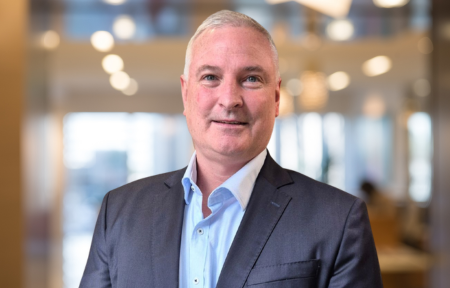
Belinda is a highly respected public policy specialist with more than 20 years’ experience at the forefront of Australia’s digital economy and technology ecosystem. She’s chief executive officer of Data Centers Australia, the peak body for data centres and the AI infrastructure sector in Australia. Belinda was previously head of government relations at Air Trunk and earlier spent more than a decade leading Microsoft’s Australian corporate affairs and policy team. Belinda is a former federal ministerial advisor with a focus on digital economy policy. She has qualifications in law and business.
Welcome, Belinda.
Belinda: Thanks, Richard. It’s great to be here.
Richard: Belinda, in today’s episode, as we’re discussing about offline, we’re going to be talking about all things data centres in Australia. And there’s a number of our listeners, whether they’re government decision makers or policy makers, developers, as well as financiers that are very interested to learn about data centres. We’re basically gonna do an education 101 piece about data centres, where the activity is, what some of the metrics are, and then also talk about what governments needs to know, just because I think it’s a really opportune time to educate everyone as to the opportunity for data centres, but particularly data centres in Australia. Before we get into that, though, I do have an icebreaker question, and the icebreaker question is as follows. What’s your favourite breakthrough in technology and why?
Belinda: Good question. I think for me the arrival of online banking. I think that was such a game changer both at a personal level but also for the broader economy. I’m old enough to remember when teachers at school would rush off at lunchtime on a Friday to get money out of the bank, banks closed at 4pm, they weren’t open on the weekends. If you hadn’t got your money out, you didn’t have money for the weekend. When you think about now online banking really puts you in control of your own finances, the ability to move money around, the ability to pay bills when it suits you, the ability to transact even though you haven’t rushed to the bank at four o’clock on a Friday to get cash out. And then when I think about that in the context of what I do now, online banking is enabled by data centres, by a digital economy that’s driven by twenty four seven facilities, that are always on, always available to support those actions. And as I said, I just think the impact on people at the people level, but also on our economy, it means we’re trading twenty seven. And so both of those things for me has always been kind of that aha moment that that’s what this is. This is what this brings to us as a society.
Richard: Gotcha. Well, thank you for that. Before we get into the actual main piece of the show, I am interested to understand who Data Centres Australia is. So was hoping you could please just educate both myself and I suppose the audience on who Data Centres is.
Belinda: Data Centres Australia was established in November last year. So, we are four months old as the peak body representing data centre operators in Australia. We currently have our members represent 86% of capacity in Australia. And then we have a lot of the supply chain that supports the data centre ecosystem.
Richard: Gotcha. All right. Well, congratulations. Four months old, but certainly probably much like the, the sector is actually growing very quickly. And I’ve seen some of the articles and insights that you’ve put out and it’s absolutely fascinating. And that’s part of the reason why I wanted you on the show today, because there’s an enormous education piece that everyone needs to get their heads around. So, let’s jump into the main body of the show and let’s start really with, you know, education 101 in terms of data centres what are data centres?
Belinda: Data centres are purpose-built facilities that host the compute, the computers that run all the digital processes, store the data, process the data for our modern economy. As we were just talking then about banking, when you think that’s really happened for every aspect of our economy, we’ve moved it online. In COVID, we saw our social lives move online. What enables that is the data centre. Prior to data centres, we ran those computers in basements of buildings, not purpose built facilities that were not secure, used 67% more energy and couldn’t do the really high level transactions processing that we’re doing today when you think about artificial intelligence. So, the important thing to think about, think I was reflecting at an event last week, it was a big forum just on data centres. And because there’s so much interest in this sector, people have started to lose sight of data centres are really just part of that enabling infrastructure. Critical infrastructure that run all the important services. Whether it’s emergency response, whether it’s flight controls, public transport, banking, online shopping, business transactions, email services, all rely on a data centre. But data centres don’t exist just to be data centres. They’re part of that tech stack and enabling infrastructure.
Richard: Very interesting. I want to go a little bit deeper on that. As we were preparing for the show, we had a bit of a discussion about how how the industry and I suppose government should actually view the sector. And I still think that currently a lot of people would be viewing it through the lens of it being real estate. But as we were talking offline, arguably or should properly actually be viewed as infrastructure. Is that what your thinking is?
Belinda: Yes, certainly. And certainly, it is legislated as critical infrastructure.
Richard: Okay
Belinda: Under the Sochi Act. So, one of the 11 sectors that are deemed critical infrastructure. When you think about, you know, we’re having conversations with the government at the moment about supply and diesel supply. You know, data centres have a 99.49 % guaranteed uptime. They run 24-7. They can’t go down. We’ve seen where part of the tech stack supply chain’s been interrupted, if you remember the CrowdStrike outage, which wasn’t a data centre, but how much of the economy was impacted by that. That’s how we operate now. So data centres are absolutely critical infrastructure. They run our energy systems, they run our water systems, they run our security systems. So yes, absolutely they’re infrastructure and they are critical infrastructure.
Richard: That’s very interesting. As you’re talking, I realize really the only one I know of critical infrastructure is hospitals. But as I think it through now, you’re absolutely right. Unfortunately, I’m sad to our lives would probably stop if this critical infrastructure was disrupted. And I think that’s really important just for some of our listeners to be aware of. It is critical infrastructure. Certainly, I was aware that it had to be running 24-7. And increasingly we’re reliant on it, both from a security perspective, but also actually just making sure that it is, we’re online 24-7. I did have a couple of questions about the stats. I jumped on your website. I must admit, it’s doing some of the research beforehand. How big is the sector? How big could it potentially be? Where are some of the locations that have had the most activity?
Belinda: I think it’s really important to put the Australian environment into perspective of what a lot of people are reading about in the U.S. and a lot of the headlines that we’re starting to see around the data centre sector are being conflated with what’s happening in the U.S. So the U.S. has 5,400 data centres. We measure data centres in megawatts or gigawatts as capacity. The US has around 54 gigawatts of capacity. In contrast, Australia has around 250 data centres and 1.4 gigawatts of capacity. So, it’s significantly smaller than the US. Now that means a couple of things. One is there is capacity to grow. Secondly, we’re not seeing some of the problems and the headlines that are coming from the US, including because we don’t have the same regulatory framework. So, in Australia, the growth has been modest, but it is certainly growing over the last 12 to 24 months. And we’re seeing that everywhere. One, because of the continued uptake of cloud services, this shift from the on-premise in the basement compute into data centres, and then the uptake of AI, which is really fuelling that growth. The second thing that’s happening is as the US meets constraints, particularly around energy, because of that 54 gigawatts, the big global tech companies are looking for other markets. Asia is the fastest growing region in terms of uptake of digital services, digital transformation. When you think of Some economies really going through that big burst, Australia is the fourth highest user of Anthropics ClaudeAI. So, Australians are big adopters and users of AI, particularly in our business sector. So Australia is a really attractive market. We’ve got availability of land, which is an advantage over many of our Asian neighbours. We’ve got stable political environment. We’re a Five Eyes security partner to the US. And the thing that I think is really attractive is the availability of renewable energy. So, most tech companies, the customers of data centres have 2030 net zero ambitions. Our data centre operators here in Australia really are focused on sustainability. In fact, as I was saying before, data centres are driven by the fact they’re 67% more energy efficient. They’re driven by that efficiency. So, the use of renewable energy, the availability of renewable energy is really attractive. It’s also a challenge because we’re going through this energy transition at the same time as we’ve got the growth in data centres and that makes it a little bit messy, but we can do it. And as I said before that growth trajectory compared to the US is quite modest.
And this is probably the core message of data centres, Australia, there’s a lot of hype in this market. I think as you were saying before, thinking about it as a property play has driven a lot of speculation in the market. And so, when you look at the pipeline, there’s a lot of stuff in there that will probably never get built. And we talk, talk about phantom demand. So, if you look at the pipeline, it’s 20 gigawatts. If you look at what’s real, you know, people that have got planning approval, people that have got capital, people that have built a data centre before, that have got construction companies engaged. It’s much smaller and we look like we will double our capacity between 2025 and 2030. So, five year doubling of the existing capacity is nothing like what we’re seeing in the US.
Richard: Gotcha. All right. A couple of questions there. I made some notes as we were talking. I know our investors would be very interested to know the scale of, suppose, the investable universe. And I know on your website, you did have a figure, indicative, i’m assuming, where we could get to by 2030. What is that figure out of interest?
Belinda: So this was done back in 2024. And we think it’s probably conservative now, just on the scale of how much things are changing and how quickly it’s changing. So that was $26 billion by 2030. And that’s sort of, you know, that was going to data centre operators and asking them directly like what, what is in their pipeline. There’s been other estimates out that, has that closer to 35, $40 billion.
Richard: Ok wow,
Belinda: But it’s, it’s significant. And yes, the rate of change is, it’s the fastest growing AI is fastest growing technology we’ve ever seen. AI needs data centre capacity. So that rate of change is just, something that. no one’s ever contemplated before and I don’t think is slowing at any point soon.
Richard: Look, I agree with you. On the one hand, AI excites me, but it also terrifies me. And I suppose it’s probably fear of the unknown, but also trying to use it or in the world of data centres, it’s really to accommodate it. I have a question about the different geographies or locations and I try not to keep the show about Melbourne versus Sydney. Whilst I’m based in Melbourne, I do an enormous amount of work in Sydney. In a number of the markets that I study, Sydney seems to be the most mature market. Often investment happens there first. I think it’s because especially overseas capital just views it as, it’s almost, it’s a global international city like London, New York, Hong Kong, Tokyo. And I’ve seen that there seems to be an enormous amount of activity in New South Wales. But increasingly I am seeing a lot of activity in Victoria. And I’m interested to know if that’s the case both. Melbourne and Sydney and then I was reading on I think it was on your website also Canberra and Perth seems to be getting activity. But my question more for you is the first one is Sydney still the hub? But also is is what’s happening in Victoria? We’ve seen these good announcements whether it’s locally or even regionally is the government actually expediting and helping planning and perhaps sending the right market signals for investments to to come into Victoria? Because I’ve seen some of these announcements and I’m curious to know what your views are and I suppose your views are of that. So let’s start with Sydney and then we’ll get into Melbourne or Victoria.
Belinda: So 96 % of data centre capacity in Australia is in Sydney and Melbourne. They are the two hotspots and that’s really driven by where customers are. So, we think business customers, end users really clustered around those two cities. Sydney has been the forward leaning market. It’s hard to talk about numbers of data centres. That doesn’t really make sense because we talk about incapacity and capacity, you know, lots of different sizes of the 252 data centres I talk about. 66 of those are less than one megawatt. They’re very small when you think about the scale of what we’re building today. But Sydney has 870 megawatts of operational capacity and Melbourne is about half that at 40 megawatts. But we’re seeing Melbourne really grow and attract a lot of the big investment at the moment. And I think there’s two things at play. The first one is energy is the constraint. So, where you can get energy. A data centre operator needs a couple of things to sign a customer. They need planning approval. They need to know they’ve got guaranteed energy. At the moment, that’s slow in Australia and that’s because traditionally the distributors that guarantee the energy availability can’t do that unless they know that they’ve got the transmission coming through substations. The growth has been so rapid that substations in the areas we’re building aren’t being upgraded quickly enough to allow the capacity to come through. So, energy is the constraint and Victoria has probably got a little bit more capacity than Sydney at the moment. Having said that, they are both highly attractive and we keep urging people not to think this is a state of origin play, which we’re very good at in Australia, because Australia is competing with the rest of Asia and the rest of the world. And that’s the global race. We actually think it’s unhelpful, the sort of state rivalry. The thing that… data centre operators rely on is speed to market. How quickly can we build and be operational because that’s what customers are demanding. That’s what we’ve been urging all levels of government. We have to be able to do this permitting more quickly, not less rigorously, but more quickly. And so, we’ve seen, certainly Victoria take up that challenge and our meeting there, they have a pretty good process. The development facilitation program that the state government runs is actually best practice. They’ve got case workers who understand data centres who work with our operators closely that can unblock challenges because when you go to planning approval for a data centre, there’s many agencies involved, there’s the different utilities and so you need a coordinating function to help you through all that if it’s sort of left to the operator. You know, you’ve got to get one little thing ticked off through the Department of Transport who is not dealing with data centres every day that can just delay you for months and months and months. So having the team within Vest Victoria who really push that through is really incredibly helpful. We’ve been urging New South Wales to look at that and see if they could do something similar. At the moment, that’s not happening and New South Wales process has been incredibly slow and frustrating for our members.
Richard: Gotcha. Thank you for that. I had spoken to various clients and they mentioned the direct facilitation program. I do a lot of it in the resi space and it has been well received by the industry. And I’m glad to see that that seems to be, it’s certainly that’s confirmed by the feedback from some of our clients in terms of getting faster planning.
Advertisement: Quickly interrupting this episode to tell you about Charter Keck Cramer. Charter Keck Cramer is an independent property advisory firm with offices in Melbourne, Sydney, Brisbane, and the Gold Coast. Through our collaboration with Anderson Global, we connect with over 18,000 professionals around the world. We provide strategic property advisory services spanning multiple market sectors. Our advisory team provides specialist advice across transaction management, tenant representation and lease negotiation, strategic portfolio of reviews, development advisory and more. Complementing this, the Capital Division advises on structured property partnerships connecting property owners and tier one developers. Our extensive valuations coverage includes Prestige residential, and Greenfield Development Markets, together with all commercial asset classes. Quantity surveying is at the core of the project’s team, ensuring cost control from planning through to post-construction. And our research team delivers property data and analytics across the residential living sector, along with expertise in strategic land use planning and urban economics. With specialists across a diversity of sectors, Charter Keck Cramer is your trusted property advisor. Now let’s get back into the episode.
Richard: Are there taxes and charges that are attracting investment or deterring investment in the data centre world? I certainly can speak for that in the residential world. Is there anything there that’s actually, or that needs to probably occur to make it more attractive?
Belinda: So when you look globally, certainly we keep talking about the global race and there really is a race for countries to attract this investment. The size of the investment is around a trillion dollars in artificial investment infrastructure. And so, there’s a lot of countries offering very attractive incentives. One of the things we’re keen to sort of shine a light on is the fact that Australia doesn’t offer incentives to build here. And it’s actually worked quite well for us. Again, if you’re looking at what’s happening in the U.S., there’s been a huge lot of community backlash to data centre operators and developers. And you’ve seen the companies come out recently and say, you know what, we’re going to pay our taxes. And for me, that’s quite remarkable. And everyone’s applauded. I think, my goodness, like data centre operators in Australia have always paid their own ways. They’ve always contributed to the taxes that support the communities they’re building in. And I think that’s a good thing. It’s a good thing that we’re not given shortcuts. We have a very rigorous process. We’re not driving up household energy bills because data centres pay their own way. We pay for our connections 100% upfront. We pay for the augmentation. We paid for the upstream transmission and we’re not asking for tax incentives. I think one thing that we do need is more clarity around taxation. You know, there’s been a little bit of noise in the media lately about, you know, some , questions over how the tax office is thinking about data centres. So, uncertainty is very unhelpful. And that’s the thing we would ask for is, is clarity and certainty, but not looking for incentives or tax breaks.
Richard: That is extremely refreshing to hear because almost every other sector that I’ve looked at, we keep banging on about tax breaks and incentives and how it’s impacting the costs of delivery. So, it’s very refreshing to hear that. I did have a couple of questions, but I’ll come back to them because I’m getting the cart head of the horse. I’d like to talk to you a little bit more about the key metrics of data centres because I think our listeners are very well versed in retail or residential or commercial market metrics. And the metrics I mean are things like rents or prices or yields. But when I’ve done a bit of research, it really, and you started touching on this, data centres do require energy or electricity and then also water. I’m keen to just understand, then also you said that they measured quite differently in terms of megawatts and so forth. Let’s talk a little bit more about that, if that’s all right in terms of, and let’s start with water actually. What’s the water for? How much is required?
Belinda: So compute in data centres, like any electrical device produces heat. So, think about your phone gets hot when you’re using it, your laptop gets warm. Data centres are producing heat and that heat needs to be rejected out of the building to ensure the temperature stays at a optimal operating temperature so the compute keeps running. It comes down to how you do that in a building, how you cool the building if you like. And what our operators use is a range of different cooling systems. Sometimes that’s just air rejection. And you’ll use fans to push the hot air out, bring cool air in. And it’s actually one of Melbourne’s great advantages. We cool off overnight. We can use, in fact, some of our members say 95% of the time they can use air cooling, which uses no water.
During warmer periods of summer, evaporative cooling might be used or chillers might be used with refrigerant cooling. So, it’s very dependent on external temperatures. You’re getting that heat out. How do you get cool air in? And so it’s the evaporative cooling that uses water.
Richard: Gotcha. Okay.
Belinda: But it’s very modest amount of water. We keep hearing these. And again, I think this is coming from the US headlines, which again, different environmental factors, different scale, different regulatory schemes. So it’s 0.04 % of Australia’s water use is used by data centres. Public swimming pools use seven times more water than data centres. It’s moderate. What our operators want to do is use non-potable water sources, recycled water, raw water, recycled industrial water. All of those things are possible, but we need governments to meet us halfway, need infrastructure available to do that. And that’s stuff we’re working through at the moment.
Richard: Sure. Well, I must admit, I read all the media headlines. I certainly take a critical view and I don’t believe everything that I’ve read. But even myself, I read that and I really thought that we were almost going to go into a drought because data centres are going to take all the water. I didn’t suspect that that was the case, but it’s nice to actually get some stats from you. And I think your swimming pool analogy of comparison is actually very powerful. So, I hope people that are listening do keep that in mind because you’re right, I have seen some of those headlines and I’ve gone, this just doesn’t really make sense as to the water consumption. What about electricity? Is that, what role does that play?
Belinda: So, as you know, any electrical device computer requires energy. And when you’re taking that, as we talked about before, you’re taking that out of businesses where that energy you set on the business energy bill. And we don’t count that. It’s like an invisible load. If you can add that all up, the number would be much bigger. When we put it in a data centre, it’s quite visible. We measure data centre capacity in megawatts, which is an energy term. So that conflates things. Now that’s not to say they don’t use energy. They do that. That’s how we run the modern economy that we have. So that’s the critical bottleneck, I guess, for all countries of how we, with the growth and the capacity of data centres, we need more energy. We need firm energy, so it needs to be available 24-7. We need clean energy because we need to decarbonize our economy. And we need affordable energy. And they’re the three things that will attract where this infrastructure goes. I think what’s really interesting, so renewable energy is fantastic and that’s one of the big opportunities for Australia. But we spill five to seven gigawatts of renewable energy because we’re not capturing that, we’re not storing that, we’re not firming that. And so, people talk a lot about we need more generation, we need more generation. What we actually need is more firming, battery storage, more transmission, so that we can capture that energy that we’re already generating.
Richard: Gotcha, okay. Before we get onto, I suppose, the role of governments, because I’m keen to work with you on that and understand what they’re doing right and doing wrong. I did have a question for you and it relates to the Docklands in Melbourne. Been wondering for a while now with what’s happening with the commercial office markets and working from home and even the residential housing markets and whether people want to live in apartments and the cost of construction. Obviously, Docklands is on the water. Do you think that there’s a role that maybe data centres could actually be, could plan be delivered in that location? Just I’m interested to know there’s, there’s obviously land seems to be in good locations. And I’m just wondering, is that something that the government could consider?
Belinda: It’s an interesting one. So we do have there is one of our members has a data centre down in that space that was built one of the very early ones many years ago. Data centres build in industrial land, so zoned industrial spaces. We wouldn’t want to be building in residential spaces. We already have conscious that there are parts where residential and industrial butt up against each other. But certainly from our perspective, building close to the urban fringe, building close to power availability, building close to supply chain, there’s a lot of equipment that comes in and out of data centres. So, building close to those, they’re kind of our, and close to our skilled workforce, they’re kind of our requirements of where you would build. If the government saw that as an opportunity and there’s land availability, I think, It’s certainly something operators would consider, but we’re, yes, we’re also conscious of community and where we build that we, we want to make sure we’re good neighbours and we go in with that.
Richard: Makes perfect sense. I know you’ve started to touch on the role of government, but is there anything else that you or your, your members would actually like governments at whatever level to be aware of in terms of setting up the industry in Australia for success?
Belinda: The government’s come a long way, both at state and federal level. 12 to 18 months ago, we weren’t getting the signals that they recognized that this was a really important part of the economy, of society. And that really changed. The treasurer, Jim Chalmers, you know, made it the number one issue at the economic roundtable last year. The signalling from Minister Charlton and Minister Ayres has been that we want this. When they first put out the AI plan discussion, data centres weren’t mentioned, infrastructure wasn’t mentioned. It now is kind of the thing they lead with. So we think that is one, a big turnaround, but two, critically important. That signalling, it matters to investors, it matters to customers that Australia wants that infrastructure here. The speed of permitting, we keep saying speed market is the number one thing on our wish list. We just need to do it quicker. And we’ve seen Victoria really now take that on board and their processes are working pretty well. And four months is, is really global best practice. So if they can stick with that, you know, they’re right up there. The New South Wales government also recognised that they were slow and they’ve introduced the Investment Delivery Authority. So we’re still hopeful that that will show itself to try and match that four month process. I think it’s still too early to tell. And then you probably would have noticed last week, we had both the federal government and the New South Wales government come out with some guidelines, expectations, whatever you want to call them. And whilst we recognize part of that is trying to signal to broader parts of the community that we won’t just accept any operator here, that there’s a requirement to have sustainability at the forefront, to make sure you’re looking at Australian jobs, to be ensuring you’re paying your own way. What we would say is that certainly our members that represent 86% of capacity are already doing that. There’s already legislation that ensures household power bills are not impacted that we pay our own way. We’re not calling for tax breaks. We don’t receive any tax breaks. Our members offset 70 % of their energy use through renewable energy. They’re signing long-term PPAs, power purchase agreements, to be an off taker for renewable energy projects that without that probably would never be built. So we see ourselves as playing a really important role in the energy transition. We call ourselves catalysts for that. There’s things that wouldn’t happen without the data centre market. So we, we, we welcome this opportunity to put our story forward, but part of us also thinks, you know, level expectation, sorry, federal expectations, state level guidelines. How does that land overseas? And does that just become, gosh, Australia gets a bit complicated. That’s concern.
Richard: Great. Thank you for that. Final question for today in terms of the outlook. data centres you know you started to answer that in terms of how big you think the investable universe is by 2030. Is there anything else you’d like to add in terms of your outlook for data centres in Australia?
Belinda: This is an awesome opportunity for Australia to transform its economy for our future prosperity. There’s a report that was put out last year that valued that at $142 billion per annum to the Australia’s economy. There’s not too often you get an opportunity like this to really be on the brink of something that could be so transformative to how we think about future prosperity. Having the infrastructure here means we pull through the jobs, we support the supply chain, we have more control over what artificial intelligence looks like, we make sure it’s aligned with our values, with our laws. I just think it’s an opportunity we can’t miss.
Richard: Great. Well, thank you very much for your very valuable time today. I thought it was a fantastic session. I will put links in the show notes to yourself and your colleague Tim, and then also your websites and the various articles. Listeners, please do reach out to Belinda if you’d like to chat with her, get pointed in the right direction. She’s certainly a wealth of knowledge when I’ve spoken to both her and Tim offline, certainly across everything that’s going on. And I certainly commend you guys for your really great work in the sector.
Belinda: Thanks Richard.
Richard: Thank you very much everyone.
Hi everyone, hope you enjoyed the episode today with Belinda. I found it absolutely insightful and very exciting just to talk about the scale of the opportunity ahead of us with respect to data centres. In terms of the three things that I’d like everyone to just take away with them from today’s session to think about in their daily lives are as follows.
The first point that Belinda made very well is that data centres are actually part of the tech stack. I think that’s really important to keep in mind and they certainly need to be viewed as critical infrastructure, both by policy and decision makers in the planning and the tax schemes, as well as by investors. I think that that’s really important because as she correctly said, a lot of people are viewing data centres as a property play rather than as critical infrastructure in a real estate play. The returns are very different. The risk profile is also very different. And it’s important that that actually gets fully understood and appropriately legislated for particularly in the planning system as we move forward. Speaking of planning, I was very pleased to hear that Victoria has actually best practice planning and particularly the direct facilitation program, how well that’s doing for data centres. I just encourage our government listeners to be reminded that when there is planning certainty, both with respect to timing as well as outcomes, it helps investors price the risk and make investment and development decisions that much more accurately, that much more comfortably. And it sends the correct signals to the market to proceed. And on the one hand, we have the residential housing market that’s really struggling with lot of mixed messages and uncertainty, even though certainly planning is improving in this space. But on the other hand, then we have data centres in the same state and having quite different planning guidelines and much more certainty and you can just see the very positive impact that is occurring and I’ll encourage everyone to listen to that and as it applies to Australia as Belinda correctly said It’s actually not a state-by-state race but it’s basically Australia verse some of the overseas countries to get this critical infrastructure up and running.
Finally then I do a lot of work looking at both structural versus the cyclical changes and I suppose just to remind everyone, really cyclical changes basically mean that’s the market dynamics or market pricing or rinse or so forth will revert to long-term averages or back to the equilibrium whereas structural changes are basically permanent changes that are here to stay. And It’s very important to understand whether certain asset classes are emerging as a result of cyclical or structural changes. In my mind, data centres certainly are emerging as a result of structural changes. The way we’re living our lives with AI and just how much AI and cloud computing and all things just online are really regulating our lives. And clearly we need data centres, which as Belinda correctly said, are part of a tech stack just to support our way of living. This is a structural change. And again, I say that to remind both investors about that really the tailwinds of the investment universe and thematic for data centres, but also for governments at all levels to just be reminded that this segment of the real estate market or the infrastructure market, depending on how you view it, is emerging based on structural changes. It is here to stay. It’s only going to become more pronounced. And I would strongly recommend that decision makers welcome this investment into Australia.
It certainly can play a very positive role and in my mind, most likely plays a positive role for places like Victoria and New South Wales as the mining boom has played for WA or Queensland. And I’m convinced that moving forward, this could be a significant source of revenue if taxed correctly and if the correct market signals are sent to industry and not go as far as even saying it may be one of the ways that Victoria can actually put itself out of the significant levels of debt that it is in is by using some of the available land in the States to entice significant levels of capital investments into Melbourne and Victoria with respect to the data centres. And perhaps a vision and a goal for the government is to make Melbourne and Victoria the data centre capital of the Asia Pacific region. That could be something quite fantastic and novel. Anyway, that’s enough from me. I hope that you have a wonderful rest of day. Thank you very much for listening to this podcast.
Thank you very much for listening to this podcast. If you enjoyed the episode, please make sure to subscribe to our podcast so you never miss an episode as we’ve got more exciting content coming. We’d love to hear your thoughts. Please leave us a review on either Spotify or Apple podcasts as it really helps us to grow. Also, follow us on Instagram @preciselyproperty for updates and join the conversation. If you’d like to get in touch with us, subscribe to our newsletter via our website, charterkc.com.au or write to us at podcast at charterkc.com.au.
Lastly, if you found this episode interesting, please share it with your friends and family. Thank you again for listening and stay tuned for our next episode dropping in two weeks’ time, plus bonus content also on the horizon.
Disclaimer: Precisely Property is a podcast presented by Charter Keck Cramer and is for educational purposes only. Nothing in this podcast should be taken as investment or financial advice. Please engage the services of an appropriate professional advisor to provide advice suitable to your personal circumstances. The views expressed by our podcast guests may not represent those of Charter Keck Cramer.