This episode was recorded on the land of the Wurundjeri people of the Kulin Nation. We pay our respects to their elders, past, present and future.
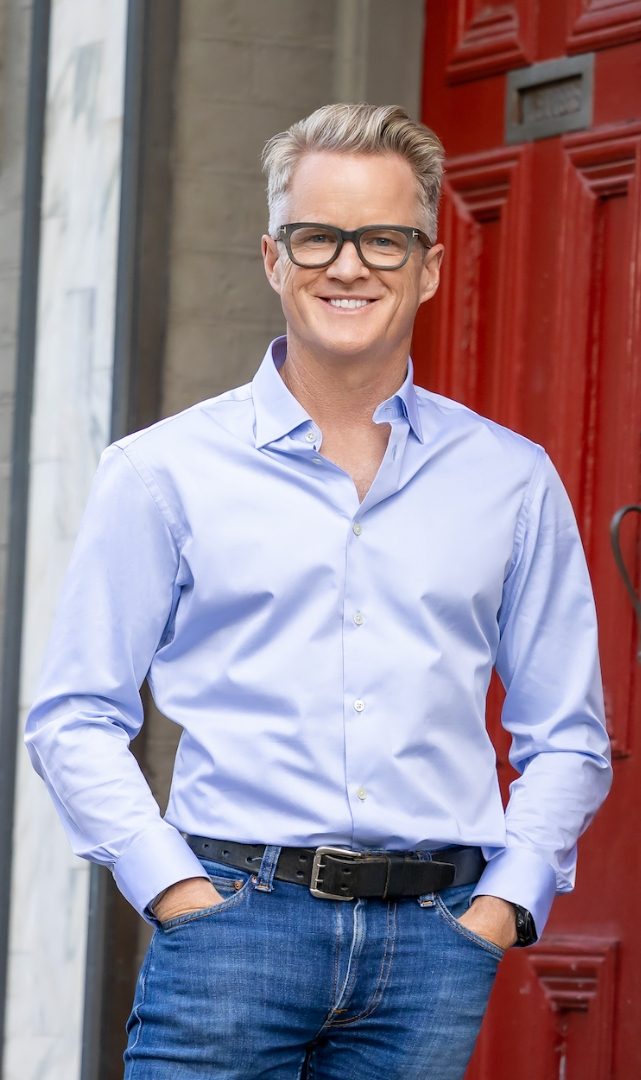
Richard: Hello and welcome to another episode of Precisely Property. I’m your host Richard Temlett, I’m excited to have you with us today.
If you’re here for the first time, thank you for joining us. I encourage you to listen to our previous episodes where we discuss all things property, with a focus on dynamic discussions with industry leaders. In this episode, we’ll be talking about sustainable Build to Rent with Rory Hunter of Model. So, sit back, relax, and let’s get started.
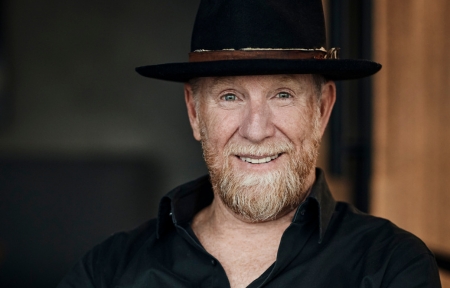
Rory is the founder and CEO of multiple award-winning sustainable property companies. An entrepreneur with a focus on decarbonising the future, his latest venture, Model is a purpose-first, Built to Rent development group that dismantles the rental norms through the pillars of climate action, community building and design innovation inspired by the world’s finest hotels. Rory is a Harvard Business School graduate, World Economic Forum Young Global Leader, Global Board Member of the Young Presidents’ Organisation Sports and Outdoors Network, member of the Property Council of Australia’s Sustainable Development Committee, and has also spoken at prominent conferences, including the G20 and Davos. Welcome Rory.
Rory: Hey Richard.
Richard: Rory, that’s an absolutely amazing bio by the way. In today’s episode, we’re going to talk about sustainable BTR and a recent report that you’ve had commissioned. Off record, I’ve certainly been aware of it, and I cannot wait to unpack a lot of that because I genuinely feel that both finance and the industry need to know a lot of what those findings are to educate everyone and move the industry forward.
Before we get into the show though, I do have an icebreaker question. What’s the most inspiring place you’ve ever travelled to and how did it shape your outlook?
Rory: One of the many adventures I’ve been fortunate enough to have is when I was 19, I went to Nepal. So, it was a long time ago, 30 odd years ago, and basically jumped on a plane, landed in Kathmandu and thought, where do I go from here? I ended up finding a guide and spent about five weeks in the Himalayas doing the Annapurna Himal. It was a wonderful adventure, and it was a beautiful part of the world. But I think what really changed me was I grew up in a very loving family, but quite an atheist family. And so, this is the first time that I was able to engage with my spiritual side. And that became, I guess, a part of me that opened up increasingly over the years.
Richard: Fantastic. I’ll certainly be talking to you probably off record about that. I’m very interested to learn a bit more. In terms of the show outline today, I’m keen to learn a little bit more about you. I mean, your bio is pretty incredible, so learning a little bit more about that. I’m obviously then keen to learn a bit more about Model. I’ve been watching, I read a lot of the articles with interest, but I think the industry would be very keen to know who you are, what you’re up to. And then also we’ll jump into sustainable BTR and that research report that was recently prepared. I suppose for the first part of today, your background and your experience in the industry and where you are, how you’ve ended up where you are now.
Rory: I used to say I was an accidental hotelier. I certainly didn’t set out to build a hotel company. I was in my 20s, traveling to New York. I was working for an advertising agency and found myself in Indochina and exploring. I met this guy whose dad was a fisherman, and he told me these stories of this archipelago off the coast, which sounded a little bit too good to be true. Virgin rainforest, white sandy beaches, oceans teeming with fish. And this is back in the day when you could do a Google search and get zero results. A long time, but Google Earth had just launched. And so, I looked at satellite imagery, and it looked remarkable. I was able to charter a fishing boat and spent two weeks circumnavigating the archipelago. And it was just as beautiful, if not more beautiful than was shared. There were three villages out there, but zero tourism infrastructure. And on the last day I stopped in at this little island. There were a couple of families that were living there. They wanted to move back to the mainland, and I guess I was the first foreigner that they’d ever met. They asked me if I wanted to buy their island for $15,000. And it was one of those crazy moments that you know you’ll never get again. And so, I agreed on the spot, put my New York plans on hold and that became the catalyst for what was the adventure of a lifetime.
Richard: That’s absolutely brilliant. Just so I understand, because I do have a note here. Is this the Song Saa Private Island?
Rory: Yeah.
Richard: Or a different one? Because there’s an amazing article and we’ll certainly put links to that. I’m interested to know what you did there because that looks absolutely incredible.
Rory: Yeah. When I bought it, it wasn’t in great shape. So, the first part of that journey was the rehabilitation of the island and through that process, working with local villages, but primarily women. The men were either fishing, gambling or hungover. And that process allowed me to understand the challenges that they were facing from lack of access to healthcare, lack of access to education. Fishing was really the only job, and it was the quintessential poverty trap. And so, what I could see was this unique opportunity to be able to weave those community interests alongside our business, our guests, our investors. And then at the same time, I could see the damage that was happening to the marine ecosystem through overfishing, destructive fishing. I did lot of free diving and would often experience the reverberations of dynamite fishing.
It was this unique moment where it was the first island to ever be developed in the country’s history. We were the first people to ever own an island. And at one level, there was this opportunity to be able to look at those different stakeholders’ interests and weave them in alongside ours. And then at the other side, was a deep sense of responsibility to be able to lead by example, and I knew that whatever would come after this would be influenced by what we did. It was a unique opportunity where there was this blank canvas to be able to explore, experiment, and look at different types of development.
So, that was the starting point of how that broader philosophy evolved. From there, I went on to build what is regularly voted and awarded one of the top 10 resorts in the world. I think because of the impact that we had, we created the first ever Marine Reserve in the country’s history, then partnered with Prince Albert of Monaco to turn that into a 400 square kilometre Marine National Park. We put in place solid waste management systems into the nearby villages. We built and operated primary schools in partnership with the Ministry of Education. We would do annual medical missions with the Ministry of Health and bring over 20 doctors from the US and do these missions to the outlying villages. It was this unique circumstance where that platform of property could then be leveraged to drive positive change.
Richard: I could almost do an entire episode on this. The only question I have before we jump into the main part of the episode is have you always been entrepreneurial? You were given this amazing opportunity, you’ve obviously taken it. You’ve hustled, you’ve got the finance in place. Absolutely incredible. I suppose my question to you is have you always had that streak in you, because that is a story that you can’t make up. It’s just incredible.
Rory: Yeah, it was quite an adventure. I have, for whatever reason, I was born to look at ideas and try to bring them to life and from selling eggs out the front of our family farm when I was five.
Richard: I was going to ask about that. Because there’s, what’s that saying where people, if they start a little business at school, they’re going to…I think Richard Branson was saying that, and as you were describing, I thought, got a Richard Branson in the room here. So, you did that during your formative years, selling eggs and making a profit and things like that.
Rory: Yeah, lots of little different business ideas throughout school. Then I started a beer importation company when I was fresh out of high school, I started various other businesses throughout my early 20s, but this was probably the one that was the most significant.
Richard: Okay. I’ve set the scene because our listeners won’t know, but you very kindly came to one of our State of the Apartment Market events. I remember it very well. It was in Sydney, and you came up to me, and you said, I want to learn more about BTR. I’m learning about it, but I want to learn more about it. The questions that you were asking me, it stuck in my mind. I thought this is someone I need to remain in contact with because I just couldn’t put my finger on it. But I now understand that entrepreneurial-ship or that streak that you have. And I’ll congratulate you because you’re obviously very modest. Where that was a couple of years ago to where you are now is absolutely incredible. So, let’s talk about Model. What is Model? What are your ambitions with Model?
Rory: I sold Song Saa about four years ago, took a year off, sailed home from Hong Kong during COVID and really needed a chance to decompress. You know, it had been 16 years and it’s a really big chapter. Once my brain started to work again, I very quickly gravitated to Build to Rent. I think as an entrepreneur, I resonated with the early-stage nature of the sector. I was fascinated by the reality that was information symmetry, which never happens in property. It certainly doesn’t happen in institutional grade property. And so, the fact that an entrepreneur could have the same calibre of ideas as a Mirvac or a Lendlease was something I thought was worthwhile exploring.
The Opco/Propco structure of the sector was one I resonated with again from the hotel world and knew that the real value creation was in the platform in the Opco.
The third piece, and this is probably where I’m a little bit different from some of the other Build to Rent groups is I noticed a real corollary with that little Island in Cambodia 20 years ago and what I thought we could do with the build form. When you think about alignment of interests and even misalignment of interests, historically that’s been a real issue in residential development in Australia, because you look at the building through the lens of cost. What’s right for the developer, the investor, is often not right for the end user, the apartment purchaser, the tenant, the environment, the community, the government, etc. So, what I thought was once you start owning these things long-term, you can then look at the building through a different lens, one of value. What I wanted to do was to make sure I was right, or at least my ideas were thought through.
And so, I did a real deep dive. I mapped out all of the leaders in the aspects of the supply chain from finance to building to QS, you name it. The likes of GBCA, the CEFC, Multiplex, so on and so forth, and interviewed all of their senior team and then synthesised their ideas into a white paper, which is called Tomorrow’s Too Late, and published that about 20 months ago. In essence, it’s part manifesto, but it’s a framework for how we can lead the decarbonisation of the built form. And so, that was the birth of Model nearly two years ago now. I guess when I looked at it, not only was my own thinking around how can we use these platforms to drive more positive change and create a great outcome for our residents, for the local community, for the environment, but also drive returns for our investors I guess was the starting point, but what I knew was that we could push the envelope a little bit further than everybody else. And what I mean by that is everybody else had to take their ideas through investment committees and through complex board structures and stakeholders. Whereas we could push the envelope from a sustainability standpoint in ways that others couldn’t. If I was right in my thinking, and if all of the insights and the white paper were true, that would be a way that we can not only differentiate our platform and compete with the others, because there were plenty of people that were prepared to die on the hill of affordability, but nobody that was prepared to die on the hill of sustainability. It was this top right-hand quadrant, which was clear, it was blank space. That seemed like a really fertile territory for us to explore.
From that point of view of positioning ourselves as a more pioneering side of sustainability that then allowed us to get out there and to have a narrative, to have a platform, to be able to start bringing the ideas and the thinking in that white paper to life. And so that started with building an internal team, putting in place all the right external team with tier one consultants, builders, etc. Building a pipeline, starting here in Melbourne, our first two assets are…
Richard: You’ve got two assets? Could you bring the listeners up to speed with the assets that you’ve got what you’re doing with capital raising and so forth.
Rory: First two projects are in Abbotsford. One is right next to Victoria Park station. So that’ll be the tallest mass timber building in Melbourne. The other one is an adaptive reuse of the old Schweppes Cordial Factory.
Richard: Oh yes. Okay.
Rory: So very different buildings, but the same ethos. Everything is looking at reductions in embodied carbon of minimum 50%. Using mass timber throughout a passive house certified apartments. These would be the first large scale passive house certified apartments in Australia, six-star, green star rating, and looking at these buildings as being global exemplars, not just great from an Australian standpoint, but real global pioneers.
Advertisement: Quickly interrupting this episode to tell you about Charter Keck Cramer. Charter Keck Cramer is an independent property advisory firm with offices in Melbourne, Sydney, Brisbane, and the Gold Coast. Through our collaboration with Andersen Global, we connect with over 18,000 professionals around the world.
We provide strategic property advisory services spanning multiple market sectors. Our advisory team provides specialist advice across transaction management, tenant representation and lease negotiation, strategic portfolio reviews, development advisory and more. Complementing this, the capital division advises on structured property partnerships connecting property owners and tier one developers.
Our extensive valuations coverage includes prestige residential and greenfield development markets, together with all commercial asset classes. Quantity surveying is at the core of the project’s team, ensuring cost control from planning through to post-construction. And our research team delivers property data and analytics across the residential living sector, along with expertise in strategic land use planning and urban economics.
With specialists across a diversity of sectors, Charter Keck Cramer is your trusted property advisor. Now let’s get back into the episode.
Richard: Let’s jump into… you commissioned a report. I remember it was a few years ago now and we were talking about sustainability and whether there was any evidence for residential and particularly BTR. Can you talk a little bit about the report, what the findings were, I’m in your hands?
Rory: Yeah. So, the white paper was very qualitative. It didn’t have any numbers, it just felt like the right thing to do. And when we did our initial equity sounding late last year, a lot of the institutions that we were speaking to came back and said, for us to be able to get this through our IC, we need clear quantitative data. And so, we commissioned JLL to do a global body of work to look at assets in more established markets for multifamily and Build to Rent, but also sustainability. So, places like Norway, Finland, Sweden, Germany, the UK, and then parts of the US, and our thinking was that they would outperform. If you point to office, commercial office as a harbinger of what we think is to come. If you looked at those buildings as a developer 10, 20 years ago through that lens of cost, you may have a stranded asset now. They’re not likely to be leased, their cap rate is going to be high. People won’t want to buy them or own them and so there’s a real issue.
But if you invested through that lens of value, then you’ve got a great asset and it’s outperforming. If you think that’s the trend that’s happening in real estate across the board, we then say none of this has ever been done before in Australia. Nobody’s built these sorts of buildings. We can do a whole bunch of benchmarking for our base case, but for us to be able to demonstrate this premium that we think is there and the ability for our assets to outperform our competitors and to be able to deliver alpha return for our investors, we need to be able to look at why this worked elsewhere and how, and the results were fascinating. We have the executive summary on our website. And if anybody wants to have a look at the 80-page detailed report, we’re happy to share it, the details are on our website to reach out.
Richard: That’s very kind of you. Thank you.
Rory: Well, our view is that this has the ability to really change capital allocation across housing throughout Australia, because ultimately this is a better way to make money. And even more simplistically, it’s a better way to mitigate risk. And what I mean by that is we’re building for a very different future. If we think about our 2030 commitments, we’re debating the 2035 commitments at the moment. We’ve made a commitment to net zero by 2050 to be able to decarbonise our economy and this energy transition that’s underway. We can debate how quickly we get there, but it’s underway. Our buildings are going to be a key part of that. I just don’t think the market can get us there on its own and so it’s going to come through policy. It’s going to come through regulation. At the same time, whoever owns these assets, 10, 20, 30 years from now is going to want something that’s more resilient. And so that was the starting point.
And so, what we found was really fascinating in that there’s four key drivers within an underwrite and cost of construction. All those base pieces are what they are. And these are more expensive buildings to build by the way, but that piece is relatively straightforward. We then layer in our benchmark assumptions. So, looking at comps within Melbourne from rent to lease up to occupancy to terminal yield, OpEx, etc. You layer all that into an underwrite. What we’ve found is where the secret sauce is. And not just for us, I mean, for any developer out there, right? It’s not like this is unique. It’s just for the first time we can demonstrate this is a better way to make a return.
There’s a very clear rental premium of 5-10 % on these highly sustainable assets. There is a faster lease up because they’re more appealing. People want to live there over other locations. There’s a dramatic decrease in cost. Passive house certified buildings have a 50-70% reduction in your energy requirements for heating and cooling. One of the really interesting insights from the report was that for a two-bedroom apartment, it’s $1000 per annum saving. And so, these are cheaper for our tenants, they’re also cheaper for us, which means that goes straight through to our NOI. For every dollar saved, if it’s 4.25% cap rate, that’s a dramatic multiple on that dollar that saved on the valuation. But the rental premium, reduction in cost, faster lease up, but also a much higher occupancy because these are highly desirable places to live, they’re stickier, people want to stay there, you don’t have the same churn.
The fourth piece, which is probably the most controversial, but I think the most intuitive, is a compression in the terminal yield. There’s a huge debate at the moment around what is the terminal yield in Build to Rent? Everybody has their own perspectives in part, because they’re very sharp. And so, people are trying to get their heads around why is it 4.25% when nothing else is 4.25%. There’s a whole bunch of reasons for that and arguments for that. But if you look at these from the point of view of these are buildings that mitigate future risk. What we found is in other transactions, there’s a 10-60 basis point compression in that terminal yield. So, when you weave all of those into an underwrite, 5% increase in rent, slight reduction in OpEx, slight increase in occupancy and slight reduction in terminal yield, then you can add anywhere from 300-400 basis points on an equity IRR per annum.
Richard: Wow all right, a lot for me to process right now. I’m jumping out of my skin as I’m sure a lot of our listeners will be because these are a lot of the discussions that I’ve been having. The first one I had is with the revenue or the rent side of things. Are you basically…given we’re in a rental crisis and if there is already a premium rent and you’re saying that there’ll potentially be a higher or there is a higher premium. Are you convincing the renters that there’s a cost saving over time or how are you getting them into the building? Because I can understand they could go to the research that certainly we’ve done, and it is many for Build to Sell. If you have some of those sustainable features, buyers, especially the millennials go, yes, we love it, but we can’t afford $50,000 more. We just can’t do it. Is that happening? How are you overcoming that with BTR?
Rory: It’s not the same hurdle. If it’s 5% increase on $500 a week, $25 bucks. So, it’s not a huge delta. As you say, for the younger generation, they want to live in homes that reflect their values so there is a willingness to pay for that. In Build to Sell that absolute number’s huge, even though the ratio is quite small, when you’re renting, it’s not. It means it doesn’t become a huge barrier to entry.
I think the other piece is that there are cost savings and so that helps to offset a higher rent. The other piece is that these are healthier places to live. If you look at the research around passive house certification, there’s dramatic impacts to health. That comes from the fact that the buildings are airtight, all the air that flows through is highly filtered, which means that the air quality is really good. But it also means you don’t have any of those issues around stagnant air, mould, mildew and those sorts of challenges that you have in other buildings. But they’re also incredibly thermally efficient. They have to be, but also acoustically efficient. Very quiet, very peaceful. You walk into a passive house certified building of any kind, and you feel it straight away.
But the long-term impacts on your health from being able to breathe in clean air, particularly in times of high pollution, but to be able to have a great night’s sleep because it’s very peaceful in your apartment. These have cascading impacts throughout your broader health and wellness. Again, people find real value in that.
What we found globally is that there’s a compelling proposition that’s a win-win. From a developer standpoint, yes, you can charge a little bit more, but there’s value in it. People are prepared to pay more for that. And in exchange, they get a much better living experience, which is why these assets globally are so sticky.
Richard: As you’re talking, I’m just wondering…the thought that I’m having is right now with BTR emerging, do you think the industry is being too short sighted, just looking at the upfront costs? For example, you said the cost of construction or delivery are higher, and not giving enough weight to the longer-term benefits over the period of time that these tenants are occupying the dwelling. And basically, if that may not all be able to be quantified, although it sounds like you have started to quantify a lot of it, like your comments about people will live and follow their values. To an extent, you can quantify that by going, look, there’s a rental premium being paid, but I’m wondering if too many people are looking purely at the financial return or the finances and going, it’s however many more percent more expensive to build and there’s too much of a risk right now. We don’t know if we’re to get the revenues. Rather than going, let’s look at it from a cashflow perspective over a decade, knowing that it gets built in. As you’ve said, the costs are lower, improved NOI and so forth. Is that what you’re observing or, I suppose my question is, where’s the sticking points? Because why has this not emerged already? What does the industry need to know? Because what you’re talking about sounds so obvious now that you’ve articulated it, but as we know, there is that sticking point.
Rory: I think a lot of it is the cognitive bias of existing developers. My greatest weakness coming home was that I haven’t been doing this for 20 years in Australia. And so that’s why I’ve built a team around me who have and they’re some of the best. I like to think we’ve got the best management team in the business.
Richard: That’s incredible. I saw the announcements recently, so congratulations and incredibly smart with what you’re doing, but keep going.
Rory: Thank you. But my greatest weakness was also my greatest strength, which was I could come to the market and look at it with different eyes. I didn’t have those biases of 20 years in residential development. And I think that’s a part of it but also, change takes time. Humans don’t like change. The first wave of Build to Rent, and we’re in Build to Rent 2.0 now, but that first wave of Build to Rent, a lot of those developments were converted, Build to Sell, DAs. And so, they were looked at as a small step change in a longer journey. And it wasn’t just around sustainability, it was also around apartment mix, scale of the buildings, a lot of two-bedroom, three-bedroom, four-bedroom apartments, a lot of the projects are 400, 500, 600, 700 apartments. When you look for it, when you think you need that level of scale, rather than seeking sites where your residents want to live, you seek sites where you can get the scale.
I always say that Build to Rent is a sector where the second mouse gets the cheese. And what I mean by that is that first wave of Build to Rent was phenomenal, and the reality is the vast majority of assets are outperforming their underwrites. But there’s a whole bunch of lessons that we can learn from that are expensive lessons to make. Simple things like having more studios, one-bedrooms, a few twos. The reality is most people in Build Rent are single person homes. You don’t need large apartments. You need great amenity, and you need great location. And so, I think to answer your question, part of it is that it’s an evolution. And investors don’t like risk so that’s why change happens sequentially. But at the same time, I think you now have more and more confidence in the sector. Every institution wants to be in living. They know they need to be in living. And so that dialogue has shifted. It’s gone from being this alternative asset class to a core asset class in 18 months, which is mind blowing. I don’t hear anyone referring to this as an alternate anymore. I think it’s a growth curve. We’re on that early phase of the growth curve. I think people are looking for proven models and nobody likes to take dramatic risk, and you can’t when you’re an investment manager. So that needs to be calibrated to reflect the returns.
But I guess when I look at it, where it’s working for us is it means that we can access pools of capital that others can’t, both on the debt and the equity side, because part of our whole thesis was that not only are these better assets, they’re more efficient, you can drive a higher return, better for residents, better for the community, etc. But that if we’re early enough, we would be able to out-compete for capital based on the calibre of our ideas. And so that’s proving to be the case on the debt side and on the equity side, because there’s more and more banks and investors that have made their own commitments to decarbonise their portfolio, who see the world through the same lens that we do.
I always say that part of what we’re doing is building a coalition of the willing. Not everybody thinks the way that we do. Not everybody believes that the future will look like the future that we think it does. But we’ve been fortunate that at every touch point within the business, we have been able to find tier one organisations that think like we do. And that see that ultimately this is a risk-mitigant strategy.
Richard: Look, before we get onto the future and what the future looks like for yourself, what’s one key point that you’d like the industry to know? The most critical one that you’ve found in your travels so far, public or private, there’s probably about 20 you could name, but one that jumps to mind that you, having done what you’ve done and clearly, you’ve researched, it’s unbelievable what you’ve done. What do you think the industry most needs to know right now?
Rory: I think it’s that shifting from looking at a building through the lens of cost to value. It’s very simple to say, but it changes the whole dialogue and the whole discussion from an underwrite to the way you design it, to the people that you work with and ultimately how that building, not just gets designed and built, but how it lives and breathes. Getting it built is the easy part really, it’s making it work as an operating business so that you’re driving a return for your investors and giving your residents a great life.
Richard: Very impressive. I can see why you’re attracting the debt and the equity. All I can say is please keep going, which I know you will. Let’s talk about the future. What does the future look like in your eyes in 10 years’ time or 20 years’ time, whatever it is, what does it look like?
Rory: I think we’re seeing some seismic shifts in real estate in Australia, certainly residential real estate. And that then overlaid with a number of multi-decade mega trends. The first one of those is our net population growth. If you look at the intergenerational report, which came out, I think it was about 18 months ago, Australia’s got long-term net population growth higher than any OECD nation. And so, at the same time, our land is our scarce resource, and I think we’re only just starting to get our heads around that. We’ve got this net population growth that’s the envy of the developed world, but yet we only have a couple of cities where that’s going to happen. And so, what you have is this inner-city densification. I think density is great. I think if I look at the great cities of the world, Manhattan, London, they’re wonderful because they’re dense, but there’s a cultural identity that needs to evolve to be able to embrace that.
So, you’ve got net population growth, you’ve got inner city densification, and then you’ve got the energy transition. That’s the background, if you like. And then at the same time, from a residential development standpoint, I think we’ve got a bifurcation in the way that we deliver apartments. Historically, the rental stock would be two bed, two bath. You’d sell it off the plan. Mum and Dad investors would buy it. They would then manage it generally with a property manager and it wouldn’t be great for the tenant in the long run. It’s probably not great for them. They don’t make a lot of money. There’s a whole bunch of hidden costs. The Build to Sell market’s, great. It works well for an owner-occupier. It doesn’t work well for an investor, and it doesn’t work well for a tenant. And so, now that Build to Rent has really proven itself and it’s through that early stage where people were wondering, is this going to work? That question’s truly been answered. If you think about this being a customer led business, if you’re a 28-year-old inner city Melbournian who wants to find somewhere to rent, you want to find somewhere you’ll be treated with respect, with dignity, you’ll have tenure security and you’ll be treated like a customer. That’s not with a Mum and Dad investor. It’s not with a real estate agent. And so, I think we’re seeing the beginning of that where Build to Sell is great for un-occupiers, but people don’t want to buy off the plan as a way to make money. I think that’s going to be a long-term trend.
I think somewhat coupled with that is the shift from developers being about projects to platforms. You can overlay the broader living thematic to that as well. Living is not necessarily a bunch of verticals, it’s more of a horizontal. And when you map the landscape out like that, you think of these multi-decade mega trends. You think about these shifts within residential real estate that are happening. Then for us, it’s about working out, where’s the right place to play? Where can we add the most value? And ultimately, I think it’s a phenomenally exciting time to be doing what we’re doing.
If we look at any other established markets, the US, for example, we’re multifamily it’s about 12% of housing stock. UK, it’s 5-7%. If we jump forward 10 years in Australia, housing is about an $11 trillion asset class with zero institutional investment. If we get to even the UK’s penetration rate, we’re talking a $500-700 billion asset class, potentially a trillion-dollar asset class. And again, in these sectors, in these countries, I should say, Build to Rent is the largest sector in real estate in each country. And so, while we’re at the very beginning stages, it’s quite a fledgling sector. If you jump out, this will dwarf commercial office, it’ll be on par with industrial. And so that growth curve is only going to get steeper and that flywheel is only going to get faster. And so, yeah, we couldn’t be more excited.
Richard: Rory, I’m going to come out and say – you are one of the smartest people that I’ve come across. The way you think is very different to lot of the people in the industry, but that’s in a good way. Absolutely brilliant. All I can say is I certainly will be watching you closely. We’ll be catching up because I’m keen to stay in touch with you and hear how you’re going. Before we finalise the podcast, do you have any final thoughts you wanted to leave the listeners with?
Rory: Oh, I think when it comes to entrepreneurship, I think that it’s difficult but change only happens through bold ideas. And I think Australia is inherently quite a conservative country and we’re not a nation of entrepreneurs, but I think if you are an entrepreneur, you couldn’t hope to be in a better country. We’ve got such great long-term economic tailwinds. We’re safe, politically stable. And I would encourage your younger listeners to embrace the opportunity of following your dream and bringing ideas to life.
Richard: What a great way to end the episode. Thank you very much for coming in today. And to all our listeners, I hope that you are inspired and certainly we’ll be putting all the links to the report in the show notes. Thanks very much.
Hi everyone. I hope you enjoyed listening to that podcast with Rory as much as I enjoyed doing it. It was an absolutely fantastic podcast, and very rarely do I meet someone who really, really deeply challenges my thinking to the point where in the episode I was on the fly trying to process what he was saying and come up with questions to keep the conversation going. It was a breath of fresh air for that to happen, and I absolutely love it. It’s happened a couple of times in my career and when that does happen it certainly makes me obviously better at what I do, having my own experience and knowledge stretched in such a good way.
The three learnings that I’d like everyone to take away from the session. And again, there’s a dozen at least, but the first one is I love Rory’s fresh way of thinking where he said that his greatest strength or his greatest weakness is that he doesn’t have 20 years of property industry experience. Although I still to an extent challenge that given what he’s done in some of the other sectors in real estate. But why I think that that’s relevant is he’s solving problems using thinking from other industries. I’m convinced to solve the housing crisis, we need to look at what other industries are doing, whether it’s finance or some other industry that have solved similar problems and then use that outside of the box thinking to apply to the housing crisis. You can see he’s already starting to do that with what he’s carving out in terms of his niche in BTR. I’m convinced that that’s very clever thinking, that capital is clearly attracted to, but it’s thinking that we need to be doing given how quickly things are moving across the world and in the industry. That’s the first finding.
The second one that I thought was really great, and it’s still an extension of solving problems through other industries or through different ways of thinking, is the fact that Rory looks at BTR, not through the lens of costs, which I must admit most people do, but rather through value. It’s amazing when I speak with him offline, he spoke and he made the comment about getting access to different buckets of capital. It’s absolutely correct. It’s not that I’m necessarily taking him for his word in the sense that I’ve spoken to some of the capital, who absolutely love it. So, there’s a lot to be said for that. It’s so impressive what he’s doing, how he’s thinking and the fact that he’s been so generous with his knowledge and if you do look at it at value rather than cost and using that as an education piece for the renters, it’ll go a long way to educating the industry.
Finally, it’s more of a note for myself, but I suppose for other people that are perhaps on the entrepreneurial side of things or looking to create new products or service lines, his comments about mapping things out, understanding who the stakeholders are, what role they play in the supply chain or the development process for this matter. I thought it was really clever because again, before and after the show, and I spoke with him about what he’d done and who he’d spoken to, it was clear that he’d spoken with, he had a deep understanding of the industry, he’d put together his white paper with his hypotheses, and they are based on highly educated discussions with the educated people in the industry. I can’t help thinking again, there’s a lot to do, and I do quite a bit of that in my own research for various engagements. But there’s a lot that can be learned by speaking to the right people and asking the right questions. Anyway, there’s some food for thought, so I hope you have a good rest of the day.
Thank you very much for listening to this podcast. If you enjoyed the episode, please make sure to subscribe to our podcast so you never miss an episode as we’ve got more exciting content coming. We’d love to hear your thoughts, please leave us a review on either Spotify or Apple podcasts as it really helps us to grow. Also, follow us on Instagram at Precisely Property for updates and join the conversation. If you’d like to get in touch with us, subscribe to our newsletter via our website, charterkc.com.au, or write to us at podcast@charterkc.com.au.
Lastly, if you found this episode interesting, please share it with your friends and family. Thank you again for listening and stay tuned for our next episode dropping in two weeks’ time, plus bonus content also on the horizon.
Disclaimer: Precisely Property is a podcast presented by Charter Keck Cramer and is for educational purposes only. Nothing in this podcast should be taken as investment or financial advice. Please engage the services of an appropriate professional advisor to provide advice suitable to your personal circumstances. The views expressed by our podcast guests may not represent those of Charter Keck Cramer.