This episode was recorded on the land of the Wurundjeri people of the Kulin Nation. We pay our respects to their elders, past, present and future.
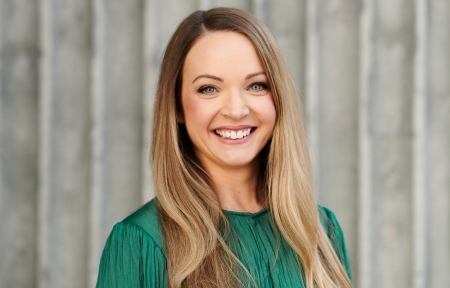
Richard: Hello and welcome to another episode of Precisely Property. I’m your host, Richard Temlett, I’m excited to have with us today. If you’re here for the first time, thank you for joining us. I encourage you to listen to our previous episodes where we discuss all things property, with a focus on dynamic discussions with industry leaders. In this episode, we’ll be talking to Julian Anderson, of Bates Smart, about a variety of very topical issues. So, sit back, relax, let’s get started.
Julian is a director at Bates Smart with extensive experience delivering major projects across Australia and the United Kingdom. He has led large-scale architectural and consultant teams on commercial, residential, educational and infrastructure developments, including Melbourne’s Build to Sell and Build to Rent projects and Sydney’s $1.5 billion Crown Hotel at Barangaroo. Before joining Bates Smart in 2007, he worked on landmark UK projects, including King’s Cross Rail Station and Paddington Crossrail. Julian is known for turning complex briefs into user-focused, sustainable and contextually responsive architecture. Welcome Julian.
Julian: Thanks Richard.
Richard: Julian, in today’s episode, we’re going to talk about various topical issues, including your ideas and the article that I read in the paper a few weeks ago on the new Richmond station and rail adjacent redevelopment, as well as on the Build to Rent and the Built to Sell markets as of 2025. Before we get into the episode, I do have an icebreaker question, and the question is as follows. You’ve worked on some of the UK’s biggest infrastructure projects like King’s Cross Station before moving to Australia. What’s one lesson from those projects that stayed with you?
Julian: Thanks, Richard, that’s a great icebreaker. Look, I learned so many lessons from those projects. King’s Cross Station in particular is one that sticks with me. I’ve worked on the new diagrid structure, the new station that was created adjacent to the existing heritage building, I spent about two years working on that. It had been in the office of John McAslan + Partners, who was the architect leading, it had been in his office for probably eight years. It was one of these very significant rail station projects. The other important or exciting thing about working on that project was that it was being designed at the same time that Argent St George were developing the master plan for King’s Cross Station immediately adjacent for the King’s Cross land. And that’s turned out in its current form post completion, I think it’s turned into being one of the most significant urban regeneration projects, probably of the last 20 years. And I keep going back to London and visiting that and visiting the station. I think I was so fortunate to be in London at the time working on that project that’s turned into such a significant one.
The thing I really did love, and I don’t know if this is a lesson, the thing I loved was working in a team of that size. It was working with so many different architects, interior designers, consultants, builders, developers and realising or understanding what can be achieved from what was essentially a pretty blank canvas at the time. So much of that land has been transformed over the last 20-25 years. I think the things I learned were the idea that you can be incredibly ambitious when you’re an architect and you can have ideas that seem incredibly aspirational can actually be delivered. It’s taken time but I think that gave me a level of confidence that I brought back to Australia and in the intervening years have tried to as far as possible be a part of projects and work with clients and consultants whose aspirations are at the very highest levels of our industry.
Richard: Great. Well, your resume is absolutely fantastic. And as we were talking offline, you are extremely well regarded across the industry. I do a lot of project profiles, particularly in the Build to Sell space and a number of the most successful developments, especially in Melbourne, have your and your company’s very good work sitting behind it. You’ve obviously brought these decades of experience back to Melbourne and Australia. And I can see the very positive impact you’re having on the various projects.
All right, the themes that we’re going to break up the session into today, there’s three of them. The first one is you did a thought leadership piece on the new Richmond Station and rail adjacent redevelopments. I read that with a lot of interest. I have seen, I don’t know how many years ago, there has been some discussion on it, but I’d love to get your further views and insights on it. We’ll then jump into Build to Rent and what you’re seeing on the ground, some of the lessons learned, especially from overseas where you’ve worked. And then Build to Sell, I’m dying to talk to you about Build to Sell, and also what you’re seeing now in 2025 versus perhaps 10 years ago.
So, first theme for today, your article that I will put links to in the show notes. Can you talk to us a little bit about it? What brought it about? I’m kind of in your hands.
Julian: Yeah, definitely. I’ve lived in Melbourne for…I was born in Melbourne, lived in Melbourne for most of my life, spent some time out of Melbourne in London and Sydney, but I’ve always been interested in Richmond Station being a supporter of Collingwood and going to the MCG often and, then driving through Punt Road and past Richmond Station, I’ve always looked at it and wondered what a great opportunity to turn it into something that reflects the energy of the place and its relationship to the MCG and the tennis centre and what is one of the world’s greatest sporting and entertainment precincts. And then also more recently got interested in the idea that particularly something that the state government to their credit are very focused on, which is delivering rail adjacent developments in order to provide housing supply. It came about through these twin interests.
The station itself is an incredibly important node. I think it has about 3-4 million people going through that station every year. It’s substandard in my view. It’s not up to the level… it doesn’t provide the level of service that it should. There’s no DDA (Disability Discrimination Act–compliant access) compliance there. If you’re in a wheelchair, you cannot get from Swan Street up to the station in an appropriate manner. So, what we did was we came up with a concept which was about designing and delivering rail adjacent residential property, which would be delivered by the state or by a developer. There would be increased consideration given to the ability to deliver more housing on that site than is necessarily described in the planning controls. That approach is something that’s consistent with the state’s development facilitation pathway, which is about providing some relaxation around planning controls in order to stimulate supply. So, we’re kind of dovetailing with that concept. And then some of the money, some of the funds that would be earned by the developer or the profit that the developer generates would then be put back into regenerating the station itself, not in an overly luxurious way, but dealing with the pragmatic and practical needs of the station itself in the 21st century.
So, there was quite a bit of interest in the story. I think people, Melbournians, feel very strongly about Richmond Station and can imagine that it could be something quite different. I think certainly I’d learnt having worked on Paddington Crossrail in London and Kings Cross Station that these rail adjacent developments can really contribute to the successful experiences of train passengers and then also deliver a significant amount of property. We do a lot of these. We do over station developments. We’ve just finished the Pitt Street over station development in Sydney, which is a Build to Rent project that we did with Investa and Oxford Properties. They’re wonderful projects to be a part of. We’re talking to VicTrack, we think that there is a genuine opportunity here. The piece of work we did is a piece of work we do consistently undertake pieces of thought leadership work in the office in order to explore ideas that aren’t necessarily leading to a project for us, but pieces of work that we think are important for Melbourne or Sydney or Brisbane where we have offices and things that we think will stimulate a discourse around issues that are important.
Richard: Great. Well, a couple of questions I’d like to unpack. The first one is just a general comment. I agree with you that station, it could be iconic and it certainly is a major landmark. Something special does need to be done to it or with it. When I’ve investigated both rail adjacent and then over development, a lot of the people do say it is obviously very expensive to do. I’m interested in your views on that. It doesn’t mean that’s impossible. But what are your views on that in terms of how would it be viable now? Would it be viable in a more balanced market where we don’t have ridiculous building costs? What are some of the lessons given you’ve done it overseas, or you’ve seen it overseas be done very successfully?
Julian: Well, when we started this Richmond Station project, if you go back through history, I do recall, you’ll see on the internet, there are a number of projects that have been done on that site. Many of them were contemplating over-station development, which in my view, in that location is unaffordable. The structural engineering requirements to span over the tracks and then build over it would make it prohibitively expensive. So, our concept is saying, take the land that’s adjacent to it. There is a significant amount of land, there’s about 1700 square metres, which is owned by the state, by VicTrack, managed by VicTrack which is big enough to deliver over 200 apartments. There are then other parcels of rail adjacent land next to that that have various private owners that you could then talk to and partner with, or they would get some sort of uplift in terms of the likely sale price of that land based on some relaxation around the planning controls.
In this instance, we can’t see that there would be an over-station development that would stack up, but certainly a rail adjacent development. In central Sydney, where we’ve more recently done these over station developments like Pitt Street, they’re building a new train station at the same time as they’re building an over-station development. They can make it work commercially and the real estate value in central Sydney is much greater than Richmond. It’s working out where the opportunity lies, and as you said, it’s a good point you’ve made about construction costs. We’re dealing with a very challenging market in Melbourne at the moment in relation to construction costs, feasibilities, people are struggling to get the feasibilities to stack up when you compare the sale price, for example, of residential property against the actual construction costs.
Richard: Another comment I wanted to make, I have the privilege to act for a lot of overseas investors looking to invest into Melbourne, Sydney, Brisbane, and more recently the completion of the Metro in Sydney and that over-station development, overseas capital is so attracted to that. It’s incredible. And I’ve jumped on the train on a few times, so well done on all the work that you’ve done there because it is out of this world in terms of how impressive it is. Certainly, when I speak to those investors and offline, we were talking about the large interest, for example, from Japanese capital, very rarely do these opportunities get presented to them where they could do types of over-station development or this infrastructure coming through. It’s interesting, I’m trying to talk out loud and flesh out some of the ideas about going, yes, there might be in certain areas, it might be cost prohibitive to go over it. However, they are very few and far between and the capital overseas certainly understands it and likes to take on that risk. I’d go as far as even saying when I’ve spoken with some of the BTR operators more recently, overseas capital is willing to put equity into some of these projects where they have over-station development, which is a huge finding because they’re not willing to do equity in Melbourne, but it’s in Sydney. I suppose that’s the observation I wanted to make in terms of the different cities and the over-station development. My question to you is, if we’re going to do the rail adjacent development, your idea to set up a win-win for the government would be that the proceeds of the sale of the land would go to fund the upgrade of the station?
Julian: Some of the station upgrades. There’s many ways you could do the station. Our concept was to say, you need to build a new roof to provide appropriate coverage and then upgrade the platforms themselves and deliver some DDA access and then clean up the tunnels and provide…so not a “do maximum” type approach, but something that was bringing the station up to a level, new lighting, new wayfinding. There was, as part of the concept you will have seen in our proposal, there was an idea that you could provide better connection through a new bridge link to the tennis centre and the MCG. Having to shut down Brunton Avenue every match day is not ideal for that area, I don’t think there’s a huge crush at the station after matches. Queuing times are probably overly long. So, I think we hadn’t redesigned it itself, but it was the beginnings of a concept. So, there was a range of options that people could, the state and developers could take on.
It seems to me that the interest it’s generated certainly means that people can see that there is something there that we should start to think about. I think it was also important for us that we’re very focused on the housing issue that we’re facing at the moment. I read in this morning’s paper that by 2051, the state are committing or want to commit to delivering an extra 1.7 million homes. And there’s talk that maybe we’ll struggle to get half that number of homes. We’re very interested in contributing to the delivery of those houses through intelligent design and strategic thinking. But we were also very interested in this idea that Melbourne needs ideas that are inspiring and captivate us and get us excited about the future. So, we need to deal with this problem, which is housing, but we can’t lose sight of the fact that we need to continue to enjoy our city. We want Melbourne to remain and be one of the world’s most liveable cities and I think it’s doing a great job of that. That is important. The good cities are the ones that people enjoy living in, raising their children in, studying in, visiting, being a tourist in. And we need to keep an eye on that as well and not get lost in dealing with problems or trying to solve problems but actually providing a vision and creating a discourse around the things that Melbournians want out of their city.
These can be, and I learned this on King’s Cross Station that the King’s Cross Station precinct and new station itself, that was something that had been talked about for over 100 years. It’s probably taken 25-30 years or more to deliver and it’s still going. So, it doesn’t matter if these things take time. It’s that people need to have the ideas and get behind the ideas and take their time to deliver them in the right way.
Richard: Well, look, I absolutely loved that article and I commend you for that forward looking thought leadership because you’re right. We need inspiration right now. And I can’t think of many better locations to do something like that. So please keep up that thought leadership. I certainly like to do it too, but I must admit I read that one and I thoroughly enjoyed it.
Let’s shift gears and jump into Build to Rent. I’m keen to understand what you’re doing in the BTR space, what your views are of it. And, given that you’ve obviously worked overseas, if you’ve done some work on them overseas, which I suspect that you have, what are some of the lessons learned that could be adopted in Australia?
Julian: Well, we were at Bates Smart fortunate enough to deliver the first Build to Rent tower with HOME at City Road. And that came off the back of a US study tour that we did with them that was a vision that they had that they’d seen work well in the US. So, in 2018 they had the vision, we are going to deliver the first Build to Rent tower in Melbourne. It’s been a tremendous success. It then led us to designing LIV Munro for Mirvac, which I think was then the next tower that was completed. Those two projects were very much informed by what we’d seen in the US. We did a three-city study tour and visited about 30 different properties in the US. We were able to understand very deeply what was happening in the US and see the consistencies across those projects. We developed a brief, all the Melbourne projects on the back of that through an ethnographic analysis, if you like, looking at what was working and what wasn’t. And the US model had been rolled out post the industrial revolution. It’s a model that the US are very familiar with and continue to refine. So, we had the benefit of all of that knowledge.
We’ve continued to do a range of other Build to Rent projects around Australia. More recently, I undertook a tour of the UK with some of our clients and other members of the Bates Smart team. It was to understand what was the next wave of Build to Rent looking like because the British example was a post-GFC series of projects and evolution that came off the back of the government stimulus around post-GFC and the government did a wonderful job. There were a few things we found interesting in the UK. One was that the majority of these developments that we visited in the three cities that we went to in London, particularly London, these developments all existed about 20-30 minutes from the centre of London, largely because that’s where the land was affordable, but they were very adjacent to train stations. People who would otherwise normally want to live in zone one or two in London are happy living in zone three or four because they’re proximate to a train station. They were getting good quality access too. So, the amenity, the quality of these buildings was really high. The access to transport was really good.
The other thing we saw was that these buildings are in the first wave of Build to Rent in Melbourne and Sydney. There was an expectation that the amenity of these buildings was at the top of the towers where the real estate was more expensive. So, it was like a democratisation of space. Everyone was getting access to this amazing amenity at the top of the building. We saw less of that in the UK. A lot of these developments were more podium mid-rise type developments where there was a lot of landscape access. They had a lot more access to ground space and they were leveraging off that access to landscape and open space in order to provide really good quality amenity and lounge space and recreational space that was adjacent to the landscape. That’s something that we’ve looked at a lot more closely and we’ve started to, I guess, think more about how the landscape, outdoor space can be a positive benefit for people in these buildings. And it did lead to a reduction in the amount of amenity that we were providing as floor space in these buildings, because we’d seen that in the UK and seen that it was working. The buildings we’re doing now have less indoor internal amenity than some of our UK counterparts. One bedrooms and studios are still very popular. They’re still the most in demand apartment type in these buildings that we’re seeing. And we think that’s okay. If there’s a demand for it, that’s what we need to deliver.
The other thing that we did find interesting was the fact that these developments were located 20-30 minutes outside the centre of the cities or in particular the centre of London. We’re interested in what the future in Melbourne has some relationship that more of these Build to Rent developments are going to be developed 20-30 minutes outside the city loop. So, we looked at how does the suburban rail loop relate to what we’d seen in the UK? I think there is a scenario where you say, even though it’s very early days on the suburban rail loop, hopefully, and there’s a lot of discussion that can be had about the suburban rail loop. Hopefully the suburban rail loop is going to contribute to this potential for people to understand that maybe there’s sufficient amenity and access to public transport in a ring around the edge of Melbourne. Perhaps where it’s a bit easier to get some land and deliver the sort of projects that we’d seen in the UK. This is a 25, 30, 40-year project. Hopefully it works. I think that’s definitely the government’s intentions that they will create these nodes around the suburban rail loop and people will enjoy all of the amenity that then builds up in time. That’s definitely the strategy. I’m not sure how it will go, but hopefully we’ll get some work out there.
Advertisement: Quickly interrupting this episode to tell you about Charter Keck Cramer. Charter Keck Cramer is an independent property advisory firm with offices in Melbourne, Sydney, Brisbane, and the Gold Coast. Through our collaboration with Andersen Global, we connect with over 18,000 professionals around the world.
We provide strategic property advisory services spanning multiple market sectors. Our advisory team provides specialist advice across transaction management, tenant representation and lease negotiation, strategic portfolio of reviews, development advisory and more. Complementing this, the capital division advises on structured property partnerships connecting property owners and tier one developers.
Our extensive valuations coverage includes prestige residential and greenfield development markets, together with all commercial asset classes. Quantity surveying is at the core of the project team, ensuring cost control from planning through to post-construction. And our research team delivers property data and analytics across the residential living sector, along with expertise in strategic land use planning and urban economics.
With specialists across a diversity of sectors, Charter Keck Cramer is your trusted property advisor. Now let’s get back into the episode.
Richard: We’ll keep the suburban rail loop discussion for perhaps another day, but let’s keep going in the amenity space. Because I am interested in your views on, we can start in Melbourne with swimming pools. Is that something that is worthwhile putting in? And why I ask it is I always get asked by either the financiers or the developers going, there’s a cost benefit analysis here. Do we put it in, do we not, is it used, is it not? So, I ask everyone this, I’m not sure there’s a right answer necessarily.
Julian: What do you tell them?
Richard: What I tell them is, oh please stop asking me such hard questions. When I then jump in and I profile the projects and what I’ve learned is in areas or cities like Brisbane or WA, much warmer climates, they do seem to be used. They do seem to be more attractive. Melbourne less so, often they’re indoors. They’re not that well used. But there’s always this argument with the property managers or the leasing managers go, well, it sells the sizzle of the building. But then when they track the stats in terms of the usage and so forth, it’s not well used. And so, I’m leaning towards going, well, I’m not entirely sure that the benefit is there for the costs and the upkeep. So that’s ultimately where I would land. That being said, I’m interested from your view of design and what’s happening overseas. What do you think?
Julian: Well, I think we only saw one swimming pool in three cities. We visited Manchester, Birmingham, London and I think we saw one indoor swimming pool. I mean, the climate is definitely an issue there, so you can’t have outdoor swimming pools. It’s an interesting point about all of our residential, so 95% of our Build to Sell and Build to Rent projects where we have the real estate, we are delivering pools. And in Melbourne, they’re indoors. Sydney is a mix of indoors and outdoors. They have the luxury of the climate. There was one project in particular that we were doing, a Build to Rent project that is under construction. It’s quite proximate to a very large swimming centre in Melbourne. So, we debated with the client, we said, look, they don’t need one. They can walk 10 minutes, and they’ve got one of the state’s best swimming facilities that they can use. And so, for a long period of time, there wasn’t a swimming pool and then it became, it may be that this project is a Built to Sell project in 20 years’ time, we’re going to have to have a swimming pool. So, we put a swimming pool in, it’s 20 meters long.
I take your point about patronage. I do worry or I think maybe not worry, I think a bit about this concept that you’re building these pools in order to sell apartments and they’re not actually going to get used, which is a concern in a world where we’re working very hard to deliver ever increasing levels of sustainability and embodied energies is becoming the next issue we need to tackle because we seem to be making good progress in terms of operational energy and dealing with that through renewables. The embodied component is big and building swimming pools is expensive. I don’t know what the solution is because at the moment, I think there is the shared view that you have to have a swimming pool in order to deliver.
I guess one thing you may say in the defence of the swimming pool is that with an aging population in Australia, swimming is something that is much more easily done by an older cohort as a form of activity. I think if you go down that line of thinking, you say, people are getting more interested in exercise and activity and the swimming pool is one of the ultimate forms of exercise and activity. So, we’re dealing with a desire and a need to keep the population healthy and happy.
But look, I don’t know what the solution is. We’re definitely looking at more things we’re doing like plunge pools and saunas and spas and ice baths and the whole wet area experience in our mid and upper premium end residential projects is definitely getting more interesting, maybe more exotic. But I think that’s because there is a view that the patronage is good. But it is Richard, it’s something we’re very interested in.
Richard: Before we jump into Build to Sell, the final question I had on Build to Rent, is there an item or items of amenity that are the most popular? Ones where if a client came to you and they’d go, we’re going to do as little amenity as possible, but what’s something that’s a deal breaker or is the most used?
Julian: Yeah, this is something that we saw consistently in the UK, flexibility of space usage and patronage is the key. So, we saw in the UK and we’re starting to do more of this in Australia. Loose furniture is important, less built in joinery spaces that can cater to 100 people coming together for a wine and cheese night or a dog petting night or some sort of event. The events in these buildings are important. So, the managers need to be able to get the people together so that that contributes to building the community and a strong community contributes to longer leases. You need to be able to deliver large spaces that can flex up to deal with events, but then at the same time also be private enough to allow people to get out of their apartment and they might be in a smallish studio, so they really enjoy working out of their apartment in the building and seeing other people but having the privacy and the ability to do their work. So, we’re seeing things like meeting room pods that are small one room telephone type booths that are on wheels that can be moved around. Flexible furniture settings, that would be the space that is probably the most important that I’ve seen creating an environment where particularly in the work from home world that we now live in is allowing people to rent less space because the cost is relatively high, but then leverage off all of the work-type lounge space that exists in the building. That would have to be number one.
Richard: Great. Let’s shift gears and jump into Build to Sell. The context for our listeners is I’ve studied a lot of the Build to Sell projects and Bates Smart, the name comes up consistently with some of the best and most well-designed projects. And I’ll say that obviously, so you don’t have to, because you can be modest. But when I look at the resales of the projects and speak with some of the buyers, they are very attracted to a lot of the designs. I’m interested now in 2025, what you’re seeing on the ground in this space, whether it’s from, we can start with building costs, we can start with design. What are you seeing? What are you working on?
Julian: Definitely post the emergence of Build to Rent and we did talk about this with our Build to Sell clients that they did understand that what occurred in Build to Rent in 2018 when that market really started to emerge and that market emerged off the back of the APRA guidelines around foreign ownership when Build to Sell started to slow down. What emerged out of that were a lot of learnings around working from home and flexible space. A lot of the way we’ve thought about the amenity in these Build to Sell environments certainly has learnt from those Built to Rent projects that have now been completed. So, we’re rolling that out across our Build to Sell projects.
I think the other thing, which is sort of switching tax slightly in relation to your comment about construction costs, and this is perhaps possibly more true. I’ve seen it more in Melbourne, because I’m working more on Melbourne projects. We are, in order to deal with construction costs, doing things like thinking about making the building bigger, not just taller, but wider, longer, in order to do things like minimise the number of cores in the building.
So, there’s a project that we’re doing off St Kilda Road at the moment. The client bought and was developing one site, the adjacent site became available. They bought it, totally reconfigured their ideas about what building needed to go onto the site. They came to us, we came up with a strategy which said, you won’t be able to afford to build two towers on this site, even if you wanted to link them with the bridge. You need to build one large building, the building’s length in terms of its frontage on the street exceeded all of the council controls around building length without a proper break. We ended up designing something which was quite sculptural and elegant and appropriate. We worked with the Victorian government architect, the council and the state to come up with a proposition that was satisfactory. And it then became a catalyst for the way we’re thinking about other projects.
One of the best ways to deal with cost is to minimise doubling up on things like lifts and stairs. So, there’s a sustainability agenda there. There’s also a practicality and pragmatic approach. There’s a strategic approach. We’re also dealing with construction costs so that precedent has then allowed us to have discussions with other councils and the department saying, look, you’ve allowed us to do this here and we’ve done it for these reasons. You need to think about this in the context of the current construction environment in Melbourne. Look, it’s relevant for Sydney and Brisbane as well, where we also have offices, but obviously the issue we face in Melbourne is projects that are at the upper level in terms of rate per square meter at $25,000, maybe $27,500, maybe $30,000 a square metre. Comparable properties in Sydney are at $45,000, $50,000, $60,000, $65,000 a square metre. Construction cost, not that dissimilar, a little bit higher, but it’s not that much higher. So, the feasibilities of these projects are challenging.
That was one way we think through good design, good architecture, good urban design and really great engagement with the authorities. I think we’re seeing, we’re trying to solve problems through design, which I know the client on that project has been tremendously happy with the outcome. They said to me, they think they’ve achieved 15% more NSA (Net Saleable Area) using this design that we’ve developed as opposed to having a building which was two towers or two towers with a bridge.
Richard: Can I ask, I’ve certainly observed a trend. It’s more in the downsize or right size, a segment of the market and it is mainly in Melbourne, I suppose also in Brisbane. Are apartments getting bigger size wise, the floor plates to justify the higher value rates? What are you seeing in this space?
Julian: I think we’re still seeing, I mean, we’ve got a project we’re doing at 671 Chapel Street with CASA. We’ve got a project we’re doing with Time and Place on Dorcus Street. And then we’re doing CBUS’s 437 St Kilda Road project, which is on the west side of Fawkner Park. That project is about 84 apartments. They’re relatively big. They’re targeting a market that is very much at the higher end of the spectrum. Dorcus Street probably has a greater mix.
I would say that certainly if you were to compare, there’s still very much a difference between Build to Rent and Build to Sell in terms of apartment sizes. Our Build to Rent briefs pretty consistently at the moment at 15-20% starting point on studios. The returns that the Build to Rent operators get per square metre for the studios are the highest and there’s a really solid market for it. So, you can understand that they’re doing that. That doesn’t exist in Build to Sell.
I think certainly where we’re doing three-bedroom apartments, 20%, three-bedroom. I think it’s more about the location and the target market. I think certainly there are areas in Melbourne that are going really well, like St Kilda Road, the emergence of Anzac Station. People can see it now. They can drive past it and imagine that it will be finished very soon. That’s contributing to a huge amount of positive sentiment on St Kilda Road.
Arden Station as well, that whole area, that precinct, the state land that people are bidding on at the moment. And then the area around that is seeing really positive engagement, that’s a good news story about the Melbourne Metro. And then I think, we were talking about this before, I think what’s next, these stations are contributing, but we do need more stimulus around housing supply because I can’t see us getting to the targets by 2050.
Richard: Gotcha. Well, look, I know we’re almost out of time, but let’s tease that out a little bit in terms of the stimulus around housing supply. I am asking a lot of people that kindly come on the show this question because it is a generational crisis in my mind. It’s going to take a number of years to get out of this. And I’m interested in your views, from your view of the world, what type of stimulus, especially in Melbourne, given we’re in Melbourne, but can also apply to Australia. What’s needed in your view?
Julian: I think, if I was to start by saying, the state’s doing a really good job. The development facilitation pathway has contributed to real interest and projects going beyond the drawing board and being built. So that’s been fantastic. The state has definitely got on board with this idea of 50 train and tram and bus centres where they’re going to contribute to relaxation of planning controls in order to deliver supply. There’s no doubt at all that Melbourne is very affordable. We’re at the bottom end of the market. Things are starting to improve, but not from what I can see to a level that is going to hit the targets that the state are talking about needing to be achieved.
Interest rate cuts would be great. I’d love an interest rate cut or two in the next 12 months. I think the construction costs are market driven, so it’s hard to know what to do there. Perhaps there might be this concept of potentially more prefabrication modular housing, which we saw a lot of in the UK and the Build to Rent market, particularly Greystar. Greystar built, it was the UK’s tallest prefab housing project as a Build to Rent project in Croydon. You visit all the Greystar projects in London and most of them are prefabricated. So, I think there’s something there that could deliver supply.
Certainly, I think population growth is probably the one that is going to contribute, but I think we need to be very focused on this idea that our suburbs don’t continue to grow. We need to use the land that we’ve got that has the amenity. And also, from a sustainability and longevity perspective, it needs to be realistic. So, we need to put some sort of limit on the size of our state. There are a lot of positives there. We’re working very hard to investigate all of those areas. Like I talked about before, managing construction costs through new ways of thinking about delivering real estate, single cause, bigger buildings. We probably need to get comfortable with the idea of if Melbourne is to hit 10 million by 2050, we need to get comfortable with the idea that this is going to be a big city and grapple with that now and not default to low scale, low rise sprawl.
Richard: Great. It was a fantastic summary of your thinking and certainly mirrors a lot of my thinking. I think we do discuss similar issues with very similar clients. I think that’s all we need to get through today. Did you have any final thoughts or comments that you wanted to make?
Julian: No, I mean, we were talking about this before we started. Having grown up in Melbourne, I’m a big believer in Melbourne. I love the place. You want to spend the remainder of your career trying to turn it into the best city in the world and continuing to focus on making it very liveable and enjoyable for all of us.
Richard: Fantastic. Look, I definitely share your views there and I’d be very keen to team up with you in the future to put together some thought leadership because I think that’s what is required right now from a number of people across the industry.
Julian: I’d love to.
Richard: That’s all we need to talk about today. Thank you very much for coming on the show.
Julian: Thanks, Rich.
Richard: Hi everyone, I hope you’re well and that you enjoyed this episode between Julian and I. I thought it was absolutely fantastic and the energy that he brings to his work and even into the room was infectious and I encourage you to reach out to him and get him and Bates Smart involved in your projects. I can’t help thinking that would be a very smart decision to make. In terms of the three findings that I would recommend or suggest for today, they are as follows.
The first point is about urban renewal. You’ll hear through the podcast that urban renewal takes a number of years and a number of market cycles to be carried out and be completed. The overseas experience that Julian had in the UK on King’s Cross, for example, planted a seed in my mind because I am doing quite a bit of precinct renewal work for the state governments across various cities, particularly in Melbourne and Sydney. And I am in a bit of a process of explaining to everyone that these large urban renewal precincts will take 25 years or 30 years longer to be completed. The Docklands (in Melbourne), for example, is a perfect one or some of the precincts up in Sydney. And that will be developed over a number of market cycles. We need the enabling infrastructure there. We need an alignment between planning, market demand, and that infrastructure. And then it needs a clear vision, and it can be built out over those market cycles. And I think that that’s certainly given the fact that we’re in the grips of a housing crisis, something that we need to really consider doing and have longer term consistent visions for a lot of these urban renewal precincts.
The second point everyone can leave with is firstly the clear fact that Julian has great experience with Build to Rent. Those study tours, I’ve done a number of similar types of tours myself and I can’t help thinking that that’s what people really need to do. There’s no substitute for touching, feeling and seeing these types of buildings. His comments about the amenity being moved from the top level down to the more podium levels and using the indoor-outdoor areas I thought was very well made. And certainly, I am seeing and hearing that in discussions that I’m having, and it makes perfect sense. And again, I would suggest that that’s the next evolution of BTR in Australia. As we’ve said before, the Australian renter is different to the UK or the US renter. And it’s important that we continue to deliver stock that meets target market and target demand, which may mean that there are nuances that do start to arise for the Australian market. And it’s fantastic to hear that these new projects for the next wave are doing things differently, learning from what went well or went badly last time, and pushing the boundaries.
The final point that I would want to make is, Julian’s comment about building costs and redesigning buildings, for example, to minimise cores or making them bigger. I think that that’s really clever and that is part of the necessary evolution that the building and construction sector needs to go through and the industry as a whole needs to go through. It’s fantastic to hear that council and planning also got on board and I can’t help thinking that perhaps there’s another tool or lever that governments and the building industry can come together on and work through and go – if it is more efficient or it costs less to build in a certain way as Julian described, it’s an easy win to provide planning dispensations that don’t cost the government, whether it’s local or state, any money. Getting that project mobilised and supply added, obviously will put downwards pressure on prices and rents that’s important. I can’t help thinking that there’s more solutions that are going to emerge given that we are stuck between a rock and a hard place when it comes to productivity and building and construction. And it was fantastic to see some of these green shoots coming through with how the industry is evolving, which I certainly know that it can, and I have confidence that it will. Those are the thoughts. I hope you have a good rest of day. Thanks very much.
Thank you very much for listening to this podcast. If you enjoyed the episode, please make sure to subscribe to our podcast so you never miss an episode as we’ve got more exciting content coming. We’d love to hear your thoughts. Please leave us a review on either Spotify or Apple podcasts as it really helps us to grow. Also, follow us on Instagram at Precisely Property for updates and join the conversation. If you’d like to get in touch with us, subscribe to our newsletter via our website, charterkc.com.au or write to us at podcast@charterkc.com.au.
Lastly, if you found this episode interesting, please share it with your friends and family. Thank you again for listening and stay tuned for our next episode dropping in two weeks’ time, plus bonus content also on the horizon.
Disclaimer: Precisely Property is a podcast presented by Charter Keck Cramer and is for educational purposes only. Nothing in this podcast should be taken as investment or financial advice. Please engage the services of an appropriate professional advisor to provide advice suitable to your personal circumstances. The views expressed by our podcast guests may not represent those of Charter Keck Cramer.