This episode was recorded on the land of the Wurundjeri people of the Kulin nation. We pay our respects to their Elders past, present and future.
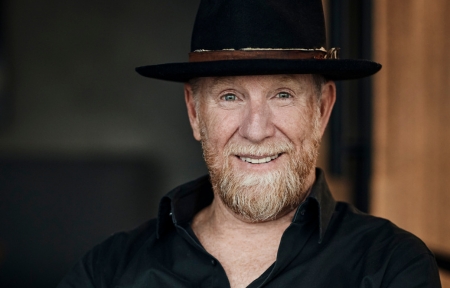
Richard: Hello, and welcome to another episode of Precisely Property. I’m your host, Richard Temlett, I’m excited to have you with us today. If you’re here for the first time, thank you for joining us. I encourage you to listen to our previous episodes where we discuss all things property, with a focus on dynamic discussions with industry leaders. In this episode, we will be talking about the retail market with Kate Bailey of CBRE. So, sit back, relax, let’s get started.
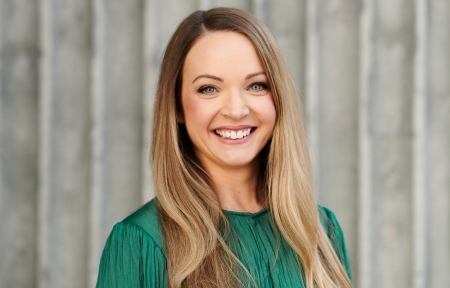
Kate joined the CBRE research team in October 2015 after working in the economic consulting and property strategy field. Kate leads the research team in Melbourne and is the National Head of Retail and Alternatives Research. Kate began her career in 2008 working at a property economic consulting firm, gaining valuable experience providing advice to a range of public and private sector clients. Her role took her to the United Kingdom, where she worked as a valuer and analyst for a property developer, delivering key insights which helped inform development decisions. Upon return to Australia, she spent four years at Coles working in property strategy and forecasting, providing direction for the future network of supermarkets, liquor, and convenience properties. Welcome, Kate.
Kate: Thank you for having me.
Richard: Kate, I can’t wait to get into today’s episode, and we’re going to be talking about all things retail across Australia. And, certainly, as we were preparing for this episode, I can see that you’ve got such a fantastic wealth of knowledge, and I’ve jumped on your website to read a number of the reports that you make publicly available. All our listeners, I’d encourage you, please do jump on the website, we’ll put the links to it. You can get some fantastic views on what’s happening across various segments of the market. But today, it’ll be just to retail. That’s what we’re going to be talking about, the different types of retail, how they’re performing, and, also, what the general outlook is for the next 12 months.
Before we get into the session, though, I did have an icebreaker question, and it’s as follows. You’ve had such a fascinating career in property research. Was there a moment or experience early on that sparked your interest in the sector?
Kate: Oh, that’s a tricky one, it’s hard to pinpoint an exact moment. I would say that something that made me really love research is probably Alan Kohler’s little economics snippets on the 7:30 news. Firstly, they’re always very interesting and they’re very concise and they cut straight to the bone, but I really love the “so what?” You get all of this data and it says, “so what does it mean? What does it do?” And that’s what I like about research. You get to tell the story and cut through the data. So, yeah, Alan Kohler, it all goes back to there.
Richard: It’s funny. Obviously, the listeners can’t see you and I, but I’m smiling because I almost have a very similar answer to you where I used to listen to him and I still do, and I read a lot of his work. And you’re right, it’s the data, but it’s the “so what?” And I absolutely love it. It’s the critical analysis, it’s that insight that comes out of it.
Kate: Absolutely.
Richard: Certainly, you and I, we’re in a similar space in terms of research. Great answer. In terms of today’s session, I’m keen to learn a little bit more about yourself and your background in the industry. I know I’ve covered it a little bit, but I think for our listeners to hear a bit more detail about you would be really beneficial. They are likely people that are looking up to you as a role model, and they’d like to learn a bit more about your career path and certainly your experience from overseas.
As I said, we’ll talk then about the retail market, the different types of retail assets, what’s happening across the different cities, some of the trends that you’re observing. I’m keen to delve into the outlook in terms of what’s happening and what your views are for the next 12 months.
So, the first part of the session, let’s talk, if it’s alright with yourself, about your background and your experience in the industry. Could you elaborate a little bit more on that?
Kate: Well, I didn’t quite realise how long my bio was until I was listening to it be read out to myself. So, yes, in October this year, it’ll be 10 years in the research team at CBRE. I feel super lucky to have landed this job. I joined the research team in 2015, I came on board as the Head of Industrial and Logistics Research, probably at a time where we spoke about sheds rather than logistics facilities and I really enjoyed working in that space and seeing that market mature and change. Eventually I picked up retail and industrial, and then that grew to be a little bit too big for one person. Now I mainly focus on retail and the alternatives market as well. So, my background has been in retail economics.
As you mentioned, I did four years in the network planning team at Coles, effectively looking at where the new sites should be, what needs to be rolled out, what demographics were driving new stores, a whole lot of different bits of analysis, which is a really fun job. It’s given me a weird knowledge of lots of different places around Australia, lots of growth areas I’ve visited that a lot of people probably haven’t been to.
Before that I spent some time in consulting as well. I always focused on that strategic planning, property economics space. Then I did a year in the UK working as a valuer, which was a great way to understand the building blocks of the market and gave me a great appreciation for all the different levers that can be pulled to get a development off the ground.
Richard: Fantastic. I’m glad I managed to tease out a bit more of your background because when we start discussing now what’s happening in the retail space, the listeners need to be aware that you can draw on your other experiences or other asset classes because as I learn more about them and whilst I mainly specialise in residential, when I chat with people across the other asset classes, there’s some similar drivers and a lot of them are interlinked, interrelated to one another. The fact that you’ve specialised in more than one certainly would give you really good line of sight as to the innovation of the industries as moving forward, especially as retail and industrial seems to be merging a bit more.
Kate: Absolutely. It’s hard to speak about one without the other now that ecommerce is so prevalent and in play.
Richard: Look, let’s dive in. I must admit, I was on the train this morning, I couldn’t wait to get into what’s happening in the retail market. It seems to have been one of the markets that has been impacted by not just the pandemic, but even before that, with the rise of online shopping and online retail and so forth. So, I’m keen to talk to you a little bit more about what you’re seeing on the ground with the different asset classes. For example, neighborhood centers, sub regional malls, large format retail. I’m in your hands as to where we’d like to start.
Kate: I think that’s a great way to intro it because we’ve been talking, not we, but the market’s been talking about the death of retail for so long. What’s going to happen once ecommerce kicks in? What’s going to happen post pandemic? During the pandemic? No one’s going to want to go shopping anymore. And it’s been the complete opposite, the market’s been exceptionally resilient and it’s a really fun space to be working in at the moment because there is so much happening. I guess, at the very crux of it, we’ve seen such solid population growth across Australia. And we know that, we’ve done some research at CBRE that for every million people that moves to Australia, we need 800,000 square metres of retail space to be able to support that new population.
Richard: Okay.
Kate: And we’ve seen that it’s really hard to build things at the moment. It’s been exceptionally expensive, construction costs are really high, it’s hard to find land. So, what we’ve done is more and more people are moving into existing catchments of retail centers, and we’re seeing that’s driving down vacancy, it’s pushing up rents, it’s pushing up footfall. It’s a really fruitful time to be working in the retail space at the moment. I suppose we want to get a little bit more specific?
Richard: I was going to ask for our listeners that don’t live and breathe retail like you do. Obviously, like with residential, there’s no single market and there’s no single asset.
Kate: Maybe I can give you the rundown.
Richard: If you could, that would be great.
Kate: Yep. So, we talk about large format retail, which is bulky goods retail. So that’s often the big Harvey Norman’s, Forty Winks.
Richard: Yes.
Kate: And then when we talk about shopping centers, we refer to three separate classes. So, there’s a neighbourhood center, and that’s when you usually have one or two supermarkets and you might have some specialty shops. A subregional center, that’s when you’ve got a neighbourhood center plus a Kmart, plus a Target, a discount department store. You might have some mini majors like a JB Hi Fi, Best & Less in store as well. And then all the way up to a regional center. You can have super regional centers, major regional centers, but effectively they’re the Chadstone’s, the Doncaster Shopping Town. They’ve got proper full-line department stores like Myer or David Jones, a whole range of different shops in them as well, entertainment precincts, all sorts of stuff. And obviously, each one of those different categories has a different retail need. You might be doing your everyday convenience shopping at your neighbourhood center all the way up to wanting to go and see a movie on the weekend and go out for dinner at a regional center.
So, what we’ve seen is it’s much cheaper and easier to build bulky goods or a large format center and a neighbourhood centre at the moment. That’s also really quick to put up and responds to that population growth. So, that’s where we’ve seen the bulk of new supply. And as a result, with all of those people moving to Australia, they need to buy a fridge, a bed, all of that kind of stuff. Large format centers have performed exceptionally well.
Richard: Just with that, I understand then the cost side of the equation, but you said that it was easier to put up. Is it because of the locations and the planning requirements are easier or faster?
Kate: You need less land often if you’re building a large format centre or a neighbourhood centre, it might be part of a new community, so there’s vacant land that’s already been set aside. And also the actual fit out is a little bit less. You don’t need to have high-end materials. You don’t have as many corridors, you don’t have multi-storey car parks, you don’t have lifts, you don’t have escalators, all of that sort of thing. The hurdles to be able to construct it become much lower.
Richard: Sure.
Kate: And therefore, you’re able to deliver that a lot more effectively.
Richard: Okay, so that’s large format. What are some of the other ones? What do you see?
Kate: The large format and neighborhood centers have both been performing well. So again, that’s just having that whole lot of new population move in. We’ve seen a lot of shopping centers remix their centers to have non-discretionary retail.
So, a big focus at the moment on supermarket space and centers like neighbourhood that have a lot of that greengrocers, butchers, supermarkets, that demand is inelastic. And it doesn’t get impacted by cost-of-living pressures in the same way that we see entertainment precincts, fashion, all of that sort of stuff. So, those markets have performed really well.
Richard: One of the points I wanted to make is that distinction between discretionary and nondiscretionary retail, which you obviously started to highlight. When I speak with some of our valuers here, they have said that with the cost-of-living crisis, it seems that the nondiscretionary, I don’t know if the word ‘recession proof’ is correct, but it seems to be maybe low risk. Let’s put it that way.
Kate: Yeah.
Richard: When you analyse a neighbourhood center, a lot of the tenancies or the revenue is at more nondiscretionary revenue, which, as you said, is less dependent on the point in the economic cycle.
Kate: Absolutely.
Richard: Does that then ultimately mean that things like the returns are lower to reflect the risk? Or where does that sit versus some of the other centers that might be more discretionary?
Kate: Well, I think it drives foot traffic as well that you do see a lot of people moving through those centers. You are able to command higher rents because if you have a lot of people moving in there and you’ve got these businesses that are performing really well, that builds on each other and you get more people moving through the center. Even at the larger scale, what we’re seeing regional centers and sub regional centers, they are now starting to almost remix their center and start to include a lot of that nondiscretionary space. I think that new development at Chadstone is a really great example. The market precinct there is bringing in that food and beverage and it’s specialty retail, but it does have that nondiscretionary focus and that’s driving a lot of foot traffic.
Richard: Gotcha.
Kate: So, we’ve done large format neighbourhood, both performing really well. We’re now starting to see some solid rent growth in subregional and regional centers, which we haven’t seen for quite a while. Again, they’re the market that we’re not building any new space in. If you want to go to a regional center, we’re seeing them getting fit out and maybe improved, but we’re not building much new space. So, subsequently we’re seeing an increase in sales density, an increase in foot traffic, and that’s helping to lower vacancy and support rent growth in those markets. In the last 24 months we’ve started to see that market move quite solidly. Our forecasts have got rents in those centers performing pretty well over the next 36 months or so.
Richard: Can I ask why there is no new stock of that sub sector being built?
Kate: Again, it’s around having the available land and the fit out costs and construction costs. Everything that we’ve seen in office, we’ve seen in industrial, we’ve seen in residential, we’re pulling in our forecast at the moment for the amount of new supply delivered to the market because it is really hard to be able to get a lot of those deals to stack. We’ve done quite a lot of work looking at economic rents and the sort of rents that you’d be able to charge if you wanted to be able to get a development out of the ground. And when we look at neighbourhood centres, they’re doing really well. So, that makes economic sense to be able to build those.
Richard: Can you please explain to our audience again the difference between the economic rents and the market rents?
Kate: Yes. The economic rents are effectively what you’d have to charge to be able to make the development stack up and market rents are what is being charged at the moment. In markets like office, economic rents are much higher than the market rent that’s currently being charged. And subsequently, it’s hard to build much new supply. But in the neighbourhood center space, market rents are much higher than economic rents. That’s why we’re seeing a lot of that new stock come out of the ground. But yet to build a new Chadstone, for example, that’s an extreme example, but that takes a lot of new space, a lot of money, a lot of time and so we haven’t seen a lot of that being delivered.
Richard: Gotcha. Okay. Are there any other centres that we may have missed?
Kate: Probably the only thing I’ve missed is CBD retail as well. CBD retail has probably been a more challenged market and the sector that was impacted most by the pandemic. A change in footfall, change in working patterns, we’ve seen markets like Melbourne overall have higher foot traffic than pre pandemic, but a lot of that is after 5PM and on weekends. Therefore, you get a bit of a remix. Particularly in more secondary areas, you start to see a slowdown in rents and much softer demand.
Richard: I think it would be remiss of me not to ask you what your views are. When I looked in the paper this morning, Mecca has just announced that they’ve taken out their largest store across Australia, which obviously is fantastic for Melbourne. What are your views on that? I’m assuming there’ll be a positive impact, but what do you think the impact will be of having them there and also, is that a reflection of their confidence of the long-term fundamentals of Melbourne as a city and retail? What are your views?
Kate: Oh, absolutely. At time of recording, they’re officially opening today. I haven’t been through yet, but I’ve seen lots of photos and videos. It is going to be such a boost in confidence. It’s going to be transformational for the Bourke Street Mall. I think we talk a lot about experiential retail, the idea that you don’t just put a shop there and people turn up, you have to give them a reason to not shop online. What’s different about coming into store? Can you talk to people? Is there something unique about being there in person? And that Mecca development is completely experiential. It is quite remarkable.
Not only have we got Mecca opening, The Walk Arcade is reopening, 260 Collins Street is being refurbished and reopening. We’ll start to see a halo effect with more and more groups wanting to come into the CBD to be located next to these incredible new developments. So, it’s an exciting day.
Richard: It is very exciting. It made my day. Obviously, we’re recording in Melbourne and there has been a lot of negativity in Melbourne. It’s actually really good because it’s not all bad. In fact, in a lot of the sectors, my instinct and even the stats show that sentiment is turning and it was so lovely to see that announcement. And I’m working and it’s confidential and some of them will start to be announced in the next six or nine months.
In other sectors also, there’s going to be announcements like that where developers or businesses are taking a longer-term view of either Australia or Melbourne or the Melbourne CBD and putting their money where their mouths are. And that one, I think, is absolutely fantastic for the city. Obviously, it’s an enormous amount of floor space that they’re taking out, but your comments about it being an experience, I think, is very well made. When I speak with some of the retail owners of the larger centers, they’ve also made the comment that they are doing or there’s a much greater focus on that experiential reason for coming into the center, more than one reasons to come in compared to maybe 20 or 25 years ago, however many years ago, where it was more one dimensional. I think that is perhaps an evolution of the retail sectors is having to evolve based on some of those structural changes that are occurring.
Kate: Absolutely, yeah.
Richard: Can we talk about Sydney, Melbourne, Brisbane? Are there differences in those markets in terms of the performance of the different assets? I could answer that from the residential perspective with where they are, the different points in the market cycle. But what are you seeing across those markets? Is there anything that jumps out at you that is abnormal or an opportunity?
Kate: It’s interesting in retail in the shopping center space. We probably don’t see the difference in the same way that we would in office or the same way that we would in industrial. There’s obviously adjusting for sentiment and taxation, you might see pricing differences a little bit. The big changes we’ve seen are probably in the CBD. You can tell the different markets by the CBD. We’ve got quite a difference in vacancy within CBD across the country. Vacancy at the moment, we just released our data yesterday. Sydney’s recording 5%, Perth’s just over 20%, Brisbane’s 18.3%, Melbourne’s sitting at 6.9%. There’s a bit of a difference between those markets. I think the big difference we see is divergence in prime and secondary. That’s a trend we see across the commercial property market, but more and more retailers are choosing to have a single flagship store that they’ll really fit out. They’ll have a wonderful fit out, very interesting high-end finishes, larger floor plate, but they’re choosing that to make sure that they’re in the right location for them. They want to make sure that they’re in the best part of the CBD or they want to make sure that they’re in the best shopping center. Rather than the divergence between different states, we’re starting to see a little bit more of that in prime versus secondary. Anywhere you go that you’re in a more secondary location or maybe a centre that hasn’t been refurbished for quite a while, that’s the difference.
Advertisement: Quickly interrupting this episode to tell you about Charter Keck Cramer.
Charter Keck Cramer is an independent property advisory firm with offices in Melbourne, Sydney, Brisbane and the Gold Coast. Through our collaboration with Andersen Global, we connect with over 18,000 professionals around the world.
We provide strategic property advisory services spanning multiple market sectors. Our advisory team provides specialist advice across transaction management, tenant representation and lease negotiation, strategic portfolio reviews, development advisory, and more. Complementing this, the capital division advises on structured property partnerships connecting property owners and tier one developers. Our extensive valuations coverage includes prestige residential and greenfield development markets together with all commercial asset classes. Quantity surveying is at core of the projects team, ensuring cost control from planning through to post construction. And our research team delivers property data and analytics across the residential living sector, along with expertise in strategic land use planning and urban economics.
With specialists across a diversity of sectors, Charter Keck Cramer is your trusted property advisor. Now let’s get back into the episode.
Richard: You made a comment about some of the stats and some of the information you’ve recently released. I was keen to pick your brain, if that’s alright, on vacancy rates or yields or rents, again, I’m in your hands as to what’s happening, perhaps maybe even summarising some of the stats that you released yesterday. Let’s go back to vacancy rates because one of the ones jumped out at me, and I thought that was quite interesting, and that’s Melbourne. Were you surprised to see Melbourne at, you said 6%?
Kate: 6.9%.
Richard: Is that surprising to you? I thought that it would have been higher.
Kate: Everyone thinks it’s going to be higher.
Richard: Is that because of those negative media headlines versus what’s actually happening on the ground?
Kate: Melbourne, everyone feels surprised when I tell them this stat. This is the first half that we’ve recorded vacancy for six or so halves that Melbourne hasn’t had the tightest vacancy in the country. This has been overtaken by Sydney this half. And Sydney’s got a lot of redevelopment happening in the CBD there. They’ve had the metro bringing people in. But also part of our numbers, the Met Center, which had a higher number of vacancies, is being refurbished. So, we’ve taken that out of the count and that’s moved the numbers there a little bit as well.
But Melbourne at 6.9%, it was 6% last half. The half before that it was 6.9%. So, it’s where it was at this time a year ago. But to your point about all of the construction in the CBD at the moment, the metro tunnel’s underway, a lot of our focus area that we go and count is got hoardings up and there’s a lot of construction happening. But we know that the second half of this year, a lot of that will be resolved.
Richard: Gotcha.
Kate: We’re anticipating vacancy to creep back down again. A lot of people are surprised that Melbourne does so well. It’s also the largest area that we count, and it’s got such a solid retail call. It does perform well, so I wasn’t super surprised.
Richard: There you go. Because again, I’m not as close to stats as you are, but certainly, I read as much as I can and there’s often that negativity saying no one wants to invest in Melbourne. Some of it, certainly, there’s a basis behind that, but I’ve always maintained that’s not reflective of every market, every sub sector.
Kate: I sometimes read that and then I’ll go and get lunch or whatever and there’s people everywhere and it feels really vibrant. And it does feel like a little bit of a disconnect. I know that the office market’s got its own challenges in that way. But the retail sector has been really consistent and performing pretty well.
Richard: Okay. Taking a step back, I know on your recent report, you’ve also started talking about the rental growth and I’m interested to understand a little bit more if you could please educate our listeners as to what’s happening with the actual growth across either the different cities or the different sectors.
Kate: Yep. Far and away, we’ve seen large format retail have the strongest amount of rent growth. Large format’s a funny sector because it’s a little bit lumpy. You can have really strong growth. In Sydney, we had 23% year on year back in 2023.
Richard: Wow.
Kate: Really big amount of growth. And then all of a sudden you build a new center and that can drop it down. It doesn’t take much to add supply into that pipeline and it tempers growth for a little while, but large formats have been performing really well.
Interestingly, secondly to that, it’s been the sub regional and the neighbourhood centers that have seen solid growth. So again, harking back to talking about growth in nondiscretionary space, both of those centers, center types have a large floor plate of supermarket space. Off the back of that, we’ve seen rents currently sitting probably 10-15% above where they were pre-COVID. Really solid growth there as well.
Regional centres growing 3-4% a year at the moment on average around Australia, so that’s pretty average. And that’s obviously sitting well above retail sales growth that we get from the ABS, so that’s solid as well. Our forecast has that continuing for the next two to three years.
Richard: Very interesting. Let’s shift gear and can we jump into the trends that you’re observing?
Kate: Yep.
Richard: What are some of the trends that you, through the research that you’re doing, have identified and that you’d like everyone to know about?
Kate: There’s a lot happening at the moment. I think one thing that we’ve started to see, not to keep talking about population growth, but we’re seeing landlords become quite savvy about how they’re sweating their assets. The idea that it used to be that the centre would open at 9AM and close at 5PM and that’s where you get your sales. Now, more and more we’re seeing mixed use and that’s not just putting an office next door, that’s including medical, including childcare. Can you put a gym? All of a sudden, you’ve got people coming in at 6AM in the morning, entertainment precincts.
I think 10 years ago, if you said to someone, “I’m going to go out for dinner at the local shopping centre,” they would have looked at you like you’re mad, but that’s increasingly commonplace now. You’ve got this vibrancy that all of a sudden, you’ve got these centers that are working 18 hours a day and you’re getting solid foot traffic in through that time. More and more, I think we’re seeing landlords understand that and remixing their centers towards that as well, which is fantastic. It’s making retail so much more vibrant and an interesting space.
The other one, we touched on yields a little bit, but we’re starting to see a shift in capital back towards the retail sector as well, which is exciting. I think that smaller part of the sector has always been dominated by private investors and they’re obviously able to move a lot faster and be a lot more efficient and be able to snap up some of those centers. Whereas a lot of the larger institutional groups are now starting to see the change and building in new strategy and structure and allocations towards the retail sector, which is great. Last year was our second highest year of transaction volumes on record after 2021. And last year we saw the highest number of subregional centers traded ever. We’re anticipating another big year this year as well. That’s a trend we’re seeing is all of a sudden, there’s an interest again back in the retail sector, which is really exciting.
Richard: Two questions on that. The first one was, is there a particular location from where the capital is coming from? Is it overseas? Are there any jurisdictions?
Kate: A lot of the time, it depends if you’re managing the center as well. Retail is quite management intensive, much more so than set and forget that we might see in other sectors. As a result of that, we tend to have a higher proportion of domestic groups in that space when we compare the retail space to industrial or office.
But, we do see a lot of capital coming out of Asia in particular, but globally as well, looking in they can see the story of retail in Australia at the moment. Also, the resilience like I touched on. I think everybody was a bit worried about what kind of retail sector will we have post pandemic, post ecommerce and things have proved up that a lot of people still want to go and physically shop and utilise their retail space.
Richard: Gotcha. The second part of that question, you said the volume of transactions. For those of you, including myself, that are not as close to it as you are, is it good or bad to have a large number of transactions? Why I asked that is you have to have a willing buyer and a willing seller. I can understand why people would want to be buying. Is this basically the seller just going, alright, I’ve got the return on investment that I want. I’m now able to achieve a price that I was aiming for. Why are all these sales? And, again, it’s different to residential, which I live and breathe, and there’s different reasons for people buying and selling. But with these institutional assets and the ownership and the length of the ownership, why is there so much? Is it a catch up from the pandemic? Is it change? What is your view on that?
Kate: I think there’s so many different reasons why groups would choose to sell now. I think that there’s much more liquidity in the market and you’re right, there was a catch up from the pandemic. During the pandemic, it was a wait and see. What’s going to happen with the market? What’s going to happen with the retail sector? And we saw post pandemic, pricing tightened for industrial and for office and subsequent correction in that space as well, in line with where interest rates headed. Retail didn’t have that uptick in tightening. So, it hasn’t had the correction in the same way, it’s been much more stable. I think that groups feel confident about the future of the market. If you’re looking to reposition your portfolio, it’s a great time to sell, but also a really great time to buy as well.
Richard: Sure. Okay, let’s shift gears, I’m keen to start talking about the outlook and then the opportunity and then the risks. Let’s start with the RBA and the cash rate. What are your views on if the cash rate is cut? We do have a cost of living crisis, how do you think that’s going to flow through to demand for retail? Whether it’s the buyers or whether it’s the owners of these assets.
Kate: I think it’s been interesting. I always follow the Consumer Confidence numbers. And the way that Consumer Confidence works is that anything over 100 means that consumers feel really good about life. Anything below 100 means that they feel really nervous. During the GFC, we hit 75. During April 2020, we hit 75. The numbers, when you look at 2023, still bubbling around 78. People were feeling really flat and that context, it was really rough. I think we’re currently sitting at 93.1 off the top of my head.
Richard: Oh, wow okay.
Kate: And that number has been trending upwards and upwards. And far and away, people are saying that they feel really confident around interest rate cuts and we know that they’re coming and they’re feeling much more confident around their finances and what that’s going to look like in 12 months’ time. They want to be able to go out and buy larger household appliances. They feel more confident to be able to spend money. It’s a roundabout way of saying that, yes, we’re forecasting another two interest rate cuts this year, that will be August and November, and that we are already starting to see that filter through into consumer confidence and translating into retail spend as well.
Retail spend, if we look at that data series from the ABS, has been super consistent, hasn’t moved too much and has been bumbling around that 3% mark, which is pretty good. It depends on what month you’re measuring it, but on the balance, we’ve seen all sectors perform reasonably well, whether that’s fashion, whether that’s food and beverages or cafes or household appliances. I think we’re already starting to see that good news translate into a return on investment.
Richard: Sure. What are some of the other opportunities or risks that you are seeing or you think our listeners should be aware of?
Kate: Oh, look, I think that the lack of supply is something that we’re talking about more and more, but probably not enough. If we look at the pipeline of supply coming into the retail market, it is so low. It is less than half of historic numbers. We’re starting now to see confidence return to the retail sector. Five years ago, when a lot of developers were planning their pipeline, retail wasn’t factored in. So that’s going to have a really material impact on footfall, on retail trade, on sales density, and on vacancy and rent. I think that is the number one thing that we’re talking about. We’re not building enough retail to be able to satisfy the demands from that population growth that we’re seeing. So, I think that’s an exciting opportunity.
And then look, I touched on mixed use as well. I think so much of retail in Australia that there’s so much opportunity for landlords to be able to sweat those assets, to be able to bring in new customer base, to be able to work them more hours a day, to get people in first thing in the morning, later at night. So, there’s that growth there that we often don’t see in other markets. If you make that investment and you work that asset, there’s some wonderful rewards to be reaped.
Richard: I agree with that. And to build on that, and I like your summary of sweating the assets, what I found is that in the residential world, there’s a number of retailers who are either by their shareholders or by their boards getting pushed to sweat those assets and work them harder. A lot of them do look at the air rights and use the air rights above these centres. Often, they’re very well located, they have good areas for car parking, they have good market fundamentals for residential. I’m starting to see that a lot more and we’ve seen, you probably would have read the same articles that I have in the paper with certain landlords exploring that. We have a housing crisis and, certainly, that could go a long way to addressing the housing crisis because those retail nodes are in amazing catchments for what the retail demand is.
Kate: Great amenity as you point out in linking residential to these retail assets. Transport links, you’ve got shopping amenity, community amenities are often based in these centres as well. It makes perfect sense to be able to co-locate those two asset classes and we’re seeing that more and more.
Richard: And certainly, as we’re talking, it makes a lot of sense because they used to be 12-hour centres, they can be 18 or sometimes even 24 hours and suddenly different uses at different times of the day, different revenue streams. Getting especially residential in there creates almost a critical mass of residents. They have to spend money, they need childcare, as you said, they need to shop, they need to do a whole bunch of things. And so, there’s a significant opportunity in my mind there, and I can’t help thinking that is certainly an opportunity moving forward with some of those land holdings, and that’s across Australia.
Kate: Yeah, agreed.
Richard: Great, I know we’ve got through a lot today. Do you have any closing remarks or any final thoughts you’d like to leave our listeners with?
Kate: I think it’s a really exciting time to be working in retail. It feels like we’ve got some really creative landlords at the moment doing really interesting different things. It’s been so lovely to see the resilience of the sector. And as someone who works in research, but as someone who likes to go shopping as well, it’s a really exciting time to be out and about and seeing a lot of these new developments. I’m super optimistic about what the next couple of years holds in the space.
Richard: It’s really good to have a very positive podcast. I’m not saying some of the other ones have been negative, but certainly talking to you, having the announcement of Mecca today, looking at or learning about the vacancy rates, there’s a lot going for the retail sector, which is great to hear. I’m certainly inclined in the discussions to agree with you with you whereas our valuers on the ground and what they’re seeing with the demand and things like that. And, certainly, it’s great to have it reinforced by yourself.
I wanted to thank you very much for coming on the show. I will certainly post all the links and the notes to yourself, and, hopefully, some of our listeners can reach out to, no doubt, pick your brain a little bit more. So, thank you so much for coming on.
Kate: My pleasure, thanks for having me.
Richard: Hi, everyone. Hope that you enjoyed the session with Kate. I thought it was a fantastic insight into the retail market, and I hope that you learned a number of things about where various subsects of the retail market are at in the market cycle, but also the depth of knowledge that Kate has. I encourage you, she’s very lovely with her time or generous with her time. I encourage you to reach out to her if you’d like to understand a little bit more with what’s going on with respect to your projects.
In terms of the three takeouts that I think everyone can leave today’s session with, these are as follows. At the beginning of the session, Kate made the comment about having data and what it actually means. And in particular, I challenge the team that I’ve managed at Charter Keck Cramer to critically analyse the data. Because it’s all well and good, there’s an enormous amount of data floating around these days. But, it’s how it is analysed and then also what the data means and what the data means for a particular development or a particular investment. I think that that’s absolutely critical because you can make substantial mistakes or you can do incredibly well depending on how you critically analyse the data.
With that in mind, the next point is the impact of the media headlines versus often what is the market reality. Those of you that have heard me speak at various events, I do go on about this in the sense that a particular media headline does not reflect what is happening across every single market, in every single city or across every single asset class. Definitely there are submarkets within markets or micro markets and I would encourage everyone again, back to that first point about having critical analysis, is to apply that critical analysis to the media headlines because they are not often reflective of what’s happening on the ground and I’d encourage everyone to keep that in mind.
Finally, Kate’s point about the retail asset owners and it’s typically the large shopping centre owners and how they’re having to sweat their assets or work their assets a little bit harder. That was starting to occur prior to the pandemic, but it was definitely brought forward. The demand to do this was brought forward because of some of the structural changes that occurred over the pandemic. I have the privilege to be advising various retail owners on the residential opportunities for their projects and I’m convinced that there are significant opportunities on a number of those centres quite simply because they are very well located. They have large land holdings, large car parking areas in some of the most desirable areas around Australia’s capital cities. And there’s the opportunities to create that 18 or even 24-hour retail and residential critical mass, mainly residential critical mass on these sites, which then will feed into the demand for various uses at various times of the day. I can’t help thinking that there’s almost a number of additional revenue streams that could be generated from these assets.
When I look at case studies overseas or particularly even what’s happening in Sydney with the opportunities to live close to or even above retail, it’s very much in demand and people really like that. I can’t help thinking that is a significant opportunity that I feel state and federal governments need to be aware of moving forward, given we have a substantial housing crisis. Some of those retail locations are ideal for high density development, not just with residential, of course, but also with other uses.
Anyway, that’s all I wanted to talk about today. As I said, I hope it was a very educational session. I hope you have a great day. Thanks very much.
Thank you very much for listening to this podcast. If you enjoyed the episode, please make sure to subscribe to our podcast so you never miss an episode as we’ve got more exciting content coming.
We’d love to hear your thoughts. Please leave us a review on either Spotify or Apple Podcasts as it really helps us to grow. Also, follow us on Instagram at Precisely Property for updates and join the conversation. If you’d like to get in touch with us, subscribe to our newsletter via our website, charterkc.com.au, or write to us at podcast@charterkc.com.au.
Lastly, if you found this episode interesting, please share it with your friends and family. Thank you again for listening, and stay tuned for our next episode dropping in two weeks’ time, plus bonus content also on the horizon.
Disclaimer: Precisely Property is a podcast presented by Charter Keck Cramer and is for educational purposes only. Nothing in this podcast should be taken as investment or financial advice. Please engage the services of an appropriate professional adviser to provide advice suitable to your personal circumstances. The views expressed by our podcast guests may not represent those of Charter Keck Cramer.