This episode was recorded on the land of the Wurundjeri people of the Kulin Nation. We pay our respects to their elders, past, present and future.
Richard: Hello and welcome to another episode of Precisely Property. I’m your host, Richard Temlett. I’m excited to have you with us today. If you’re here for the first time, thank you for joining us. I encourage you to listen to our previous episode, we discuss all things property with a focus on dynamic discussions with industry leaders. In this episode, we’ll be talking with Corey Nugent and Oskar Hicks, and Corey is the Chief Executive Officer of Resilience Insurance, and Oskar is the business or a business development manager of SHC Insurance Brokers. So sit back, relax, and let’s get started.
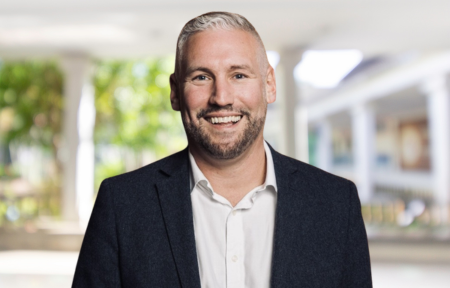
With more than 30 years of experience in insurance, Corey Nugent is a recognized leader in shaping risk solutions for Australia’s building and construction sector. His career spans emerging enterprises through to multinational insurers, complemented by influential work with the Insurance Council of Australia. Corey is known for his ability to bridge industry, governments and regulatory stakeholders, a capability that has positioned him as a trusted voice on national insurance and construction matters. He has been instrumental in guiding government legislation and regulatory frameworks on Latent Defect Insurance, LDIs, championing improved consumer outcomes and higher construction standards. His leadership includes driving international innovation and construction-focused insurance models, strengthening risk frameworks, and contributing to policy development across all levels of government. Today, Corey leads with a commitment to advancing industry standards, expanding national capability, and delivering next-generation insurance solutions that support a safer, a more resilient built environment. Oskar is a business development manager at SHC Insurance Brokers, focused on the growing adoption of latent defect insurance across Australia’s construction and property development sectors. Completing a Bachelor of Commerce at UNSW, Oskar joined SHC Insurance Brokers construction division as Australia’s regulatory landscape continues to evolve. Oskar brings a fresh perspective and a driven client-centred approach to one of the industry’s most significant emerging product categories. Prior to entering insurance, Oskar builds a career grounded in discipline and high performance by competing as a professional rugby player in the United Kingdom before returning to Australia to pursue a career in commercial insurance. That background informs the way he engages with clients with directness, resilience, and a strong focus on results. At SHC Insurance Brokers, Oskar’s building relationships across the developer, builder, and financier community helping stakeholders understand the practical and commercial value of LDI as a mechanism for quality assurance and long-term consumer protection. He is committed to growing awareness of construction insurance solutions that support a high standard of delivery and greater confidence for those who invest in Australia’s built environment. Welcome to both of you.
Corey & Oskar: Thanks Richard Glad to be here. Thank you very much.
Richard: Guys, I can’t wait to actually get into the show today. You, Oskar, you very kindly reached out to me after I’d done a presentation in Sydney. When I was talking about, which was mainly the apartment market that I was talking about back then, just the major perception issues that a lot of buyers have, and it’s an Australia-wide issue. The perception being that apartments are not very well built, that they leak, that they catch on fire, and there’s potentially gaps in elements of insurance, or really an education piece to help buyers understand that apartments can be lived in and they are actually suitable and acceptable form of accommodation. You very kindly reached out to me. started talking about a new insurance product that I’d been aware of for a while, but that seems to have really emerged, I believe, in New South Wales and is starting to emerge in Victoria. And I’m absolutely convinced, given that the show is an education piece for the industry, that having this type of insurance in place, educating not just the industry, also the actual end users being the buyers that this product is in place, will go a long way to actually supporting the apartment industry. And so I wanted to thank you both for coming on the show today to talk about both your respective companies, but also just to talk about some of the stats or the research that you guys have found. I think it’s absolutely important that everyone really knows what some of the findings are, but also your experience with advising different levels of governments, I believe, in terms of what the insurance or the impact should be. And so, it’s with that in mind that I’m very keen to just pick your guys’ brains today, talk about what you’re doing, what you’re seeing on the ground. So, before we get into the show though, I was keen to hear, let the listeners know both about Resilience Insurance and SHG Insurance Brokers. So Oskar, I hand over to you if you could start that.
Oskar: Yeah, for sure. So With SHC insurance brokers, they’ve been operating for over 35 years and for over 35 years specifically in the construction space. So, we’ve got some great sort of industry knowledge and specifically latent defects insurance. So SHC insurance brokers were the first insurance brokers in Australia to bring latent defects insurance into the market. And because it’s been new, it’s been quite a challenge to kind of educate everyone. which is why we’re here today. So, it’s, it’s lovely to be here. So thank you. With our deep knowledge of latent defects insurance, we have placed more policies around Australia than anyone else. And because we brought the product in, we specialise in this product more than anyone else. And it’s, and it’s been really interesting sort of this whole process because you kind of see problems all across the sort of the apartments, if that’s by confidence, if that’s feasibility. So, it’s really interesting sort of, you know, bringing this product to, uh, different stakeholders, you know, if that’s talking to, consumers, the actual apartment buyers, if that’s developers, but we have a great relationship with our insurer, resilience insurance, and that’s reflected with, bringing Corey onto the show today.
Richard: Great. Well, Corey, before we jump into the actual findings, is there anything else you wanted to add about, resilience insurance?
Corey: Yeah, sure. I guess and equally thank you again, Richard it’s a great opportunity to be here and talk with your listeners. I think in terms of resilience, where we’ve come from, we brought Latent Defects Insurance to Australia approximately four or five years ago. We’ve worked, as you said, we’ve worked extensively with governments, with industry, other stakeholders to try and build out that knowledge and understanding of how we can do these things differently, but how the insurance industry more importantly can support the property industry, builders and developers. How can we lean into that process and help them produce that product, which is in a tough market. And we all know that. How can we support that and improve that confidence proposition that is there? So obviously as the insurer or the manufacturer of the product, if you like, we’re the ones that produce the product, but working with insurance brokers like SHC, as Oskar said, they are the leader in Australia of distribution of this product. And have really paved the way for many of the insurance broker market to pick up and take this on. SHC is a leader. It’s great to be here with the guys from SHC and try and work through that with your listeners to move forward.
Richard: Okay. Well, we’re to start with the basics and really understand what this type of insurance actually is. But again, just to dig a little bit deeper in terms of setting the context, our listeners will be well aware over the last number of years has been a number of media articles, current affair reports, which show apartment tiles cracking or leaking or on fire. And unfortunately, a lot of the end users being the occupiers, renters or owners or investors see that article, listen to the show and assume by default that every single apartment project has these issues and that apartments therefore are not liveable, that they are not a good investments, that they are going to leak, that they’re going to crack, that they’re going to burn down. And it’s had a very, very negative impact on the industry. As we all know, apartment developers are actually quite different, and not every single project is the same. There are a number of developers, and I’d say the vast majority, that have brands to protect, reputations to protect, and want to actually deliver a product that they’re very proud of. Unfortunately, though, those media headlines have an outsized and very negative impact on sentiments. It’s actually the worst, certainly in Melbourne right now, although it’s just as bad in Sydney, come to think of it, because Sydney is a more mature apartment market, and have been a few larger or worse headlines in Melbourne. still, pictures say a thousand words. In a building on fire, or cracking tenants on Christmas Eve or New Year’s, moving out of an apartment, it’s an awful vision to see. When we’ve actually done surveys of buyers, they have said that they would be more prepared to purchase apartments and purchase of the plan if there was more confidence in the quality of the products. And when we’ve teased that out a little bit more, they’ve basically said, well, our perception anyway is that when we buy a house or a townhouse, it seems to be better built, it seems to be better insured. We’re not really sure if that’s the case, but that just seems to be the perception. Whereas with apartments, because they’ve been all over the news, they just don’t seem to be really good investments. As I said, that’s not really the case, but what has been very interesting now is that with this product coming through, I think that there’s a really good education piece for the sector, the buyers and occupiers to actually just give them more confidence that they are not going to be buying something that is a complete lemon or a complete basket case.
So that is, I suppose, the background just for the context for all our listeners. Let’s start at the beginning just because people may not even be aware of what a latent defect is. So what are latent defects and what is latent defects insurance?
Corey: Yeah, sure. I think going to that, to the initial point. So a latent defect is a defect that’s identified by the building occupier after completion that wasn’t known about or seen during the construction phase or the handover. It’s occurred after that building has been occupied. And those are the issues I think, Richard, that you were talking to before around that confidence point. We talk about it often that the issue we have right across Australia is a confidence gap. We have a lot of evidence, we do some work, for example, similar to your study, we did some work with apartments.com.au and looking at the consumer perceptions of where they sat, there was an absolute flight in consumer position to establish property as opposed to off the market, off the plan in that market. So, to that, what we know is that from that confidence gap, how do we bridge that? How do we bring that confidence back in? In terms of that media and those stories, we only hear the stories of the buildings that fail. We never hear the stories of the building that was delivered successfully. And by and large, the vast majority of them are delivered successfully. Constructing, multi-dwelling residential or commercial buildings is a very, very difficult thing. They’re complex structures. And getting into that space it’s a scenario at that point where we need to be able to restore that confidence in the consumer piece to be able to say that these buildings are delivered and they are well built.
Richard: Great. Okay. Well then let’s talk about what that insurance is, what it lets you fly through. We’ll dig deeper because we do have stats on, the impact of the insurance, but what, what actually is the insurance who takes it out? ow does that all work?
Corey: Yeah, sure. Okay. So the insurance has taken out from. And it is done extremely differently. This class of insurance to normal property insurances, it’s taken out right at the commencement of the project. That is before any dirt has been turned. And the reason for that is one of the key elements of the insurance is what we call the technical inspection service. So, we have an independent service on the, on the program, an independent inspection service that will look at all aspects of the construction, whether that’s architectural or all forms of engineering from structural, fire, water, whatever it might be. We’ll look at all of those elements throughout the construction of the project to ensure that it is delivered to standard. That program is not in place of anything that the builder or developer has, it is in support of what the builder and developer has. It is an independent QA for want of a better term for the benefit of the developer to ensure that what they’re paying for is what is being delivered so that at the point in time of completion and the policy is handed over to the owners, the owners have the confidence, one, that it was built by a solid practitioner, two, it was built well and somebody independent has checked, and three, that there’s an insurance policy that sits on it for 10 years post-completion. Now all of that insurance is organized by the developer generally. So, the developer would the one that would engage SHC and work through that process so that we can individually assess that project. You’ve mentioned before that every project is different. And we do look at every project, and we do the inspection program, differently on every project. There’s a fit for purpose proposition, not a cookie cutter. Here is a product, let’s mold that building into the insurance product. So, it is an individual proposition on each building and for each builder and for each developer.
Richard: Great. Okay. suppose, Oskar, did you have anything else you wanted to add with respect to basically what the policy is and when it’s taken out and things like that?
Oskar: Yeah, I think with Latent Defects Insurance, it’s important to get in as early as possible. So with the TIS, they’re an independent service from us. And they need to get in as early as possible so they can understand what the build is. So, for us, obviously, when we ensure their project, we need to know what’s in it. Essentially, we need to know how it’s built. And that’s why the TIS reviews all the plans. They go through a series of some pretty detailed reports. And it’s sitting alongside everyone. So if that’s the broker, the insurer, they report to the insurer and they sit alongside the developer and the builder. They don’t get in the way. They don’t have the right to stop work or to tell the builder XYZ. It’s again there for another set of eyes. And builders appreciate that extra set of eyes. It’s again, it’s not to get in anyone’s way. It’s more again, just to kind of be there on site, make sure that again, they are what they’ve described in those initial reports is what exactly is going on at site. And I think that’s really important.
Richard: Sure. Okay. I want to just tease it out a little bit more with a couple of practical examples, just so that I understand how this all comes together. I’d like to believe that I do, but maybe I don’t. And then certainly just to explain to a lot of our listeners. So, as it stands right now, or let’s rewind five years ago. You buy into a new apartment project. It’s a build to sell project. You purchase, you settle, you have 50 other owners in the building. Everything’s fantastic as you move in. Three or four years later, the building starts to leak badly, and you start going, oh my goodness, what’s going on? You have your owners’ corp meetings. You probably at that time even learn what an owners’ corporation is because that’s reality. People don’t really even know what they are. Suddenly, you maybe get a building inspector that comes out and goes, oh no, this hasn’t been, there’s defects. It’s not being built correctly. It shouldn’t be leaking. It is leaking now. Here’s what it’s going to cost to rectify the building, then a lot of the owners probably would just assume, well, I’m sure there’s some sort of insurance that covers it. We pay our owners’ corp fees. There’s building insurance. What is actually happening right now if this insurance isn’t in place?
Oskar: So just touching on that, we have empirical evidence where with defects, there’s a bit of a bell curve. So, they start to appear around year three and I believe they start to come back down around year six. And that’s really important because when you look at the bond, the new bond in Victoria and the bond in New South Wales, that lasts for two years, right? So, these defects are typically occurring once the bond is gone. And these. Again, these apartment owners, right? This is the biggest purchase of their life. They want to know that what they’re buying is what they get. And I think that’s really important. If you put yourself in their shoes, it’s the biggest purchase of their life. And I believe that they should have a warranty on that. And that’s why latent defects insurance offers a 10-year strict liability, which is first resort, which comes straight to the insurer. Any defects that occur within those 10 years.
Richard: Okay, so I want to keep teasing it out a little bit more because this is important and where everything is breaking down from the buyer’s end. In years three to six, I wasn’t aware of that, so thank you, that’s when a lot of those defects actually start to manifest. That is quite remarkable to me. So let’s just say if we run numbers five years in, the building leaks, it needs to be rectified. Often you see then in the paper that the owners’ corporations then have to raise a special levy to actually sue the builder. Why is that? Are there no warranties already in place under the legislation? So, is there basically a gap as it stands right now?
Corey: So essentially using that case study, we go Richard, so at the moment, if we take a New South Wales and Victoria as its emerging proposition, we’ve got a bond. So building has delivered for two years, there is a bond and the developer is looking at that and saying, I’ve done a great job. I get the bond back after two years. Let’s assume the building you’re talking about was a hundred million dollars to construct. Whatever the asset is worth now and five years in there is a defect. The developer had the bond paid back. So, the consumer is now sitting there saying, my only option is litigation. So, you’re dead right. The consumer, the body corporate in that case is going to a lawyer and engaging experts. There has already been a special levy to fund that ahead of the special levy that may well exist to continue that litigation. And then depending on where that sits, the actual rectification, which can take months or even years in many cases, but that will be entirely funded by the body corporate, that is the owners. In doing that, just because the bond was returned doesn’t mean that the builder or the developer are out of that game. They are a party to the litigation. They now need to defend that. So, there is a cost to them. Oskar made a really good point that when the bond is gone, it’s not something where you move away. That risk, financial risk remains for all stakeholders. Yes, the consumers. And we all feel for those owners in those cases, like the Christmas Eve example, we all feel for them. There is no current proposition in or there has been no proposition to protect those owners other than litigation, which is extremely expensive and time consuming. Latent defects insurance changes that because, we won, we have the insurance proposition that is protecting that building for the building value, not 2% because that’s the other important factor with the a hundred million dollar building that defect, the waterproofing defect, the 2% bond had it still been in place, only provided an absolute limited $2 million. Once that’s exhausted, we’re back to litigation again. Right. The latent defects insurance is strict liability. That means we’re not doing that on the, on the prospect of needing to find fault, which is what happens now with those litigation cases. It is the insurers is taking on that liability and it will deal with that later down the track, but it will take that on so that the owners are able to be remedied and put back in a reasonable position immediately. So, they’re not impacted. And we work with the builder and developer at that case to say what went wrong and how can we fix that? The insurer is the one that’s paying the bill at the end of the day, which is why the insurance exists for the billing value for the 10 years.
So, we’ve covered well beyond that bell curve that Oskar spoke to. The owners have the confidence that if something goes wrong, there is an insurance policy in place and that value of the insurance. actually increases year on year, given the time that the policy lasts. It increases from that point of time. So, it is a vastly different proposition, one side to the other. I’m not saying the bond doesn’t work. I’m just saying that it has a limited lifespan and a very limited value, which puts both builders and developers and consumers at heavy risk of needing to follow that litigation path.
Richard: Thankyou for explaining that. I’ve even got friends, unfortunately, that have been in some of these buildings where they’re educated, they’ve donenothing wrong. And they’ve literally gone, we now have to raise a special levy to sue a developer or builder or whoever. This is going to, as you said, take ages and cost lots of money. This product basically allows them or the owners corporation to basically make a claim and get it rectified without having to spend money in litigation.
Corey: That’s right.
Richard: Alright great. We certainly need to be educating the buyers on this most importantly, because I’ve known for a while now, a lot of the investors would go, well, we’re paying these outrageous owners’ corp fees, which we don’t understand. You’re now saying we need to raise a special levy to sue a builder on our building that now has lost value. We can’t sell the apartment, for example, because of all these defects, or we sell it for a 20% discount. It’s been a huge, especially in Melbourne and also in Brisbane, where there’s a huge investor segment of the market. It has really lifted a very negative impact on investors.
Advertisement: Quickly interrupting this episode to tell you about Charter Keck Cramer. Charter Keck Cramer is an independent property advisory firm with offices in Melbourne, Sydney, Brisbane and the Gold Coast. Through our collaboration with Anderson Global, we connect with over 18,000 professionals around the world. We provide strategic property advisory services spanning multiple market sectors. Our advisory team provides specialist advice across transaction management, tenant representation and lease negotiation, strategic portfolio reviews, development advisory and more. Complementing this, the Capital Division advises on structured property partnerships connecting property owners and tier one developers. Our extensive valuations coverage includes Prestige Residential and Greenfield Development Markets together with all commercial asset classes. Quantity surveying is at the core of the project’s team, ensuring cost control from planning through to post-construction. And our research team delivers property data and analytics across the residential living sector, along with expertise in strategic land use planning and urban economics. With specialists across a diversity of sectors, Charter Keck Cramer is your trusted property advisor. Now let’s get back into the episode suppose.
Richard: I’d like to talk to you, you said you you’ve brought it into Australia and Oskar when I was preparing with you said, has it come out of France? Is that right?
Oskar: yeah so it, originated in France and it’s around the world. It’s operating in over 40 countries. And I believe it’s mandatory and over 15. So it’s, it’s well and truly tested. I believe the largest claim was the 2004 Charles the Core? The airport and I believe that claim came out. I think that was a water proving issue or water collapse. That’s it. And I think that came out at 250 million Australian dollars. So you know, this is a tested product. It is new to Australia, but it is a tested product and it works.
Richard: Great. Before we get into the figures, I can’t wait to do that. You have said that you have been helping the New South Wales government and also the Victorian government, just educating them about how the product works. My understanding, please correct me I’m wrong, is that New South Wales has started to, or has already legislated this in, and it’s coming into Victoria. Can you please just let our listeners know what the status of all of that is?
Corey: Sure. So, we’ve worked extensively with both governments and outside of that with other governments as well. New South Wales, we’re probably first to the table and Victoria, certainly caught up with that and is now regulated this space. But what that means is that as a result of many of those building failures that you were talking about, about seven or eight years ago now, the New South Wales government implemented a reform program called Construct New South Wales and latent defects insurance or dissenual liability insurance as they call it was one of the branches of that reform that they put in place in New South Wales. It has been legislated and the government is now changing some of that legislation to advance the knowledge and ability of that product to work appropriately in New South Wales. And the insurance market is coming to that. Resilience has been there since day one, but others will come over time. That’s a positive for the market. Competition is good. Opportunity for consumers to get confidence is really good. In Victoria, they’ve recently done the same thing. So, Victoria has introduced a bond which will commence next year. And they’ve also introduced what they call decennial insurance, which is latent defects insurance, which will commence around the same time. The way that operates is that a builder developer will have a choice of taking out either a bond or latent defects insurance. Now, that’s a critical choice in this space. And we do hear from a number of different builders and developers and the position is not right or wrong either way. What is the protection that they’re looking to provide their end consumer and how do they use that to ensure that what they’re providing builds that confidence? We spoke right off the bat that we have a confidence problem in terms of apartments. People have a lack of confidence. It’s not, is the builder good, is the developer good? It is, will consumers turn up to a display suite and put money down to purchase an apartment over an existing property? The answer at the moment is no. With a 2 % bond, yes, there’s a financial element that I put it in and I get it back. The theory around that doesn’t stack up and we might go to that later, but the theory of that doesn’t stack up. Whereas the early I proposition absolutely gives that confidence to the consumer that there is a real tangible and meaningful protection in place, both in terms of build quality, cause we checked that and in terms of financial benefit, that there’s an insurance policy off the back for a long period of time. So that’s a tangible difference on one side to the other.
Richard: Great. Thank you for that. Just to again, close it off before we get into the stats with New South Wales. So, is that actually in legislation and is this required to be taken out or is it still optional? No, it’s a little bit of both. So, in New South Wales, it is mandatory that you must take a bond. The developer must provide a bond. It’s now also legislated that the developer may choose instead of the bond, to take LDI into a latent defects insurance That’s what I wanted to tease out because in our preparation, you had evidence that basically said having some of this insurance gave buyers more confidence and it actually converted into either faster sales or higher pricing and things like that. So, let’s talk about that because I know a number of our listeners, I mean, they hammer me all the time going, Richard, you make a statement, where is the evidence to prove it? What evidence do you guys have, whether it’s from Australia or overseas in terms of the, I suppose, the return on investment or the value for money and taking out this type of policy?
Corey: Absolutely. So we’ve got a lot of on the ground evidence at the moment. The product’s been here for four years, so it’s a building evidence set. Supporting that, we’re actually finalising right now a white paper setting out exactly what those numbers look like and what the experience is in the early days. But what we do know and we’ve done a number of different studies and investigations. We did do one with apartments.com.au where we went and spoke to consumers around exactly this. What does a consumer think if they now understand LDI insurance? What likelihood or what’s the percentage of those consumers that would require LDI on their job? And the number was 64% walked in and said, we will require LDI on the job. And that’s an important point for the developer because we’re now talking to the people that they’re trying to sell to.
Richard: Their target markets.
Corey: Simple supply and demand means that if someone is sitting there saying, I’m looking, I’m in the market to purchase a, apartment, a property, I want this product. They will pay the reasonable value for the product that they want, not the product that the market is saying, well, we can’t charge more than we’re in a housing crisis. People are paying what, what the market rate is. They will select and we now have a much more savvy consumer segment. They have been much more informed. They do a lot more research. When they have these sorts of details. We’ve seen it in New South Wales extensively. In fact, there’s been some media reporting to that where, for example, two buildings right near each other within 50 meters of each other, one with LDI, one without it. The building without LDI still after nearly 18 months still has apartments for sale.
Richard: Gotcha.
Corey: The building with LDI opened on sales three months after and sold out. Now I’m not saying that LDI changed the world, but it’s a fairly damning position. And it was in the Sydney Morning Herald, the article that was written. And they did interview various purchases, and they said it did make a difference to their purchasing decision. So, there is that proposition. We’ve also seen in various other buildings around New South Wales, because the price obviously been we started there. We’ve seen different projects where the sales price and this will go into the white paper and be the evidence and reviewed. We’ve seen the uplift in sale price. So, we’re talking development costs now, not construction costs. We’ve seen evidence of the uplift in sale price anywhere from 1 to 4% on the sale price. That’s meaningful because when we talk about all its insurance, it’s a cost it out, that sales uplift automatically has already paid for the insurance. It’s already paid for. And the consumer is happy to pay that price if they know that they’re not going to live like your family were talking about before. They’re not going to live that experience. People will pay for that protection if it’s a reasonable number. They will pay for that protection if it’s in place.
Richard: Very interesting. You said it’s been in place for four years. The next step, and maybe I’ll even delve into this with the team, is I didn’t be interested to see the resales and the value there because unfortunately, in Melbourne and Brisbane, there’s a number of projects I see where apartments come back to the market and leaving aside the impact of negative gearing now or the loss of negative gearing in the federal budget on the resales of apartments. But they do come back to the market and if there’s issues with the structural integrity of the building or the owner’s corporation is in deficit, often they are discounted. So I can’t help thinking then that there will actually be an improved resale value which we’ll have to track.
Corey: I agree. I think that’ll take time. There’s a really good article only in the last few weeks about Opal in Sydney where the lead of the owners corporation had reported that only in the last months that they were able to sign off that the building was now defect free. And some of that research was, well, what is the property value now? What is an apartment worth? And none of those apartments on resale had yet reached the number when they were originally sold. So, there is that legacy proposition that does exist. I think you’re right. It’s something we’re to have to monitor and watch over time because it’s only been here four years, producing the building, seeing the life, watching claims when they happen, if they happen, and then building that confidence will take time.
Richard: Gotcha, Oskar, do you have any other thoughts that you want to add? Cool. Let’s shift gears. Let’s jump onto governments. What does, what else does government need to be aware of? You’ve obviously done a lot of work with both New South Wales and Victoria and I suspect listening to what you said, other governments. What else do they need to be aware of?
Corey: Yeah, I guess at the moment we know that there is talking anecdotally in terms of language and as you say, there’s a housing crisis, there’s an affordability crisis, there is a cost of living crisis. So, we know that things are tough economically out there and people don’t have a lot of money to throw around. What we need to do, we also know that the government is looking to increase the supply of housing, which we need to do through the housing accord. What we need the government to be able to look at in that space, probably federally and then back into the States is to sit there and say, if we’re going to increase the number of homes that are coming into the market, how do we make sure those homes are well built? Because we can end up over the period that was set for the housing accord of producing an extra 1.2 million homes, we run the risk if the quality is not there and we continue that lived experience of poor buildings, we run the risk of really damaging the property market for a long term into the future.
Richard: Gotcha. Can I ask, as you’re talking this insurance, does it also, or is it required for other types of residential housing? So for example, houses, townhouses, terraced houses, you’ve obviously spoken about apartments. What are your views on that?
Corey: Yeah. So, there is currently insurance mechanisms all over the country for single homes and duplexes and those sorts of things. Those schemes operate differently between the states. So, Queensland, for example, has a very different model from New South Wales. Victoria has just moved their scheme positively in my view to a similar model to Queensland. I think the Victorian government’s done a fantastic job over the last couple of years of that reform work. There is an insurance product that’s generally written in most areas by the individual states. So, they have state insurers that provide that. So I think that’s the missing gap is that there’s always been an insurance product mandated for single homes and duplex. There’s never been an insurance product in Australia for that medium and high rise residential.
Richard: Very interesting. Well, certainly there’s a change in living preferences. People are living in apartments, townhouses and it seems that your product is starting to close a critical gap. And I see it time and time again that it’s the buyers just wanting that security, security of what they’re actually purchasing. And it’s very interesting to hear. I’d wondered, because I don’t think I’ve ever heard a story about this type of issue in like a house and land estate. That being said, I speak with the builders there and our listeners would probably already know every single new product dwelling, has a certain level of defects that do get rectified. Often the media portrays product that has defects as just being faulty, which is actually not correct. The nature of, I suppose, building and construction is often there, whether it’s single family dwellings or whatever it is, they actually do have an element of defects in the builder for the most part, will come back and rectify them. Obviously, the apartments get the headlines. And it occurs to me now that the reason also is if it’s off that five-year period and there’s nothing actually covering it, that’s kind of why you’d get those current affair articles popping up. It’s good then that the, and certainly I would then be encouraging the government or certainly I think it’s almost a no brainer to level the playing field by if this type of insurance is mandated for single family housing, it should be the equivalent if they’re looking to do medium and high density and. you know, provide dwellings in the missing middle or around activity centers or the Todd transit zones to actually require this type of insurance. So if the consumer, end user actually has much more confidence that the product they’re buying is fit for purpose.
Corey: Absolutely It protects the builder, it protects the developer. But when those things go wrong, there is always a government response. When there’s a government response and that’s cost, that costs us. Avoiding those issues is critical. You’re dead right, it is a no brainer. There is a model out there. that can solve for this issue. And it’s there. We just need to move forward and put it in place.
Richard: Gotcha. All right. Well, I know we’ve got through a lot today. I suppose just to close out with any other key thoughts either of you had in terms of ideas to leave with our listeners to think about.
Corey: Yeah, I think you started off with this and we were talking about this being an education piece. We’re here to talk and try and educate that position. And of the reasons we’re here to support SHC insurance brokers is exactly that. I’m not expecting people to jump in and ring you or ring me and say, I’m going to buy this. It’s about education. People should be reaching out to SHC insurance brokers, making contact and getting that education and learning how they can dump that into their next project or into their business.
Richard: All right. Thank you, both guys, for coming along today. I thought it was a really productive session and certainly it’s been very eye opening to see that there’s a gap in the market that really does need to be closed because it’ll go a long way to actually helping buyers get more, just more confidence in what they’re actually purchasing. And I kind of thinking it’ll, it’ll support confidence in especially the apartment market, which needs as much support as it can get right now. So thank you very much for you all, for both of you taking your valuable time to come on the show.
Corey: Thanks a lot, Richard.
Oskar: Thanks very much for having us.
Richard: Hi everyone. I hope you really enjoyed the episode today. All about latent defects insurance. I certainly found it absolutely fascinating and it’s fantastic to see that as the apartment market and the industry as a whole starts to evolve, that there are insurance products coming into place to actually level up the playing field and to provide appropriate cover similar to what is being provided in the detached house and land market already. The three key take-outs for today that I’d like you all to think about and apply to both your projects and investment and development decisions are as follows. I think it’s great that this type of insurance has actually come into place because almost the number one apprehension that apartment buyers and investors have is that the product is not as well built or doesn’t hold its value because of the poor construction compared to a house and land package. If there are the appropriate insurance mechanisms in place, I do believe that’ll go to giving purchases much more confidence and comfort to actually make purchases of this type of product. The second finding, tying into the first finding is really the role of the industry now is to actually educate the end user, being the buyer, whether it’s an investor or an occupier and also the, I suppose, renters. That’s the insurance is in place, and it should certainly be in place and I’d be suggesting it’s almost a no-brainer to take out this type of insurance, but educates the end user that the product is or has this type of insurance. Again, I think that’ll go a long way to actually improving the current quite negative perception of apartments. Projects in certain areas or certain sub-markets, particularly the ones that are dominated by investor-grade apartment projects. The final point then that I’ll make before we close off is that there will be links in the notes to some of the information that has been provided on the premium, both from a price perspective, as well as also a faster sales rate for these products. I do understand that further work will be carried out and I’m sure you can reach out to SHC and just get further information from them because I believe that that data and evidence certainly will help everyone make the right decisions, purchase this type of insurance and certainly advertise the end user that that is in place. And if it comes down to proving financial returns, both the developer and then also the end user, again, it seems like a no brainer. You know, that’s what I need to say for today. I hope you have a good rest of the day. Thank you very much. Bye.
Thank you very much for listening to this podcast. If you enjoyed the episode, please make sure to subscribe to our podcast so you never miss an episode as we’ve got more exciting content coming. We’d love to hear your thoughts. Please leave us a review on either Spotify or Apple Podcasts as it really helps us to grow. Also, follow us on Instagram @PreciselyProperty for updates and join the conversation. If you’d like to get in touch with us, subscribe to our newsletter via our website, charterkc.com.au or writes to us at podcast@charterkc.com.au. Lastly, if you found this episode interesting, please share it with your friends and family. Thank you again for listening and stay tuned for our next episode dropping in two weeks’ time, plus bonus content also on the horizon.
Disclaimer: Precisely Property is a podcast presented by Charter Keck Cramer and is for educational purposes only. Nothing in this podcast should be taken as investment or financial advice. Please engage the services of an appropriate professional advisor to provide advice suitable to your personal circumstances. The views expressed by our podcast guests may not represent those of Charter Keck Cramer.