This episode was recorded on the land of the Wurundjeri people of the Kulin Nation. We pay our respects to their elders, past, present and future.
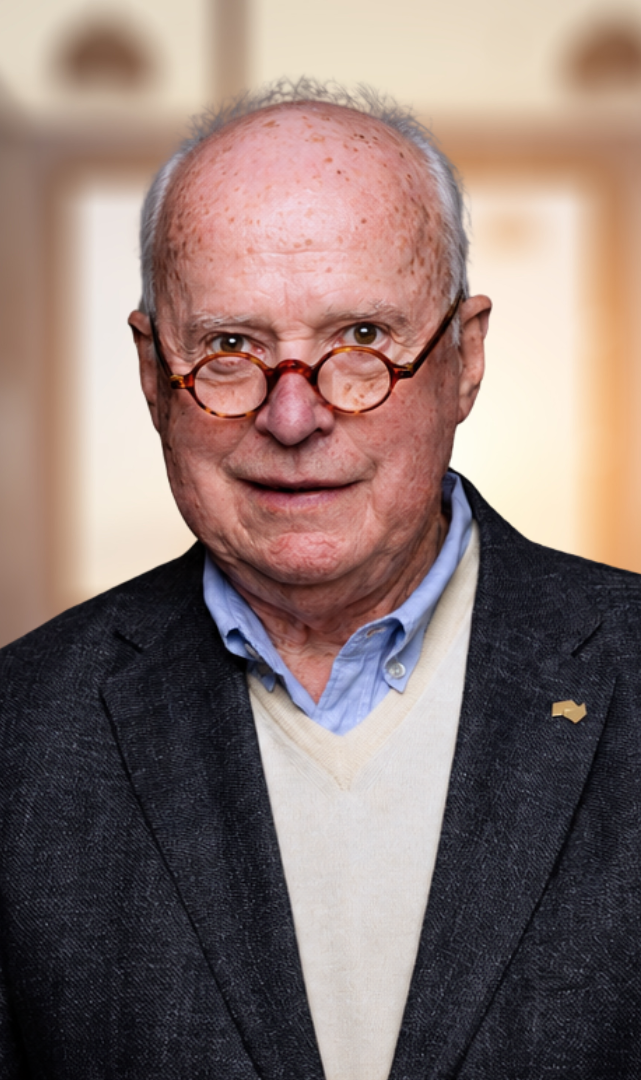
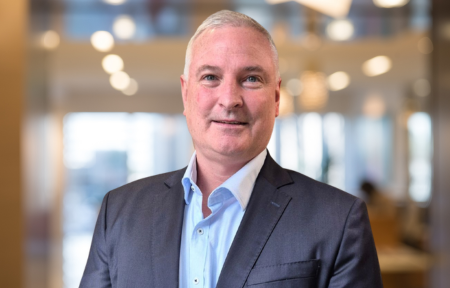
Hello and welcome to another episode of Precisely Property. I’m your host Richard Temlett. I’m excited for you to be with us today. If you’re here for the first time, thank you for joining us. I encourage you to listen to our previous episodes, where we discuss all things property, with a focus on dynamic discussions with industry leaders. In this episode, we’ll be talking with Barrie Harrop of Thrive Construct. So sit back, relax, and let’s get started.
With over nine years as executive chairman at Thrive Construct, Barrie has focused on leading innovative approaches in construction to deliver affordable, high quality housing at significantly reduced costs and timelines. Supported by expertise in angel investing, construction and innovation management, the team at Thrive is committed to reshaping sustainable urban development. Thrive Construct’s mission underpins a dedication to creating cost effective, environmentally conscious housing solutions. By fostering strategic partnerships and leveraging innovative tech methodologies, Thrive strives to redefine urban liveability and deliver projects that enhance communities while prioritizing environmental stewardship.
Welcome Barrie.
Barrie: Thank you Richard for the opportunity.
Richard: Barrie, I’m so, so excited and actually very honored to have you on the show today. I’ve spoken to you offline about just your very impressive bio and I’m keen. We’re to tie everything we talk about today back to ways to solve the housing crisis in Australia. I’ve read a lot of your work. I’ve seen a bunch of your publications and I think what you’re doing in a lot of areas is actually market leading. And I’m very keen to just talk to you about really what you’re doing, educating our listeners and what you’re doing. And hopefully then I’ll able to also reach out to you to, to partner up or to get involved in one way or another. In terms of today’s session, we will jump into your background and also talk about Thrive Construct. But before we do that, I wanted to just ask you an icebreaker question and the icebreaker question is as follows. When you look back over your career, what’s the project or achievement that gave you the greatest sense of pride, not necessarily the biggest, but the most meaningful?
Barrie: Thank you, Richard. That’s a fairly emotional question with me, primarily because my response is not going to be about the biggest and the best and changing the direction of cities. But essentially my mother in the sixties was so-called a deserted mother. That’s the legal term. But I found myself being the eldest of seven children and my mother struggling to keep a roof over her head. And I was determined by the age of 21 to buy my mother a house and give her a freehold title. I never achieved that dream, but I did at 24. And the second occasion, when I got married several years later, just starting off in real estate, finding my way. I needed a house and I focused on Unley Park, which is the most expensive residential precinct in South Australia. And somehow I managed to get a house in Northgate Street for free. I discovered a house that was derelict and run down. I approached the owner. I did a deal. I cut the land off at the back, sold that to a friend, and I ended up with a free house in Northgate Street, Unley Park.
Richard: I’m actually quite blown away. I’ll start in the order, that you’ve, you’ve mentioned them and that is an absolutely amazing achievement at 24 to be able to do that. It’s particularly for your mom. I can see why you and you are a bit, a bit emotional and I can, and I respect that that, is significant and I commend you for that. Obviously you clearly have a lot of drive and you focus on your goals. Which certainly when I, it makes a lot of sense now and actually see some of the projects that you’ve delivered. So I commend you for that. Perhaps on a more lighter note, think that that’s absolutely brilliant that you ended up getting effectively a free house. And again, it gives me a bit more insight when I’ve read some of the documents that you kindly provided to me that will obviously form part of the show notes of this podcast. You’re obviously thinking in a very entrepreneurial developer way and to be able to actually do what you did there with the derelect house, chopping off part of it and then selling it off and ultimately getting a free house. I think it’s absolutely fantastic. Probably one of the best responses I’ve ever had. Thank you very much for that.
Barrie: Pleasure
Richard: All right. Let’s jump into the show. Before we get into Thrive Construct, and I’m very keen to obviously chat to you about that. I’ve underestimated in a good way, but underestimated your background, both in Australia and overseas. And when we were preparing for the podcast, you gave a couple of examples where I effectively asked you just to repeat yourself a little bit more and to go into a bit more detail because I didn’t really realise the significance, experience you have in urban renewal. And you spoke about a project in Melbourne that I’m keen to talk about. And then also you said that you’d worked over in Japan, if I’m correct. So, I’d love to be able to just talk a little bit about those two examples with you really. It’s to educate our listeners on the fact that you’ve been in the industry for a significant period of time. You have an enormous amount of experience. You’ve gone through different market cycles in different countries. And that frames the context why I actually think people should really be listening to you right now with your insights and what you’re doing. And obviously we’ll get to that with Thrive Construct. So let’s start with Urban Renewal and particularly in Melbourne, the project that you named. What was your role on that and what did you do there?
Barrie: Thanks, Richard. My role there was essentially the project initiator. It followed a very successful project that I did in Adelaide. You probably can’t imagine a large shopping centre in Australia without a food court. Well, in the gallery in what you call the place Adelaide, we created the first food affair, which was Australia’s first food court. And a lot of innovation came from that, of course, because the tenants didn’t exist. We had to create them. And one of the tenants that I was involved with, a couple of guys wanted to sell ice cream. So we created a company called Wendy’s. Within two weeks, those two guys were earning as much as the Prime Minister of Australia. their plan was to have a store each. They came up to my office with their grand plan. And I said, well, my grand plan, given that you are going so well, is to open 300 stores across Australia. anyway, they ended up selling about 7 million cones a week. And both those guys retired with a huge fortune. Other innovation that came from that project was we put R.M Williams into the retail space. I went out to see the then owner, John Swain, the sort of late seventies. And his response was that, Barrie, I’ve got 15 people back here in my tin shed making boots, sails and whips, and I can sell everything I can make. And my clientele is from the country people and the city guys will not buy these products or the boots. I said, well, I think they will. I’m prepared to rebrand your business. I’m prepared to set up the store. I’m prepared to underwrite the store. And he said, that’s an offer I can’t refuse. And we went ahead and opened R.M first CBD retail store in the world. And then that followed to Melbourne Central, of course. We were amongst 90 registrants for that project. And it narrowed down to the final three. It required bold thinking in that era because that end of the city was totally derelict with no footfall. And it required implementation of a vision to connect the retail spine through the city of Melbourne. Fortunately, I had this experience with the gallery, which was hugely successful. I don’t know whether you can imagine, but um we opened that gallery food affair in the basement of Caller Place at 30,000 mills on opening week, and it went out to 60,000 mills in the Christmas week. I originally forecasted 7,000 mills a week, and no one believed me, including the owners that we sold the project to National Mutual, and they got an independent report on my projections, but they still went ahead and backed me. So that was the start of really Melbourne Central.
And Melbourne Central at the time, I think the government were looking for basically innovation. They were looking for inspiration to lift the spirits of the city. Melbourne in that sort of mid 80sera was going through a pretty tough period, probably not dissimilar to today. And they were looking for something pretty magnificent. And I co-opted a small firm of architects in Adelaide led by John Morphett called Hassel. In those days, they had a very small team and we drew up the winning proposal on John Morphett’s kitchen table to create the retail spine through the centre of Melbourne. Hassel’s today, of course, are a major global architectural practice, I think with 800 odd people. So that was a significant opportunity for Hassel. That was the launching pad into the national, really the international market, that project. My projections at the time were seven million people a year going through the project. The minister at the time thought my numbers were a bit blue sky. I reminded him that I only got my projections from his bureaucrats from the Underground Railway Station, and that was sort of a quietening impact on him. I did see him at the UN in New York about 15 years ago at a dinner at the Australian Embassy, and I reminded him about the conversation and… I also reminded him that currently it’s about 30 million people going through Melbourne Central. Of course, by the end of this year, I mean, it’s probably going to be more like 60 million people. So, it’s essentially the largest, most successful urban renewal project in Australia’s history. But more importantly, it became a catalyst project that’s attracted about $9 billion worth of new investment into that region of the city. So quite significant. And I walked past the project today and it’s four years of my involvement. I still shake my head. I can’t believe it’s there.
Richard: Barrie, that is absolutely incredible. I lived in Adelaide for a number of years. know Guala place very well. I know I live in Melbourne and I pretty much go through Melbourne Central every day. I had to do university assignments a number of years ago on it. It’s actually remarkable that you did what you did. And now I’m a bit more experienced in the industry, I’m aware of the very, very difficult economic periods, Melbourne and Victoria is going through at that time. It’s people like you is very forward thinking views. You might call it blue sky thinking that it is the reason why we have amazing projects and amazing developments because you are, it’s clear to me even back then when you, when you basically did your, you know, your first house, as you said, in terms of chopping up land, you think differently, you think entrepreneurial. You’re ahead of the market. Again, it gives me a lot more context now as to what you’re doing with Thrive Construct and I can see the significant impact you’re going to have. And can we please, before we jump into actual Thrive Construct, you said you’d worked overseas and in Japan and you also made another comment about urban renewal overseas. And I’m a little bit interested or fixated on urban renewal because I do a lot of work for the different states, government departments, mainly in Melbourne, but also in Sydney and more and more in Adelaide on these large urban renewal precincts. And I actually spent a lot of time looking at overseas markets and overseas examples. So you said you were doing work in Japan. I believe you sense information in some of the slide decks, but what was that project all about?
Barrie: Sure, Richard. Through the 80s and 90s for 16 years, I was one of the board advisors to the old Industrial Bank of Japan, which subsequently merged with Musso as top 10 bank in the world. I spent about 40 years going in and out of Tokyo. So, I got to build up quite a strong network in Japan. And one of my friends in the Industrial Bank of Japan, it’s IBJ it was called really, he was starting up a business called Koa, which was a real estate business, basically providing accommodation for Western. diplomats, staff in embassies, et cetera. And he sought my advice and help in Japan. Prior to that, he came to Adelaide and I showed him around my urban renewal projects. This is hard to believe, but I actually did the first major urban renewal projects in North Adelaide in 100 years. And he liked what I did, and he said, well, I want to do this in Japan. I questioned whether there’s a market for it. But he convinced me to have a look at the plan. And we zeroed in on Torontomon, which is adjoining the American embassy. But it was kind of a derelict precinct. Some large dwellings became embassies, et cetera. And I said to him, well, look, we ought to just focus on Torontomon. There’s a whole strip through here and let’s focus on developing a strategy to provide Western style accommodation for the embassy people, staff particularly, who didn’t really want to live in Japanese style housing. It’s actually quite challenging living in a Japanese house, traditional japanese house. I think when we got up to about 36 projects, and in those days, those projects were six to 10 level kind of mid-rise projects. Today, a lot of those projects are being replaced with 40 and 50 level towers. And you would say it’s probably the biggest urban renewal project in Japan’s history, that project. So, I was involved with the late Kishu Kurokawa in Japan as well, a famous architect and involved with Ashito Kato, who was the head of Coa. That company is now merged with Nippon Steel. It’s a major investor in Tokyo. So, a bit of history there for you.
Richard: Incredible. I’ve crossed paths quite recently with Nippon Steel. Obviously they wouldn’t have the connections that you do, but they’ve obviously taken a, they’ve had an interest in Australia for a while and it’s good to see them looking more at Australia, but also just some of the work that I’ve seen them do overseas. It’s absolutely incredible. All right. Let’s jump into Thrive Construct and let’s start with some of the basics. So who is Thrive Construct?
Barrie: Thrive Construct is Peter Billis, an accomplished architect, a friend of 40 Ideas. I never actually gave him any architecture, but he did pester me for a long time. ut we remained friends and about 10 years ago, we caught up with each other and decided that with our knowledge and experience, we should look at the affordable housing situation in Australia. I mean, this crisis has been looming for probably 20 to 30 years. So 10 years ago, was just the beginning really of the understanding of where the crisis was leading to. So we tried to do something about it. We’ve spent a lot of time, money, effort to, everyone says it’s like a great foresight and initiative, but it’s like a 10 year overnight success story. So we then did a lot of IP development. We still continue to do that. We’ve never uh sought one cent from any government agency to support our endeavours. I just felt that I didn’t have the time to be filling out forms and making applications for grants. We had so much work to do and we simply got on with it. So we developed up the IP around our model and our thinking and explored lots of ways to scale up that project over the years. And we’ve now come to a phase in the scaling up of this plan. with a partner from China, where I’ve got a deep relationship with a whole range of major corporations in China. And basically, that relationship came about through, I was headhunted by a Chinese investment bank about 12 years ago to set up a plan to create a new city for 400,000 people in Central Asia. And as executive chairman and that plan involved building this new city for 400,000 people over 10 years, including relocating the national airport and connecting the project through a corridor with a potential fast train link from Beijing to Paris. A pretty amazing plan. So went about identifying that land opportunity. put the team together and I ran that project as executive chair for seven years and in mid-January 2020 because of all the travel issues I decided to make an exit. Of course, seven weeks later the world collapsed with COVID but we had spent probably about 90 to 100 million over those seven years on professional fees, planning and as a greenfield site. So we did a lot of work to create those entitlements around that project. So there’s a challenge there for me to go back. I’ve been invited to go back and take a much bigger slice than I had before, but I’m still kind of considering that. But I co-opted Bates Mart in Melbourne to do master planning for me and Arup Engineering Group. A lot of experience in that region and in the greater China. And so we put together a pretty comprehensive master plan for that entire new city on the Grinchill site. I learnt a lot about fast tracking, faster market, scaling up housing. That was essentially a mid-rise city, a walkable mid-rise city. 400,000 people over 10 years. So, the Australian… housing crisis didn’t seem that daunting to me, given that I had got the framework in place to do that project. Since I sold out of that project, I have now focused and used those relationships, of course, towards forming what we call the Thrive Alliance, which involves China State construction.
Richard: I’m just trying to keep up. This is absolutely incredible. All right. Let’s talk a little bit more then about China State. construction with what obviously you’re able to share. What is that alliance? What is your role? What is the goal in? Late November last year, we concluded a joint venture agreement to enter the Australian market with a scalable, what we term, advanced volumetric modulus. So that’s like a 3D advanced modulus system that is basically 95 % complete before it hits the site. So when it gets to the site, it’s essentially like assembling a big Lego set. Essentially, even with hotel suites, we could even provide the beds with the linen, even the soap. So it’s basically a turnkey solution that’s essentially about 75 %faster to market. We’re doing it in green steel, so there’s an opportunity to create a new market. GDP growth market in Australia for green steel production around this project. And there’s also an opportunity for us to scale up in affordable housing. And that’s very dear to my heart to provide affordable accommodation, particularly for the 2.7 million Australian essential workers who are very important to our well-being. and to the many millions of key city workers struggling for affordable accommodation, pushed to the outskirts of cities, creating lots of stress on commuting three and four hours a day, particularly in the Eastern seaboard of Australia. There’s a significant opportunity in my view to do major scale urban renewal and infill housing where there’s transport corridors and existing infrastructure.
Richard: Gotcha. I’ve made a couple of notes and I’d like to just unpack them a little bit more with you. The first one you mentioned is modular volumetric construction. And I’m going to ask a couple of obvious questions that will be obvious to yourself, but perhaps not to all the listeners. Why are you looking at modern methods of construction versus conventional methods of construction?
Barrie: Sure. I emphasize this on scale, Richard. On scale, we’re about 30 to 50 % below the current, custom building costs with exquisite detail and finishes and detailing that normally would be found in multimillion dollar apartments. Just to make sure of myself and that I was making the right decision back in the end of November last year, I took along with me a world leading architect, Christian Whitham. He was previously the head of design at Bates Smart. And I took along with me Professor Greg Morrison from Western Sydney University, who basically is a humble guy, but he spent 30 years as a professor of architecture in Sweden. So, he’s basically in on the ground floor of Modular. He’s a triple professor. So I took him along to get two independent views of the China State Production Facility in Xinjiang. The three of us walked into that plant. And we both, we all thought that we’d arrived at the movie set of a science fiction movie. Christian’s response was his dream was to see detailing and finishes like this. The sheer scale of that plant producing 15,000 high quality residential grade mid rise apartments per year is quite daunting. And that is just the first of two to three plants scaling up to 40 to 60,000 apartments per year. Wrapped around all of that, of course, is the world’s largest supply chain. You can’t have a just-in-time automotive-style manufacturing facility without a just-in-time support base. So China State, I think, had built 90 % of all buildings over 300 meters in China. They’ve got involvement and built hundreds of cities in China. The company, to give you some idea of a first-tier construction group in Australia, they generally do three to four billion per year. That’s regarded as a high level tier one construction group. China’s state do one billion per day. So you could imagine the scale of their purchasing and procurement. with that scale of business. So I saw them as a perfect partner o get highly detailed, gertifully finished apartments at affordable price. And we’re going to do a lot of innovation with the help of Western Sydney University around this project as well.
Advertisement: Quickly interrupting this episode to tell you about Charter Keck Cramer. Charter Keck Cramer is an independent property advisory firm with offices in Melbourne, Sydney, Brisbane and the Gold Coast. Through our collaboration with Anderson Global, we connect with over 18,000 professionals around the world. We provide strategic property advisory services spanning multiple market sectors. Our advisory team provides specialist advice across transaction management, tenant representation and lease negotiation, strategic portfolio reviews, development advisory and more. Complementing this, the Capital Division advises on structured property partnerships connecting property owners and tier one developers. Our extensive valuations coverage includes Prestige Residential and Greenfield Development Markets together with all commercial asset classes. Quantity surveying is at the core of the project’s team, ensuring cost control from planning through to post-construction. And our research team delivers property data and analytics across the residential living sector, along with expertise in strategic land use planning and urban economics. With specialists across a diversity of sectors, Charter Keck Cramer is your trusted property advisor. Now let’s get back into the episode suppose.
Richard: I suppose Barrie, to give you some context, but also I suppose many for our listeners, we, track all the supply of dwellings across Australia and we also have forecasts in Melbourne. Melbourne needs to build about 15,000 apartments each and every year. At an Australia level, we need to be building around about 50 to 60,000 apartments each and every year to house a segment of the market. You add on top of that, obviously, medium density dwellings, townhouses or terraced houses, and then house and land. What I’ve just heard from you is there’s plants in China, all this particular plants that can actually scale up to basically build all the apartments in a single year that Australia needs. And that has actually just blown my mind in the sense that when I’ve studied the market right now, in particular in Australia, I don’t believe we actually have the capacity in terms of the buildability to actually build out the number of buildings we need to get built over the next few years. And so, it’s actually fantastic and very refreshing to hear that there are opportunities overseas where you have these types of plants that are actually already basically manufacturing these homes. And I was pleased to see, I think it was this week and you may know more than I do in this space, but with the New South Wales government, they started to actually put into legislation or codify modern methods of construction and volumetric construction, which I think is absolutely fantastic because it’ll help, I believe, it’ll help finance understand how this can work. It’ll help the end user also understand what this is all about. And we have a major cost of delivery crisis in Australia, as you well know, if we’re able to speed up both cost, quality, time, that just seems to be an absolute win-win and no brainer. So that I think is absolutely fascinating. I’m keen to also quickly talk to you about affordable housing. I know that that is something dear to your heart, as you correctly said, or you’ve said a few times and I actually share your views. And I’m assuming you also mean really it’s key worker housing. It may also be social and affordable housing. Would this modular construction also apply to that segment of the market?
Barrie: Yes, indeed, Richard. We see a big opportunity, particularly in social housing. I mean, back in the 60s and 70s, social housing didn’t really have the stigma it has today. Social housing was a step on the ladder, just like the Prime Minister of Australia’s family got. He got a step on the ladder in social housing. So I believe there’s several million people across Australia that would probably appreciate a relief from the rental stress of not knowing whether they’ve got solid tenure from week to week with children at schools, jobs, not having a secure roof over the head is a major problem. And social housing, it offers that kind of security for families to step up on the ladder. And I think there’s a big market and big opportunity for social housing. I mean, the indicative lists in Australia today, are well over half a million on social housing waiting lists. I mean, those lists are basically capped. I mean, if they open those lists right up and lifted the criteria, it could end up being several million people want a social dwelling in Australia. So it’s a very strong list criteria to be there. And I just think that is a significant opportunity, particularly for essential workers, nurses, carers, aged care, transport drivers. These are all people that are essentially low-income people. Society really needs to support these people. So, I think social housing is a big opportunity for us on scale, as is affordable housing. And we see an opportunity there, particularly in the built to rent sector, to provide affordable housing as opposed to the current model. I think asking tenants to pay $700, $800, $1,000 a week for a girl to rent an apartment is fine for a very small percentage of the market. But you’re looking at a situation where there are several million tenants just in Sydney alone without tenure. So, there’s opportunities across Australia for those five million tenants that lack that long-term housing security.
Richard: Thank you for that. The final concept I wanted to tease out with you, and then we’re to jump onto your work with Western Sydney University, is the concept of air rights. I hear a lot from governments that we’re especially in areas like Sydney, Sydney’s landlocked, we’re running out of land. We can query whether that is actually in fact the case. There are other markets like Victoria or Southeast Queensland that we can expand the urban growth boundary if we want to. Talk to me about air rights, talk to me about the opportunity. I know that you are a big fan of potentially utilising the opportunity to go upwards rather than outwards. So, what are your views on that? What’s your experience with air rights?
Barrie: Yeah, thanks, Richard. Back on the 9th of July last year, I co-authored a paper with Western Sydney University and that paper has been published. At the time, we identified the opportunities across capital cities in Australia for about 150,000 dwellings within the air rights. If you look at, with your experience, you look at all these capital cities with BC and D-grade buildings, and you look at the vacancy factors in those buildings across Australia, they are at historic highs. I’ve never seen vacancy factors in that category like they are today. So there are literally thousands of buildings across capital cities that fit within the BCD category with basically unused air rights. So, with lightweight structures like we have in Green Steel and the Vance Polymetric Modular, we can just quickly, in the matter of six months, create a vast range of affordable housing options in the cities across Australia with this utilising air rights. So, the government owned a lot of buildings, at both levels, state, federal, local government owned a lot of buildings, and there were a lot of struggling to cover the overheads of these buildings. And there’s a lot of amalgamation that happened in the past that absorbed a lot of these buildings into consolidated sites. That era is probably going, particularly for large new office buildings in capital cities in Australia, very limited options there. I mean, what’s the answer? Do you take a D9 to all these structures around capital cities? No, I don’t think that’s going to happen. So there needs to be meaningful solutions to solve the commercial opportunities to create these air rights. And that’s to do with planning, it’s to do with incentives, it’s to do with banking culture as well.
Richard: Very interesting. And thank you for that. Let’s get onto, and you’ve mentioned it a few times already, what are you doing and what is your collaboration with Western Sydney University? I’ve seen you publish insights and articles. I’ve seen you in variety of photos. What are you doing with that?
Barrie: Yeah. A few weeks ago, we had an all-day presentation with Western Sydney hosting our, what we term our road show. I had the chairman of China state modular in Australia with his team and we presented our capability in the Vice Chancellor’s boardroom, which was a great honour. Essentially, with Western Sydney, what we’re doing at this stage is creating a major research centre to understand what the needs within Australia, within the metropolitan areas of Australia, and to look at the opportunities to create a new model around housing, particularly in infill housing. and mid-rise to high-rise housing within the existing transport corridors across Australia, where there are literally hundreds of billions of dollars’ worth of infrastructure in place, paid for, but totally underutilised. Just in Sydney alone, there’s 170 railway stations, mostly surrounded by single-flat dwellings. So there’s huge opportunities for infill housing. And it’s a matter of understanding what the future opportunities are and to scale up our model around those opportunities. You need a lot of research to back the banks. It’s a cultural issue with the banks. How do you finance these things? So, we’re working closely with one of the main banks who are very supportive in what we’re doing. So, there’s a collaborative relationship building here around Western Sydney University. And the reason I’ve got a lot of admiration for Western Sydney University, as the Vice Chancellor said the other day, this university is a university for the battlers. They’re on the face of, the cold face of young students from poor families. They know how hard it is for them to get an education. I mean two thirds of the students in their 13 campuses across metropolitan and Sydney’s, this is the first time in their families have had an education opportunity. So, for me, it’s a significant opportunity, particularly with that university, with their approach to support these families to then look at the housing and look at that long-term security for those families.
Richard: Well, thank you for that. suspect you’re going to answer some of you. Your answer is going to be along those lines. I have a massive also interest in social and affordable housing. And I suppose separately, very much would be happy to collaborate with you and Western university, Western university, if that opportunity arises. But I think what you’re doing right now is very admirable. And as I’ve seen some of that research come out, and I, and I would just encourage you obviously to please keep going because we need big picture thinkers like yourself, thinking outside the box to actually solve this housing crisis. That leads me then to the final point of today’s episode. And I was keen to please get your views. We do have a number of government listeners. With what you’re doing now, what supports do you need from government? What support are you really getting from government? Really, what do they need to know?
Barrie: Well, the governments of Australia are essentially stuck in a time war of the fifties and sixties with a vast shortage of skilled workforce. You’ve got situation in Australia where there’s around about 250,000 tradies short in the country. There’s a supply chain crisis with materials because of the Middle East conflict. There’s cost escalation over the next month or two that’s going to shock a lot of people across Australia. The situation is that we’ve, we want to basically demonstrate to government our capabilities. We’re not actually relying on government to do anything for us. We want to select a range of sites that we will buy with partners, suitable partners, and we will set up a series of what we call reference projects across Australia. And we’re in that process now. And once we get this reference project program running, then we will invite the respective government agencies, who are all terribly conservative people and they’re all looking for reference projects, none of them is going to take a bold step to solve the housing crisis. They’re all living in comfortable situations themselves, but they’re not going to step outside the box. So, we just take the view that why, you know, flog a dead horse there? What we need to do is actually show the market what can be done and what can be achieved and have people live and work in these projects and let them understand just exactly what we’re doing through that process. So that’s our current strategy. We’re not denying government involvement. We’re open, of course, to it. But I haven’t seen any government agency so far in the last 10 years that’s got any solution to scaling up to solving the affordable housing crisis. And I just take the view of why share all our IP with these guys. We’ll get on and do it, demonstrate our capabilities, and then scale up from there.
Richard: Great. Thank you for that. In terms of any more detail, how are the things with definitions in the planning scheme? Do you need further recognition for what methods of construction and more definitions of affordable housing? Would that help you educate the market and finance understand what needs to occur.
Barrie: Yes, Richard. That’s a good point. The critical thing for us at the moment is obviously compliance issues. All the states have different building codes, different requirements. So, compliance is a big challenge for us. No one understands what we’re doing. Obviously, we will be compliant with all the building codes, but there’s a whole series of hurdles there in terms of compliance that we need to deal with. And I think any streamlining of the compliance, particularly in this model, would be very welcome. The scale of what we’re talking about simply can’t be replicated in Australia. I mean, everyone talks about prefab and advanced modular, but to scale up on the scale that we’re talking about is billions of dollars. And you’re just not going to get the Australian construction companies making that sort of investment. So essentially, and then of course, you need the wraparound supply chains for adjusting time automotive scale production facilities. So all of that doesn’t exist in Australia. And Australia at the end of the day for the international markets is a pretty small market. But we’re dispersed across a large landmass. So, you’ve got transportation issues and you’ve got all those factors to deal with. We’re just progressing along with a plan. We’re open to government discussions, of course, but we don’t want to bog down. There’s plenty of opportunities with planning approvals for sites, just in Western Sydney alone. This has accumulated over the last four years. There’s 86,000 partners with full planning approval that can’t be built because they’re beyond the affordability thresholds. So, these development groups have paid huge prices for zoned land, got full planning approval, which is a big challenge in Sydney, are sitting there facing a loss of 50 to 100,000 per apartment if they decide to build. So, there’s an opportunity for Thrive. We can come in with 30 to 50 % below the current building costs in Sydney on scale with better detailing and better finishes. 65% less workforce on sites required. We’re 75% faster to market than conventional construction in Australia and in Sydney. So, we’ve got a very dynamic, fast mover, you might say, advantage, and we intend to scale it up, pretty rapidly in the next six to 12 months.
Richard: Well, fantastic. Obviously there’s a significant problem in the market. It sounds like here is at least one solution. And certainly I’ve done a lot of work to study the cost of delivery crisis that we have right now. And I do think that modular and volumetric construction can be one of those solutions, particularly at scale, as you’ve correctly articulated. The final question I wanted to ask you for today, I made a note and I want to just loop back to it. You made a comment at the beginning of the session about Melbourne in the late eighties and the fact that it needed those types of infrastructure projects that you were involved in or even headlined. And you made the comment that Melbourne’s in a similar position today. Probably a hard question, but I’ll ask you on the, you know, don’t want to put you on the spot too much. I can also share my views. What does Melbourne need to do or what type of projects need to occur in Melbourne to actually change momentum, much like occurred in the eighties and nineties?
Barrie: Yeah, thanks Richard. I’ve done quite a bit of work on this. Essentially, the cities of Australia since the COVID crisis, coming out of the COVID crisis, have become Tuesday to Thursday CBDs. So, you’ve got tens of thousands of businesses across Australia struggling for viability because of that factor and loss of footfall. I mean, the capital cities, people don’t appreciate this, but Sydney and Melbourne per week, there’s probably a loss of footfall of 4 to 500,000 people that supported all of those businesses. And they’re really struggling. So, what has happened, of course, with capital cities across Australia, this is not overnight, but the last 10, 20 years, they’ve become enclaves for wealthy people and to the detriment of affordable housing, affordable rental accommodation. So you’ve got a situation where there’s a lack of inclusiveness in planning and development in the capital cities where all the transport corridors come together and a lot of infrastructure sitting there underutilised. So just in terms of repopulating the cities of Australia, capital cities of Australia, I see that as a single biggest challenge for us. And you take a case in Adelaide on North Terrace, Adelaide, there’s currently 25,000 essential workers working that street. There’s zero affordable accommodation in the city of Adelaide. By the three to four years time, there’ll be a new $3 billion Children’s Hospital built with another 10,000 essential workers on North Terrace. So the cities, capital cities of Australia just simply lack policy settings for inclusiveness and the governments sitting on land, federal state governments, in the case of New South Wales, thousands of sites across the metropolitan area that can be utilised and can be developed as a collaborative with the private sector for affordable housing and then setting aside a fair percentage and I call a fair percentage, 50%, not 10%, 50% for affordable housing and just make that mandatory. So it gets down to an economic equation. What do you pay the government for the land? You would provide affordable housing, but there’s obviously an opportunity for a range of housing types within those projects.
So currently the model of course for New South Wales government and other governments is to get the highest and best price. Well, that factor has gone out the window because just here in Adelaide, the government acquired a site, the Sovac Brewery site. That’s up for redevelopment. It’s 1,300 apartments. They went to the market and they had 12,000 inquiries. And they’re talking about that being a 10 to 12 year project. Well, if I had 12,000 inquiries on my book for a single project, I wouldn’t be talking 10 to 12 years. I’d be talking about doing that entire project in less than two years with our model. So, I think that’s indicative of the situation across the capital cities of Australia, that the government agencies simply have no pathway to deal with the crisis. Just in Sydney alone, metropolitan Sydney alone, and I think there’s some of your own research, there’s a need for 35,000 apartments per year, with currently 10,000 being built this year and over the next two or three years. So, there’s a massive shortfall within the existing market of 25 to 30,000 apartments per year for the foreseeable future. And there’s no scalable plan anywhere that I can see other than the government building a thing and a shit at Botany that’s totally unscalable, et cetera. So, there’s significant resets required and big thinking strategies to solve this crisis. And it’s not business as usual rezoning and doing rezoning around railway corridors, then putting that into the open market. And that becomes a highly speculative thing without any housing outcomes. Basically, it’s like a trading chip situation with no matter requirements to start the work, set aside a fair percentage for affordable. So there needs to be a reset of just how do you solve this crisis in terms of policy settings. And that I think is the single biggest challenge in government. And they are hard things to do. But we’ve just seen an example of a big reset with the federal government’s negative gearing. I mean, that is the single biggest reset I’ve seen in my history. And people are struggling with that at the moment. And the government’s not good at particularly selling that story terribly well.
Richard: No they’re not. No they’re not. Barrie, look, I know we’re almost out of time. I wanted to thank you so much for coming on the show. You’re a wealth of knowledge. I could have spoken to you for about four hours, but what I’m glad is that, I’m glad we didn’t because I’m hoping that lot of people will actually reach out to you. There’s a number of solutions that you clearly are able to provide, both to private sector as well as the public sector. I certainly will be putting all the details that you’ve provided to me into the show notes. I do hope our listeners reach out to you and we absolutely have to think outside the box to address and solve this housing crisis. I know that there’s smart enough people in this country and we can use methods from overseas, of what you’re what you’re doing to address this, but we need to start doing, we should have done it a number of years ago, but we need to really start acting immediately. I want to thank you again for coming on the show and I hope that you have a good rest of the day.
Barrie: Thank you.
Richard: Hi everyone. I hope that you enjoyed the podcast with Barrie. I must admit in my life and in my career, every now and then someone comes into my life that fundamentally shifts how I think and reminds me that I need to continue to think outside the box. And certainly, Barrie has been one of those people. And I hope that today’s session really can just confirm my statements above in terms of there was an amazing, amazing person who has developed through market cycles, through different decades and even through recessions. And he brings with him a wealth of experience. I think what he’s doing now is absolutely fantastic. It’s absolutely market leading. In terms of the three things that I’d like everyone to think about and take away stay. They are as follows.
In my mind, I don’t think Australia has enough big picture and outside of the box thinkers. I genuinely feel that where we are in this housing crisis and what’s required to solve the crisis, we need both big picture and outside of the box thinking. Things that have not been done previously to basically bring solutions to problems we’ve not been able to solve to date. And I absolutely loved a lot of the ideas that Barrie’s doing and I commend him for just stepping inside his comfort zone and actually driving things forward because that is certainly what we need. I actually think not just Australia, but the world needs more people like Barrie.
The second point that I’d like everyone to just have a think about is we do have a cost of delivery crisis in Australia. And that’s really the cost of production, whether it’s the value of land, the cost of materials, the cost of labour, or the taxes and charges that get put onto the delivery of housing. Obviously, what Barrie is looking at, at in his business model right now in proposition is really the costs of delivery, bringing that down to the cost of construction. I have had previous people in the episodes talking about modular and volumetric construction. I am consistently hearing it and they seem to the call seem to be getting louder and louder that this is a new method of technology that really we need to be embracing, which can bring down the costs of real estate and particularly housing. I genuinely feel that the governments and I commend the New South Wales government that started to legislate this. They need to get on board. They need to remove the huge levels of red tape. They need to just acknowledge that this is a method of construction that certainly brings us out of how we built houses 100 years ago and into the current present day environment, which is where we need to be.
The final point I’ll make, I mean, there were, there’s so many that I could make and hope that you can really step so that you’ll be able to form your own. But the final one I’ll make is that as I was talking to Barrie, realised that not only are there a few people in really in this world or in Australia, like, Barrie with this amazing entrepreneurial mindset, but I, I worry that as a society where they’re actually being entrepreneurial enough. And by that, I mean, we seem to have so much regulation right now in the various codes, whether it’s building or planning, it seems to very much be stifling innovation. And I do wonder if perhaps being perhaps inspired by what Barrie is doing with thinking outside the box is if we actually change that just much more promote innovation, promote solution and problem solving. I do feel that there are very smart people, very entrepreneurial people out there, and certainly they will not have an issue finding the capital to back them, to allow them to actually just be more innovative to bring creative solutions to the problems that we have, particularly in the housing market. And I think that the first step would be actually to send the right signals that innovation is welcome in Australia. And I’m not really satisfied or seeing enough of that in a lot of the legislation and the regulations, which seems to almost just be stifling the innovation. So that’s just a food for thought because as I said at the first point of this summary, I genuinely feel that outside of the box thinking and innovation is going to be required to solve the housing crisis. Anyway, I hope you have a good rest of the day. Thank you very much.
Thank you very much for listening to this podcast. If you enjoyed the episode, please make sure to subscribe to our podcast so you never miss an episode as we’ve got more exciting content coming. We’d love to hear your thoughts. Please leave us a review on either Spotify or Apple Podcasts as it really helps us to grow. Also, follow us on Instagram @PreciselyProperty for updates and join the conversation. If you’d like to get in touch with us, subscribe to our newsletter via our website, charterkc.com.au or writes to us at podcast@charterkc.com.au. Lastly, if you found this episode interesting, please share it with your friends and family. Thank you again for listening and stay tuned for our next episode dropping in two weeks’ time, plus bonus content also on the horizon.
Disclaimer: Precisely Property is a podcast presented by Charter Keck Cramer and is for educational purposes only. Nothing in this podcast should be taken as investment or financial advice. Please engage the services of an appropriate professional advisor to provide advice suitable to your personal circumstances. The views expressed by our podcast guests may not represent those of Charter Keck Cramer.